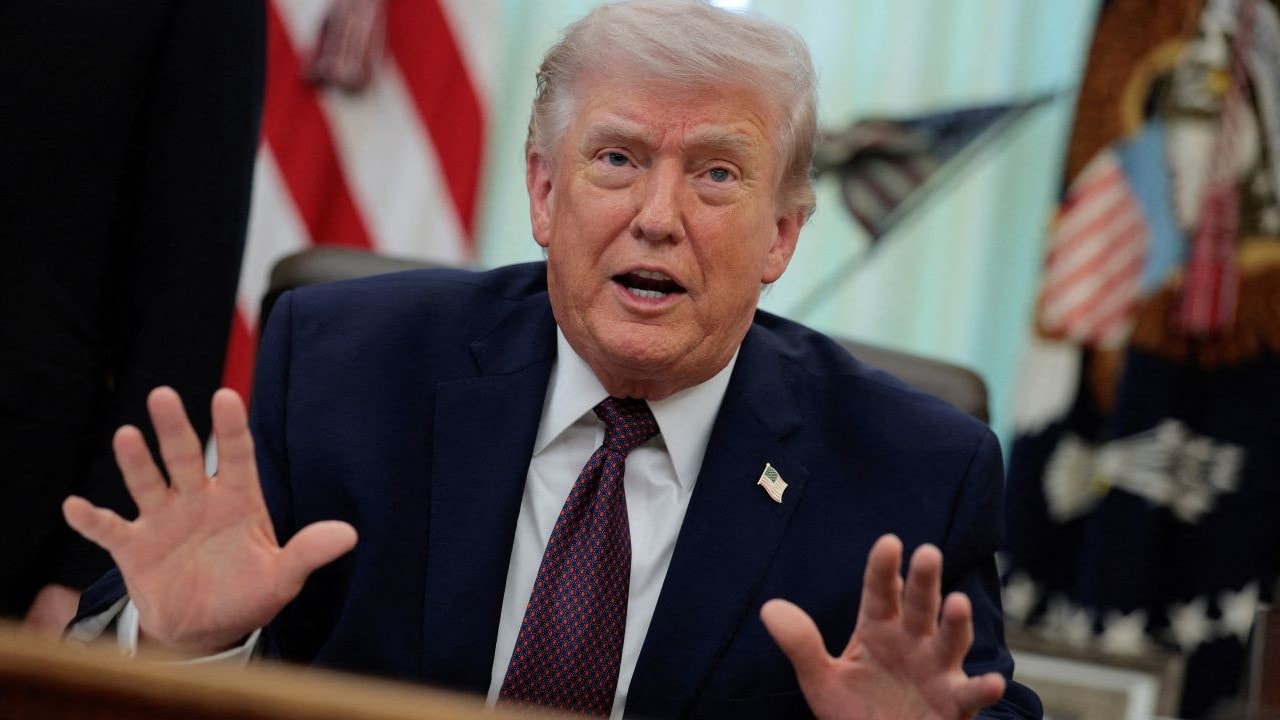
The Charles de Gaulle isn't just a ship. It's 42,000 tons of nuclear-powered French diplomacy currently sitting in the volatile waters of the North Indian Ocean. As it edges toward the Strait of Hormuz, the world is watching a high-stakes game of naval chess. While the headlines focus on Donald Trump’s latest verbal broadsides against Tehran, the reality on the water is far more complex than a simple "warning." France isn't just acting as a sidekick to American interests. They’re playing their own game.
The Strait of Hormuz is the world's most important oil chokepoint. About a fifth of the world's liquid petroleum passes through that narrow stretch. When a carrier strike group led by the flagship of the Marine Nationale moves into the neighborhood, the price of crude doesn't just tick up because of "tension." It moves because the physical architecture of global security is shifting.
Why France is Flexing Now
France has always maintained a "strategic autonomy" streak that drives Washington crazy. They don't just follow orders. However, the timing of this deployment—part of the Clemenceau 25 mission—aligns perfectly with a period of extreme friction. Iran has been pushing its luck with enrichment levels and regional proxy actions. Trump, meanwhile, hasn't softened his "maximum pressure" rhetoric one bit.
The Charles de Gaulle brings a unique set of tools to the Persian Gulf's doorstep. It carries Rafale M fighters, which are battle-proven and highly capable of both reconnaissance and strike missions. Unlike American supercarriers, which are massive cities at sea, the French carrier is smaller but arguably more agile in the cramped confines of the Middle East's littoral zones.
I’ve seen how these deployments work. It’s about "presence." If you aren't there, you don't exist in the eyes of regional powers like Iran or Saudi Arabia. By moving the carrier toward the Strait, Paris is telling Tehran that Europe won't just sit back if the oil stops flowing. They're also telling Trump that France is still a heavy hitter that deserves a seat at the big table when the "grand bargain" or the next round of sanctions gets discussed.
The Trump Factor and the Pressure Cooker
Donald Trump’s warnings to Iran aren't new, but they’ve taken on a sharper edge lately. He's been vocal about "consequences" for any Iranian interference with global trade or threats to American assets. But a warning only works if there’s a credible threat of force behind it. The U.S. Fifth Fleet, based in Bahrain, provides plenty of that, but having the French there adds a layer of international legitimacy that a solo American operation lacks.
Iran’s response has been predictable. They’ve ramped up their own naval drills and issued the usual rhetoric about "foreign invaders." But they aren't stupid. They know the Charles de Gaulle isn't there for a friendly port call. The carrier group includes several frigates, a nuclear attack submarine, and a supply ship. It’s a self-contained bubble of Western military power.
The real danger isn't a planned war. It's a mistake. A stray drone, a misunderstood radio transmission, or a nervous commander on an Iranian fast-attack boat could trigger a cascade of events that nobody wants. That’s why the "edging closer" part of the headline matters. It’s a slow-motion approach designed to let the pressure build without blowing the lid off the pot.
What the Media Misses About Carrier Operations
Most news outlets treat a carrier move like a car driving down a street. It’s not. It’s a logistical nightmare and a massive signal of intent. When the Charles de Gaulle moves, it’s coordinated months in advance, but the specific positioning near Hormuz is a tactical choice made in real-time based on intelligence.
Here is what people get wrong about these standoffs:
- It’s not just about Iran. This is also a message to Russia and China. They both have growing interests in the region. France is asserting that the Mediterranean and the Indian Ocean remain under the influence of Western-aligned democratic powers.
- The Rafale factor. The Rafale M jets on board are equipped with some of the best electronic warfare suites in the world. They aren't just there to drop bombs; they're there to vacuum up every bit of electronic signal coming out of Iranian radar installations.
- Interoperability. The French are likely practicing "plug and play" operations with U.S. assets. This means a French jet could theoretically take data from an American E-2 Hawkeye to engage a target. That level of cooperation is what actually keeps Tehran awake at night.
The Economic Reality of the Strait
If the Strait of Hormuz closes, the global economy breaks. It’s that simple. We’re talking about a spike in oil prices that could lead to immediate inflation across Europe and North America. France, which relies heavily on nuclear power but still needs oil for transport and industry, can't afford a blockade.
Trump knows this. He uses the threat of Iranian instability as a lever to get other countries to spend more on their own defense. In a way, seeing the Charles de Gaulle in the region is exactly what he wants. It’s "burden sharing" in its most visible, steel-and-jet-fuel form.
Iran’s strategy is "asymmetric." They know they can't win a direct fight against a carrier strike group. Instead, they use mines, small boats, and shore-based missiles. The French mission has to account for these low-tech threats while managing high-tech diplomacy. It’s a tightrope walk over a shark tank.
Tracking the Next 72 Hours
Watch the flight decks. The tempo of Rafale launches will tell you everything you need to know about the tension levels. If they’re flying combat air patrols around the clock, the situation is red hot. If it’s just a few sorties a day, it’s business as usual.
Don't expect a sudden strike. That’s not how France operates. Expect "freedom of navigation" maneuvers. These are essentially "I'm not touching you" games played with warships. They sail through international waters that Iran claims to control, just to prove they can.
The Charles de Gaulle will likely linger near the Gulf of Oman, just outside the actual Strait. It’s close enough to strike but far enough to avoid being trapped in the narrow channel. It’s the ultimate "maybe" in a region full of "definitely."
Keep an eye on the official statements from the Quai d'Orsay. If they start talking about "de-escalation" while the carrier is moving forward, the contradiction is the point. It’s the "velvet glove" over the "nuclear-powered fist."
Stop looking for a single event to end this. This is the new normal. A cycle of deployment, threat, and quiet withdrawal. But as long as that carrier is in the water, the balance of power remains tilted away from Tehran.
Keep your focus on the naval tracking data and the price of Brent Crude. Those two numbers will tell you more than any press release from the White House or the Élysée Palace. The presence of the Charles de Gaulle has bought time, but it hasn't bought peace. It's a temporary stabilizer in a region that's fundamentally unstable.
If you want to understand the real impact, look at how the regional players—the UAE and Saudi Arabia—react. Their silence or support will dictate if this French move actually achieves anything or if it’s just an expensive cruise through a dangerous neighborhood. Check the latest satellite imagery of the Iranian port at Bandar Abbas. If their fleet is staying home, the message was received. If they're heading out to meet the French, get ready for a long month.