Imagine living in a city that never stays in one place. You wake up, look out your window, and see the coast of Italy. A few weeks later, you're staring at the London skyline. That's the wild promise behind Freedom Ship, a gargantuan floating city designed to circle the globe continuously.
It sounds like science fiction. Honestly, most people write it off as a pipe dream that will never taste salt water. They aren't entirely wrong to doubt it, given the project has stalled in the blueprint phase for decades. But to dismiss it entirely misses what makes this concept a fascinating study in modern engineering and alternative lifestyles.
The idea behind Freedom Ship isn't to build a bigger Titanic. It's an attempt to rethink human geography.
The Reality of a Floating Metropolis
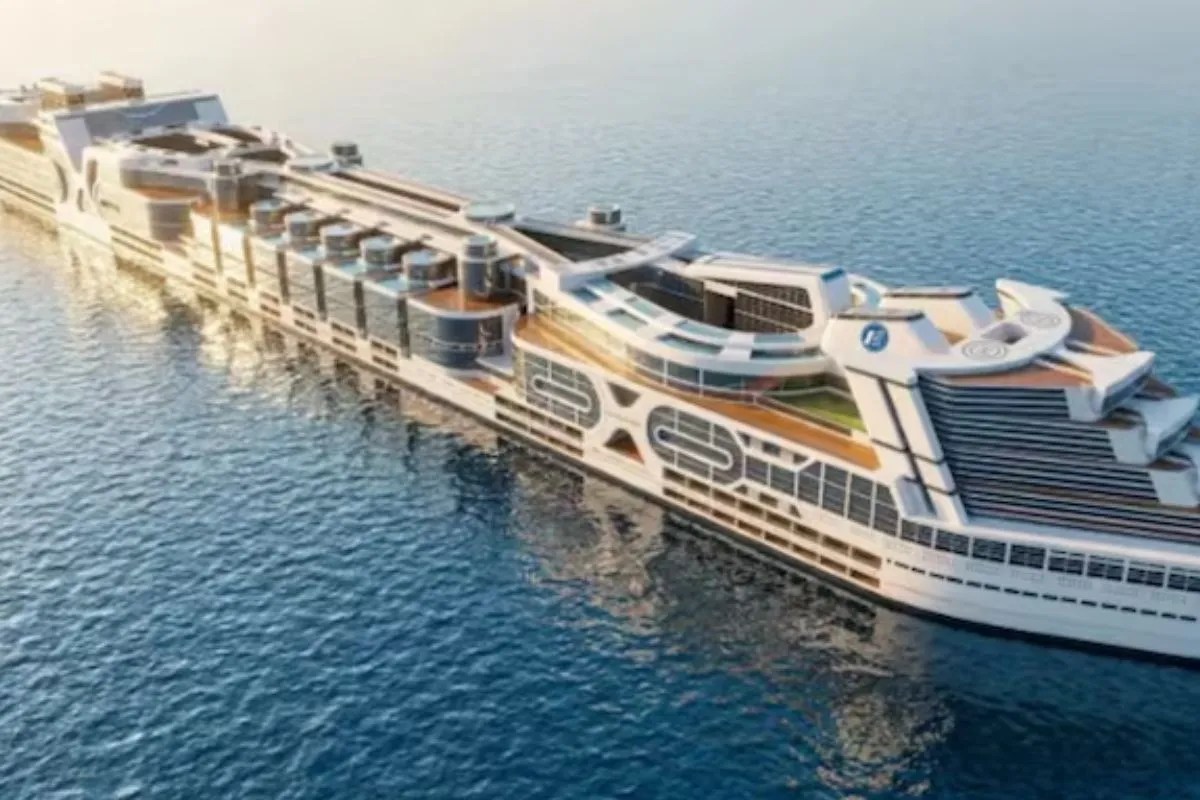
Let's look at the sheer scale because the numbers are dizzying. Freedom Ship is designed to stretch over 4,500 feet long. That's roughly four times longer than the largest cruise ships currently operating, like Royal Caribbean's Icon of the Seas. It would rise 25 stories above the water.
This isn't a holiday resort. It's a permanent home for 50,000 residents, plus an additional 30,000 daily visitors, commercial tenants, and crew members. Freedom Ship Engineering, the company behind the concept, envisioned an ecosystem complete with schools, hospitals, art galleries, shopping malls, and a full-scale international business district.
The design features a flat top that functions as a commercial runway. Small private and commercial aircraft would land and take off, shuttling residents to the mainland. It's a bold vision.
Freedom Ship Proposed Dimensions:
- Length: 4,500 feet (1,371 meters)
- Width: 750 feet (228 meters)
- Height: 350 feet (106 meters)
- Capacity: 80,000 people total
How Freedom Ship Proposes to Move
Normal ships visit ports. Freedom Ship cannot.
It's too wide. It's too deep. No traditional harbor on Earth could accommodate a vessel of this size. Instead, the floating city would anchor miles offshore, letting residents commute to land via a fleet of ferries or the onboard airstrip.
The propulsion system requires a massive array of heavy-duty electric motors. According to early engineering notes, the ship would move at a leisurely pace, around 9 to 10 knots. It wouldn't rush anywhere. The proposed route involves a continuous two-year loop around the world. It would move from the eastern coast of the United States, across the Atlantic to Europe, down past Africa, over to Asia, and back across the Pacific.
The inhabitants would experience every climate, every season, all while sitting in their own living rooms.
The Logistics Nightmare Nobody Wants to Talk About
Building a massive floating city sounds incredible on a pitch deck. The reality of maintaining it is a different beast altogether.
Think about waste management. Fifty thousand people generate tons of trash and sewage every single day. The designers claim the ship would use advanced incinerator plants to convert waste into energy, leaving zero liquid sewage discharge. Sounds neat on paper. Implementing that flawlessly at sea is unprecedented.
Then comes the food supply. You can't just drive a supermarket truck to the dock. The ship would require a massive, highly synchronized supply chain involving barges and cargo planes to keep the restaurants and grocery stores stocked. If a storm cuts off deliveries for a week, you have a massive crisis on your hands.
Legal Loopholes and the Tax Haven Debate
You can't discuss Freedom Ship without addressing the elephant in the room. Taxes.
The project has long attracted interest from libertarians and flag-theory enthusiasts. Because the ship would spend most of its time in international waters, it wouldn't technically fall under the jurisdiction of any single nation's tax laws. It would operate under its own maritime legal framework, effectively creating a floating corporate tax haven.
But international maritime law is notoriously complex. The United Nations Convention on the Law of the Sea (UNCLOS) regulates vessels in international waters. A ship must fly the flag of a specific country and adhere to that nation's laws. Finding a country willing to flag an autonomous floating city of 50,000 people—and take on the legal liability for it—is a massive hurdle.
Why the Project Stalled and Where It Stands Now
The concept emerged in the late 1990s, championed by engineer Norman Nixon. Decades later, not a single piece of steel has been cut.
Money is the main roadblock. The estimated price tag started around 9 billion dollars back in the day. In today's economy, that figure easily clears 12 to 15 billion dollars. Securing that kind of capital for an unproven, highly risky engineering project is nearly impossible. Investors prefer safe bets like traditional real estate or established cruise lines.
Despite the lack of physical progress, the dream refuses to die. The company occasionally updates its website, insisting they are searching for the right backing. Oceanic living concepts, often called seasteading, continue to gain traction among tech elites who want to escape traditional governance models.
Assessing the Feasibility
Is it actually buildable? Yes. The engineering principles behind large-scale floating structures are well-understood. The oil and gas industry routinely builds massive floating production storage and offloading (FPSO) units that withstand violent ocean storms for decades.
Is it economically viable? Probably not. The cost of entry for residents would be astronomical, and the maintenance fees alone would rival the GDP of a small island nation.
If you're fascinated by the idea of alternative living or maritime engineering, track the progress of mega-cruise ships instead. They are the closest thing we have to functioning floating towns. Keep an eye on companies testing residential cruise concepts, where you buy an apartment on a standard-sized ship. It's a much more realistic way to live on the water without waiting for a 4,500-foot titan that may never leave the drawing board.