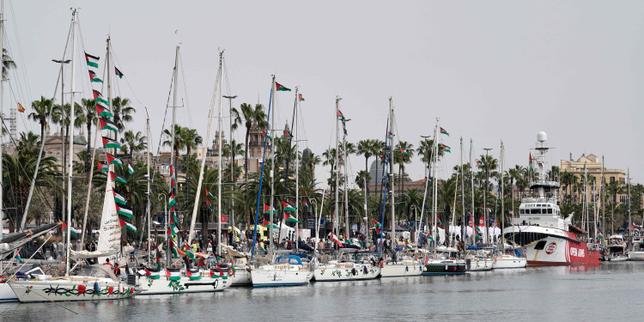
The ships are back in the water. After months of delays and intense political pressure, another Freedom Flotilla has departed from the port of Barcelona. This isn't just a local news story for the Spanish coast. It's a massive challenge to the status quo of the Mediterranean. When activists push off from the dock, they aren't just carrying rice and medicine. They're carrying a political message that most governments would rather ignore. You might think we've seen this movie before, but the context in 2026 has shifted the stakes higher than they’ve been in a decade.
Gaza remains under a suffocating blockade. The international community talks about "corridors" and "piers," but the reality on the ground hasn't changed enough to stop the looming humanitarian disaster. That’s why these ships exist. They don't wait for permission.
Barcelona is the heart of Mediterranean resistance
Barcelona has a long history of being a thorn in the side of traditional diplomacy. The city’s decision to host this departure wasn't accidental. It’s a direct reflection of local political will. You see it in the streets. You see it in the harbor. The "Freedom Flotilla Coalition" chose this port because it’s one of the few places where the local government doesn't actively try to sabotage their efforts before they can even untie the ropes.
The flotilla includes ships like the "Handala," named after the iconic Palestinian cartoon character representing resistance and the right of return. This vessel, along with others, isn't just a cargo carrier. It’s a floating protest. The organizers know the risks. They remember 2010. They remember the Mavi Marmara. Yet, they keep going back because the sea is the only border that isn't fully controlled by concrete walls and iron gates—at least not until the warships show up.
What these ships are actually carrying
People often ask why they don't just send the aid through official land crossings. The answer is simple. They can't.
Trucks are backed up for miles. Inspections are arbitrary. Items as simple as tent poles or water filters get rejected as "dual-use" goods. By taking to the sea, the flotilla bypasses the physical bottlenecks of the land crossings, even if it runs straight into a naval blockade.
This specific mission is carrying tons of medical supplies and food. But the "aid" is almost secondary to the political objective. The goal is to break the siege. It’s about the right of a people to have a port. It’s about the right to trade and travel without a neighbor’s veto. When you look at the manifest, you see a lot of flour and bandages, but the real cargo is the 500 participants from over 30 countries. These are doctors, lawyers, and former politicians who are willing to put their bodies between the blockade and the people of Gaza.
The legal reality of the blockade
Is the blockade legal? It depends on who you ask and which international lawyer is billing the hours. But the United Nations has repeatedly called it collective punishment. That’s a war crime.
The flotilla operates on the principle of "civilian protection." They argue that if the international community won't enforce the law, then citizens must. It’s a dangerous game. It’s a game of chicken played with massive steel hulls and high-speed patrol boats. Israel maintains that the blockade is necessary for security, to prevent weapons from reaching Hamas. The activists argue that you don't need to starve two million people to keep out rockets.
Both sides are locked in a narrative struggle where the Mediterranean is the stage.
Why this mission is different from previous years
In the past, these missions felt like isolated events. In 2026, the global sentiment has boiled over. We’ve seen the rulings from the International Court of Justice (ICJ). We’ve seen the mounting evidence of famine. This isn't just a group of "radicals" anymore. The people on these boats are backed by a much wider segment of the public who are tired of watching the same cycle of violence and deprivation.
Technology has changed the game too. Every person on that ship has a satellite uplink. If the ships are boarded, the world sees it in real-time. No more waiting for "official" footage to be edited and released by military spokespeople. We see the flashbangs. We hear the shouting. The transparency makes the political cost of stopping these ships much higher than it used to be.
The risks are real and the outcomes are uncertain
Don't let anyone tell you this is a pleasure cruise. It’s terrifying.
Participants undergo non-violence training. They prepare for the worst-case scenario. This includes being pepper-sprayed, tasered, or detained in foreign prisons. Some of them won't come home for weeks. Some might not come home at all.
There’s also the risk of failure. Often, these ships are intercepted in international waters, towed to an Israeli port, and the aid is "processed" through the very systems the activists are trying to bypass. Critics say it’s a waste of money. They say the millions spent on the ships could have bought more food if sent through traditional channels.
But that misses the point entirely.
If you only care about calories per dollar, you don't understand the flotilla. They are fighting for the dignity of a people who don't want to live on handouts. They want a future where they can run their own docks.
How to track the progress and what to look for
If you want to follow this story, don't just watch the mainstream news. They’ll likely pick it up only if there's a violent confrontation. Follow the independent journalists on board.
- Watch the AIS (Automatic Identification System) tracking for the ships.
- Look for updates from the "Freedom Flotilla" social media accounts.
- Monitor the responses from the Spanish and Turkish governments, as they often provide the diplomatic cover for these vessels.
The next few days are critical. Once the ships leave the safety of the Spanish coast and move into the eastern Mediterranean, the tension will spike. That’s when the real test begins.
If you want to support these efforts, look into the local chapters of the Global Solidarity Movement. They need more than just likes on a post. They need logistics, funding for legal fees, and people willing to show up at the docks when the next ship prepares to sail. This isn't just Barcelona's fight. It’s a global push to see if the sea can finally be opened.
The ships are moving. The world is watching. It’s time to see if the "International Community" is anything more than a polite phrase used in press releases while a blockade remains firmly in place. Stay updated on the handala-org and other coalition sites for live coordinates and emergency alerts if the vessels are approached in international waters. The sea is wide, but the path to Gaza is narrow and fraught with more than just waves.