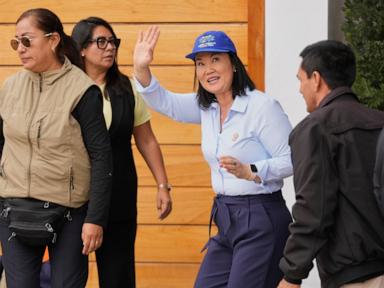
On July 3, 2026, Peru’s National Electoral Jury officially declared right-wing candidate Keiko Fujimori the winner of the presidential runoff election. Defeating left-wing challenger Roberto Sánchez by a razor-thin margin of fewer than 50,000 votes, the 51-year-old daughter of late autocrat Alberto Fujimori finally secured the presidency on her fourth attempt. While mainstream outlets frame this simply as a standard conservative shift across Latin America, the reality is far more perilous. This election exposes a deeply fractured nation mired in chronic instability, where voters chose between mutual fears rather than hopeful visions.
The final tally gave Fujimori 50.135 percent of the vote against Sánchez’s 49.865 percent. A separation of less than 0.20 percent out of 18 million ballots is not a mandate. It is a symptom of a country split down its geographic and economic spine.
The Mechanics of a Razor Thin Margin
The final stretch of the ballot count felt like an exercise in national anxiety. Early domestic returns favored Sánchez, a left-wing psychologist who drew heavy support from the long-neglected rural provinces and southern Andean highlands. The tables turned only when the votes from Peruvians living abroad arrived in Lima. These expatriate ballots broke overwhelmingly for Fujimori, wiping out Sánchez’s domestic lead and triggering immediate, familiar accusations of administrative irregularities from the left.
Sánchez demanded the nullification of certain foreign ballots. His efforts failed to sway the National Electoral Jury, which spent weeks meticulously reviewing challenged votes before issuing its unappealable certification. This marks the third consecutive presidential cycle in Peru decided by a fraction of a percentage point. In 2016, Fujimori lost by 41,000 votes; in 2021, she lost to Pedro Castillo by 44,000 votes. This time, the margins swung in her favor, but the structural gridlock remains completely unchanged.
The mechanism of her victory relies entirely on a negative coalition. Fujimori did not win because of widespread adoration for her platform or her family name. In the April first-round election, featuring a hyper-fragmented field of 35 candidates, she secured a mere 11 percent of the electorate. She advanced to the runoff simply because her core base remained disciplined while the rest of the vote shattered. In the second round, she became the vessel for millions of urban voters who feared that Sánchez would dismantle Peru’s market-oriented economic model and pull the country into economic ruin.
The Shadow of the Past and the Promise of Iron Fist Order
The Fujimori name carries intense historical weight. For older Peruvians, her late father, Alberto Fujimori, is the leader who crushed hyperinflation and defeated the brutal Maoist insurgency of the Shining Path during the 1990s. For others, he is the convicted dictator who dissolved congress in a 1992 self-coup, authorized death squads, and weaponized state institutions to maintain absolute power. Keiko Fujimori spent decades serving as his first lady after her parents' public divorce, cementing her position at the center of this complicated political legacy.
Security drove this election. Peru is currently gripped by an unprecedented wave of violent organized crime, characterized by rampant extortion rackets and high-profile contract killings. Transnational syndicates have embedded themselves in major cities, targets ranging from small neighborhood shops to international logistics firms. Fujimori leaned heavily into this terror, promising to govern with the same iron fist her father utilized thirty years ago.
Her specific proposals mirror the authoritarian security strategies currently gaining traction throughout Central and South America. She campaigned on constructing four high-security prisons, alongside a massive facility designed to replicate El Salvador’s notorious Terrorism Confinement Center. She pledged to force inmates to work for their upkeep, to militarize Peru's international borders to stem the flow of undocumented migration, and to immediately deport non-citizens caught breaking the law. To an electorate exhausted by daily security threats, the defense of civil liberties felt secondary to the desire for safe streets.
A Fractured Nation Split by Geography and Fear
The voting patterns reveal an open geographical wound. Lima, the affluent coastal capital that holds roughly a third of the country's population, voted overwhelmingly for Fujimori to protect its commercial interests and real estate values. The southern Andes and rural interior voted just as decisively for Sánchez. These regions have watched a succession of leaders promise wealth redistribution, only to witness those same politicians exit office in handcuffs.
The state failed them. Decades of strong macroeconomic growth in the capital never materialized into reliable sewer systems, paved roads, or functional medical clinics in the high altitude mining regions. The economic fallout of recent global health crises and subsequent inflation pushed millions back below the poverty line. For these citizens, the preservation of Peru’s market economy means nothing because they never shared in its benefits.
Sánchez capitalized on this resentment by warning that a Fujimori presidency would concentrate power across all branches of government, effectively resurrecting the autocratic machinery of the 1990s. His supporters view her Popular Force party as a corrupt political enterprise designed primarily to secure judicial immunity for its leadership. Fujimori herself spent significant time in pre-trial detention during recent years over money laundering allegations linked to campaign financing. While she successfully avoided conviction, the cloud of suspicion alienated a vast swath of the center-left populace, ensuring that her administration begins with zero institutional goodwill.
The Looming Institutional Gridlock
Fujimori will take the oath of office on July 28, becoming Peru’s ninth president in a chaotic ten-year span. This rapid turnover is the direct result of a constitutional framework that allows the legislative branch to impeach presidents under the vague clause of "permanent moral incapacity." Ironically, Fujimori's own party pioneered the aggressive use of this mechanism between 2016 and 2020 to destabilize rivals, establishing a precedent of legislative dominance that now threatens her own executive authority.
The legislative environment has changed structurally. The 2026 election marks the return of a bicameral congress, consisting of a 60-seat Senate and a 130-seat Chamber of Deputies, ending decades of a single-house system. Fujimori’s Popular Force secured 22 seats in the new Senate. While this is far from a working majority, it provides her with just enough voting power to block immediate impeachment attempts from the opposition.
However, passing meaningful legislation will require constant, transactional negotiations with a constellation of minor, highly opportunistic political factions. These smaller parties are frequently tied to informal or illegal industries, such as wildcat gold mining, unregulated transit networks, and substandard private universities seeking deregulation. Fujimori will be forced to buy cooperation through political appointments and policy concessions, a practice that historically hollows out state capacity and feeds the very corruption she promised to eradicate.
Immediate Economic and Environmental Headwinds
The international business community responded to the election results with a palpable sigh of relief. Total state control of natural resources is no longer on the immediate horizon, stabilizing the outlook for Peru’s vital copper and gold mining sectors. The country occupies a crucial geostrategic position as a primary trade hub facing the Asia-Pacific region, a position reinforced by significant deep-water port investments along the coast.
But economic stability cannot survive on mining exports alone. The incoming administration must confront the imminent arrival of a severe El Niño weather pattern, an atmospheric event that historically brings catastrophic flooding to the northern Pacific coast and devastating droughts to the agricultural heartland of the southern Andes. Previous instances of this climate phenomenon crippled infrastructure, destroyed commercial crops, and wiped out percentage points of gross domestic product within months.
Repairing washed-out bridges and distributing emergency food aid requires an efficient, trusted civil service. Peru’s bureaucracy has been systematically dismantled by years of political purges, as successive presidents replaced career experts with political loyalists. Fujimori inherits an administrative shell incapable of executing complex public works. If her government fails to respond effectively to the natural disasters predicted for late 2026, the fragile alliance of urban voters who carried her to the presidency will evaporate before her first year concludes.
True stability demands that Fujimori break from her historical pattern of political retribution. If she uses her influence over the judicial system to target her opponents or protect allies from ongoing graft investigations, she will trigger a repeat of the massive street protests that paralyzed the country between 2022 and 2023. To govern a nation this deeply divided, she must look beyond her immediate circle and appoint independent, respected professionals to head the ministries of interior, justice, and finance. The margin of her victory offers no room for error, and the Peruvian public has demonstrated an incredibly short fuse for presidential failure.