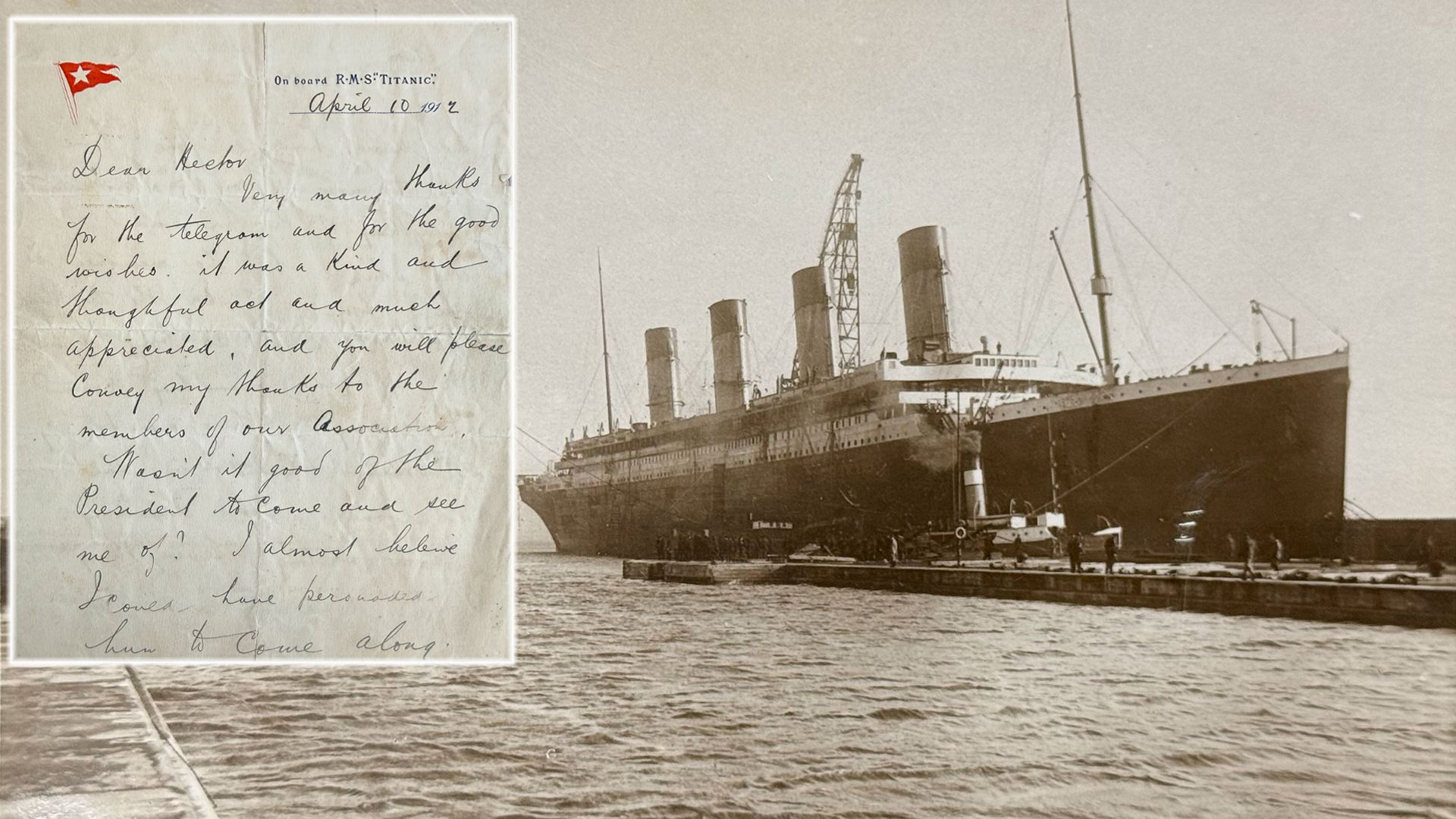
A forgotten piece of history is going up for auction in Wiltshire, and it tells a story most people miss about the world's most famous shipwreck.
It wasn't written by a high-society billionaire or a celebrity passenger sitting in a opulent stateroom. It came from Henry Price Hodges, a second-class passenger travelling on ticket number 250643. He paid £13 for his passage across the Atlantic to visit relatives in Boston. On April 10, 1912, as the mammoth vessel pulled out of Southampton, Hodges sat down to write to his friend Hector Young back home.
He didn't know he had five days to live. Nobody did.
That stark contrast makes paper relics from the Titanic so terrifyingly human. Auction house Henry Aldridge and Son estimates the letter will fetch up to £35,000 when it goes under the hammer. Collectors pay vast sums for these artifacts because they capture a calm moment right before the world shifted forever.
The Ordinary Moment Frozen in Time
When people think of the Titanic, they picture panic, icy waters, and violin music playing into the void. They forget the ordinary days before the iceberg.
Hodges was a member of the Newtown Conservative Association in Southampton. In his note, mailed during the ship's stop in Queenstown, Ireland, he thanked his friends for sending him off with a telegram. He joked that he almost convinced the association president to board the ship with him.
His description of life on board feels alive. He wrote about the weather being clear and calm. He described 200 young men on the top deck marching around and singing. Inside the saloons, people played dominoes and cards. Others read books or wrote letters. "Everything is quite different to what you would expect to see at sea," Hodges observed.
He closed his letter with a phrase millions of us have typed or written at the end of a long workday. He said he was going to bed early because he felt "as tired as a dead dog."
He signed off, sent it ashore at Queenstown, and returned to his journey. Four days later, the ship hit an iceberg. Hodges died in the icy water on April 15, 1912. Search crews later recovered his body, and he was laid to rest at Fairview Cemetery in Halifax, Nova Scotia.
Why Second Class Mail Is So Hard to Find
Most surviving letters from the Titanic came from first-class passengers. Rich travelers had the time, money, and social connections to post heavy correspondence at every port. They bought pre-stamped stationery from the ship's writing rooms and handed their mail to pursers without a second thought.
Letters from second-class and third-class passengers are far rarer.
Second-class passengers occupied a unique space on the ship. They were middle-class workers, merchants, teachers, and craftsmen. They weren't famous, but they weren't destitute either. They represented the everyday worker reaching for a better life or visiting family across the sea.
When auctioneer Andrew Aldridge evaluated the Hodges letter, he pointed out that items from second-class passengers give us a grounded snapshot of actual shipboard life. You don't get the performative glamor of first-class dining rooms or the grim, crowded realities of steerage. You get an honest look at normal people relaxing on deck, singing songs, and playing cards in the sun.
What These Personal Relics Teach Historians Today
Artifacts from shipwrecks usually fall into two groups. You have structural items pulled from the seabed, like rivets, portholes, or pieces of hull plating. Then you have personal items that left the ship at Queenstown or survived in floating pockets.
Paper items carry an emotional weight that metal and wood can't match.
Consider the difference in tone across survive-or-perish mail from that week:
- The Foreshadowing Warning: A letter card written by first-class survivor Colonel Archibald Gracie, which sold for £300,000, noted that he would wait until his journey's end before passing judgment on the ship.
- The Calm Before the Disaster: The Hodges letter, which captures everyday cheerfulness and camaraderie among young men singing on the deck.
- The Finality of Reality: Postcards mailed from Queenstown that simply said the weather was fine and arrival in New York was expected on Wednesday morning.
When you read these lines, you realize nobody on board felt a sense of doom. They were excited, tired, or simply passing time. The innocence in these words hits harder than any dramatic retelling in movies.
How the Market Values Titanic Historical Artifacts
The market for Titanic memorabilia remains surprisingly resilient. Decades after the wreck was discovered by Robert Ballard in 1985, public interest hasn't faded. It has actually grown more selective.
Collectors aren't just buying paper. They're buying proven provenance and human narrative.
A simple piece of White Star Line letterhead without a strong story might fetch a few thousand dollars. Add a verified signature, a postmark from Queenstown on April 11, and a vivid description of passengers singing on deck, and the price jumps tenfold.
Items connected to named individuals whose fates are documented in historical records command the highest valuations. Buyers want to hold a physical link to a specific person who walked those decks.
How to Track and Study Historic Shipwreck Documents
If you follow historical auctions or research maritime history, you don't need to drop £35,000 at an auction house to learn from these documents. You can analyze primary sources yourself through public archives and reputable collections.
Check National Maritime Museums
The National Maritime Museum in Greenwich and the Ulster Transport Museum hold extensive digital archives of correspondence, passenger lists, and deck plans. Studying scanned originals gives you direct access to handwriting, postmarks, and paper watermarks without paying private collector fees.
Verify Postmarks and Dates
Serious researchers always check port schedules against letter postmarks. Titanic mail left the ship at two specific points before the Atlantic crossing: Cherbourg, France, on April 10, and Queenstown (now Cobh), Ireland, on April 11. Any document claiming to be written on board after April 11 had to be recovered from a body or floating wreckage.
Read Survivor Memoirs and Transcripts
To get full context on letters written by specific passengers, cross-reference their names with the Senate Inquiry transcripts from 1912. Many passenger accounts detail exactly where people were sitting when they wrote their final notes home.
Keep an eye on regional auction listings if you collect vintage maritime ephemera. Focus on verified provenance, demand clear documentation of ownership chains, and always verify postmark dates against official port logs before making an offer on historical correspondence.