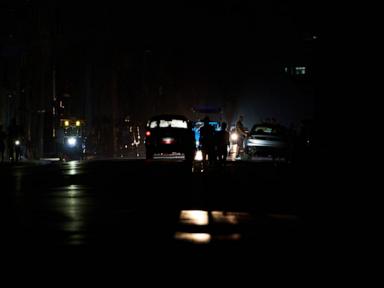
The international press loves to treat the July 2026 total disconnections of Cuba’s electrical grid like a series of unpredictable natural disasters. When the National Electric System collapsed twice in a single week—first on July 6, and again on July 10—the lazy consensus screamed the same tired headlines: aging infrastructure, bad luck, and a lack of foreign currency. They write about the system as if it is a classic vintage car that just needs a few hard-to-find spare parts and a skilled mechanic to purr back to life.
That narrative is dangerously wrong. Read more on a related topic: this related article.
The Cuban power grid is not suffering from a temporary bout of disrepair. It is experiencing a terminal structural failure. The current approach—patching up ancient thermoelectric plants like the 1980s-era Antonio Guiteras facility in Matanzas or Block 4 of the Céspedes plant in Cienfuegos—is the engineering equivalent of pouring premium fuel into a shattered engine block. No amount of emergency recovery protocols or localized micro-island building will ever stabilize a centralized grid that is fundamentally unsuited to the thermodynamic and geopolitical realities of modern Cuba.
The true crisis is not that the grid is breaking down. The crisis is the stubborn, politically motivated insistence on trying to save a centralized network that should be left to die. Further reporting by Reuters explores similar views on the subject.
The Centralization Trap and the Illusion of Recovery
Mainstream analysts continually fall into the trap of measuring Cuba’s energy health in raw megawatts. They look at the island's nameplate capacity of roughly 3,000 megawatts, compare it to the peak demand, and conclude that the country simply needs to bridge a 1,500 to 2,000 megawatt deficit. This superficial math ignores the physical mechanics of frequency stabilization.
In a highly centralized power network, stability relies on massive, rotating thermal masses—large turbines that maintain a steady 60Hz frequency across thousands of miles of transmission lines. When a single major unit like the Antonio Guiteras plant experiences an automatic trip or a boiler leak, the sudden drop in generation causes a violent drop in network frequency.
[Guiteras Plant Trips] -> [Immediate Frequency Drop] -> [Cascading Transmission Line Oscillation] -> [Total System Disconnection]
Because the Cuban grid lacks the automated high-speed switching and responsive reserve margins found in modern networks, these frequency deviations act like an acoustic shockwave. They travel down the transmission lines, forcing every other operational plant to automatically disconnect to save their own turbines from physical destruction. The July 10 collapse was triggered by exactly this phenomenon: a severe oscillation in the transmission lines of the central region caused an instantaneous, nationwide blackout.
I have analyzed utility networks operating under extreme duress for two decades, and the math here is unyielding. When your entire national grid depends on three or four fragile nodes, you do not have an electrical system. You have a house of cards waiting for a stiff breeze. The Cuban Electric Union can proudly announce that their engineers have activated emergency protocols to feed initial electricity from local microsystems back to the main plants, but this is a temporary fix. They are using tiny, inefficient diesel gensets to kickstart massive, unstable thermal giants. It is a cycle that guarantees another catastrophic failure within weeks, if not days.
The Crude Myth of the Fuel Shortage
The standard political defense from Havana, often repeated without question by international commentators, is that the grid is a victim of a fuel chokehold. It is true that oil imports dropped dramatically at the start of the year when Venezuelan shipments dried up and other regional suppliers pulled back. But blaming the empty fuel tanks misses the deeper engineering failure: Cuba is destroying its own power plants by forcing them to burn the wrong fuel.
To save money, Cuba heavily relies on its domestic heavy crude oil extracted from the northern coast. This domestic oil is notoriously high in sulfur and heavy metals. Thermoelectric plants designed decades ago to run on imported, highly refined fuel oil cannot process this corrosive sludge without suffering extreme internal damage.
The consequences are predictable:
- Accelerated Corrosion: Sulfur dioxide creates highly acidic exhaust gases that literally eat through boiler tubes from the inside out.
- Slag Accumulation: Heavy metals deposit thick crusts on heat exchange surfaces, drastically dropping thermal efficiency and forcing plants to run hotter and harder just to meet baseline quotas.
- Frequent Maintenance Overrides: Because the state cannot afford to take plants offline for the months required to properly clean this buildup, they run them until they blow.
The boiler leaks that constantly plague the Matanzas plant are not accidents; they are the direct chemical consequence of burning low-grade domestic crude in systems that require refined fuel. Even if a fleet of supertankers arrived in Havana harbor tomorrow with millions of barrels of oil, the structural integrity of these plants has been so thoroughly compromised by years of chemical abuse that they would still experience frequent, catastrophic shutdowns.
The Solar Diversion Lacks Physical Reality
In an attempt to pivot away from the fossil fuel trap, the state has aggressively promoted its plan to build dozens of new solar parks across the island. The official goal was to have 55 operational solar installations by the end of last year. This initiative is frequently praised by green-energy commentators who see it as a progressive step toward sustainability.
It is actually a recipe for even greater grid instability.
Solar energy is inherently intermittent. In a stable grid, solar generation must be backed up by rapid-response natural gas peaker plants or massive lithium-ion battery storage networks that can instantly smooth out the drops in voltage when clouds pass over. Cuba has neither.
When you inject hundreds of megawatts of variable solar power into an antiquated transmission grid that is already suffering from severe frequency oscillations, you are adding fuel to the fire. Without a foundation of stable base-load power or advanced grid-scale storage, a sudden influx of solar energy does not assist the network—it overloads the fragile control systems, driving the grid closer to the tipping point of a total disconnection. Solar parks are excellent for localized, off-grid power, but using them to resuscitate a dying centralized national system is a fantasy that defies the basic physics of electrical engineering.
The Cost of the Sunk Cost Fallacy
Energy economists estimate that completely overhauling and modernizing Cuba’s centralized power architecture would cost upwards of $8 billion to $10 billion. In the current fiscal reality, that money does not exist. The state has attempted to mitigate this by pouring a massive percentage of its available capital into the energy sector, but this investment is being squandered on the wrong side of the ledger.
Instead of funding decentralized, regional microgrids that can operate independently of Havana, the money is funneled into keeping obsolete, forty-year-old Soviet and European thermal blocks on life support. This is the classic sunk cost fallacy in action. The belief is that because billions have already been invested in these massive plants, the country cannot afford to abandon them.
The hard truth is that the country cannot afford to keep them. Every dollar spent replacing a boiler tube on a ruined thermal plant is a dollar stolen from the implementation of isolated, resilient municipal grids that could at least keep hospitals, water pumps, and refrigeration running in regional capital cities during a national crisis.
Accept the Collapse to Protect the Population
The only viable way forward requires an immediate, total departure from the ideology of a unified national power grid. The state must abandon the goal of reconnecting the entire island from Pinar del Río to Guantánamo into a single synchronized entity.
The national grid must be intentionally broken apart into permanent, independent regional microgrids.
Current Model:  [One Giant Centralized System] -> Single Failure = Nationwide Blackout
Proposed Model: [Isolated Regional Microgrids] -> Single Failure = Localized, Manageable Outage
These regional systems must be designed to run autonomously, relying on localized diesel generation, small-scale industrial solar, and dedicated distribution lines that do not cross the central transmission corridors. This approach comes with an undeniable downside: it means accepting that large swathes of the country will not have access to unlimited, around-the-clock power. It means prioritizing critical infrastructure—water pumping stations, food storage, medical centers—over the convenience of residential air conditioning in the capital.
It is a harsh, unpalatable strategy for any government to adopt. But continuing to execute emergency recovery protocols for a dead centralized grid is no longer an engineering strategy. It is political theater played out in the dark. Turn off the life support on the national grid, let the centralized system go, and start building small, isolated lifeboats before the entire ship goes under for good.