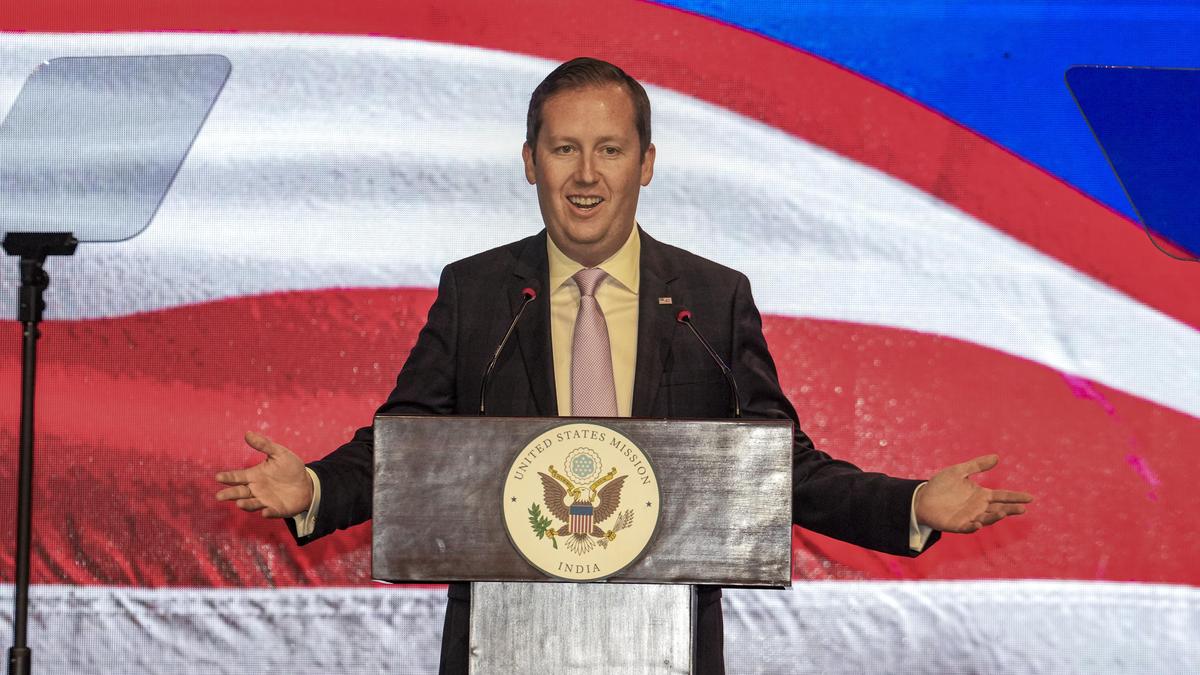
Diplomatic pronouncements frequently rely on the soothing geometry of percentages. When a United States envoy comfortably declares that an elusive bilateral accord is ninety-nine percent complete, the immediate reaction among casual observers is optimism. The final mile seems short. However, experienced observers of Washington and New Delhi trade negotiations recognize that the remaining one percent rarely represents a simple clerical detail. Instead, it usually contains the core ideological disagreements that have stalled economic integration between the two nations for a generation.
The ongoing efforts to finalize major trade and strategic agreements between India and the United States are currently stuck in this precise friction point. The official narrative suggests that only minor technical adjustments remain on the table. The reality is far more complicated. That final fractional sliver represents fundamental differences in how both democracies view national sovereignty, data ownership, agricultural protection, and intellectual property. It is not a bridge; it is a structural wall.
The Illusion of Proximity
Bilateral negotiations between Washington and New Delhi often follow a predictable pattern. High-level state visits produce grand declarations of intent, followed by months of bureaucratic stagnation. The current impasse reflects this cycle. By framing the unresolved issues as a mere sliver of the overall package, officials attempt to maintain market confidence and political momentum.
This approach misinterprets the nature of trade diplomacy. In comprehensive trade negotiations, nothing is agreed until everything is agreed. The items pushed to the end of the agenda are not left there by accident. They are placed at the bottom because they are the most politically sensitive and economically entrenched issues.
For the United States, the priorities are driven by corporate market access, stringent intellectual property enforcement, and the free flow of digital data. For India, the priorities are defined by domestic electoral realities, the preservation of small-scale agricultural livelihoods, and a firm commitment to strategic autonomy. When these two frameworks collide, the resulting gridlock cannot be resolved by minor text edits.
The Data Sovereignty Battleground
Digital trade has emerged as a major point of contention. Washington advocates for a global digital economy where data moves across borders without restriction, benefiting major American technology firms. New Delhi views data as a national asset that must be guarded, localized, and regulated to benefit domestic industries and ensure national security.
India's regulatory framework, particularly its approach to data localization, requires foreign companies to store sensitive financial and personal data within local borders. The justification relies on sovereign security and judicial oversight.
- The American Perspective: U.S. negotiators view these rules as non-tariff trade barriers designed to protect local enterprises while imposing high infrastructure costs on international firms.
- The Indian Perspective: Indian policymakers view American pressure as an attempt to undermine regulatory authority over their own digital market.
This is an ideological divide. One side views data as a commercial commodity, while the other views it as a sovereign resource. Reducing this disagreement to a minor detail overlooks the fundamental differences in how both nations approach the digital economy.
Agricultural Safeguards and Electoral Realities
Agriculture remains a highly sensitive sector in Indian politics, employing a large portion of the workforce. Any trade policy perceived as threatening the livelihoods of smallholder farmers carries significant political risk for the government in New Delhi.
[U.S. Export Demands] ---> Market Access for Dairy/Grains ---> [Indian Tariffs] ---> Protection of Smallholders
The United States consistently seeks greater market access for its agricultural exports, including dairy products and poultry. To protect its domestic farming sector, India maintains high tariffs and strict import controls, often citing phytosanitary concerns or cultural considerations, such as the feeding practices used in American dairy production.
American negotiators frequently argue that these barriers lack a scientific basis and distort global markets. Conversely, Indian trade officials see the removal of these protections as an existential threat to millions of rural families. A trade deal that exposes domestic farmers to subsidized foreign competition is politically unviable for any administration in New Delhi, making this issue a persistent obstacle.
Intellectual Property and Public Health
The dispute over Intellectual Property Rights (IPR) follows a similar pattern of entrenched positions. The U.S. pharmaceutical sector wields considerable influence in trade policy, pushing for strict patent protections and mechanisms to prevent the production of generic alternatives.
India has established itself as a major producer of affordable generic medicines, serving as a critical supplier for developing nations. The country's patent laws include provisions designed to prevent "evergreening"—the practice where pharmaceutical firms extend expiring patents by making minor, non-therapeutic modifications to existing drugs.
| Issue Area | United States Position | India Position |
|---|---|---|
| Pharmaceutical Patents | Strict enforcement; extended terms to recoup R&D costs. | Anti-evergreening rules; prioritization of affordable generic access. |
| Data Storage | Cross-border data flows; minimal localization requirements. | Mandatory local storage; strict state regulatory oversight. |
| Agricultural Tariffs | Reduction of import barriers for American commodities. | High tariffs to shield vulnerable smallholder farmers. |
Washington argues that India's patent environment discourages innovation and fails to adequately protect investments in research and development. New Delhi defends its legal framework as a necessary measure to ensure public health access, both domestically and across the Global South. This conflict between corporate profitability and public health priorities cannot be easily bridged by diplomatic compromise.
Strategic Realignment vs. Transactional Friction
The broader geopolitical context adds another layer of complexity. Both nations are drawn together by shared security concerns in the Indo-Pacific region, leading to deeper defense cooperation, joint military exercises, and technology-sharing initiatives.
However, this strategic alignment does not automatically translate into economic agreement. Washington often expects strategic partners to align their trade and regulatory frameworks with Western standards. India maintains a policy of strategic autonomy, choosing its economic partnerships based on national interest rather than bloc alignments.
This disconnect creates friction. American policymakers express frustration that significant defense cooperation has not led to substantial trade concessions. Meanwhile, Indian officials maintain that strategic defense partnerships and bilateral trade negotiations are separate matters that should be evaluated independently.
The Cost of Delayed Resolution
The prolonged nature of these negotiations carries distinct economic consequences. Businesses in both countries face regulatory uncertainty, which complicates long-term investment strategies and supply chain planning.
While negotiators focus on unresolved details, alternative regional trade agreements are moving forward, potentially shifting trade patterns across Asia. The risk is not a sudden collapse of bilateral relations, but a gradual loss of momentum as commercial interests seek more predictable regulatory environments elsewhere.
Focusing on how close an agreement is to completion can obscure the real structural challenges that remain. Resolving the final portions of these negotiations requires addressing deep-seated domestic priorities on both sides. Until both Washington and New Delhi acknowledge these core differences, a comprehensive agreement will remain elusive.