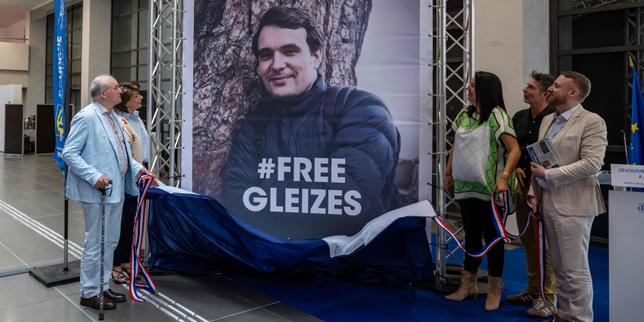
FIFA usually acts like an independent nation, ignoring global politics unless it hits their wallet. That changed today. The governing body of soccer just handed an official press credential for the FIFA World Cup 2026 to Christophe Gleizes.
There's just one problem. Gleizes can't travel to any matches. He's currently sitting inside a cell at the Koléa prison in Algeria, serving a seven-year sentence.
By approved credentialing for a jailed reporter, FIFA is making a deliberate, aggressive political statement. They are turning a sports pass into a tool for global media visibility. It's a move designed to embarrass Algerian authorities on the eve of the biggest sporting event on earth.
The Backstory Algerias Legal Siege on a Sports Reporter
Christophe Gleizes isn't a political operative or a spy. He's a sports journalist known for deep-dive profiles on soccer players, working with outfits like So Press and TV5MONDE. His trouble began because of a report he was compiling regarding JS Kabylie, a prominent Algerian soccer club based in the Kabylie region.
Algerian prosecutors locked him up in June 2025, accusing him of "apologizing for terrorism." The state's case centers on contacts Gleizes made during his research. He spoke with individuals linked to the Movement for the Self-Determination of Kabylie (MAK). Algeria classified MAK as a terrorist organization in 2021. Reporters Without Borders (RSF) reviewed the case and found the timeline completely manufactured. Gleizes spoke to these contacts long before the group was banned. He was doing basic, standard journalism.
The Algerian court didn't care. They handed him seven years in prison. The confirmation of that sentence in December 2025 shattered his family's hopes for a quick judicial exit.
The Desperate Gamble for Executive Clemency
By May 2026, the strategy changed. Gleizes and his family officially withdrew his final legal appeal. It was a calculated risk. Dropping the appeal meant admitting the domestic legal road was completely dead, but it cleared the path for a direct presidential pardon from Abdelmadjid Tebboune.
High-profile visits tried to grease the wheels. Former French presidential candidate Ségolène Royal, acting as head of the France-Algeria Association, visited him in prison. High-ranking French officials made quiet trips to Algiers to smooth over a bilateral relationship that has been icy since mid-2024.
The political calendar offered multiple windows for mercy. Ramadan passed with no action. A visit from the Pope yielded nothing. Even a direct meeting in April between President Tebboune and FIFA leadership failed to win his release. Algeria has dug its heels in, using Gleizes alongside detained writer Boualem Sansal to project an unyielding stance to the West.
Why FIFAs Media Pass Actually Matters
This isn't just an honorary piece of plastic. FIFA media accreditations are heavily protected, scarce assets. Thousands of active journalists get rejected for every World Cup cycle due to strict space limitations. Handing one to a man locked in a concrete cell is an open provocation.
The tactical reasoning here is simple. It keeps Gleizes on the official docket for every single press briefing, match day, and media gathering throughout the tournament. Every time a FIFA spokesperson takes the podium in New York, Dallas, or Mexico City, the empty seat assigned to the accredited French journalist stands out.
It strips away Algeria's ability to let the story fade into the background. The World Cup draws billions of viewers. By keeping Gleizes officially on the roster, his colleagues have a continuous, institutional platform to raise his case during live broadcasts and press conferences.
The Threat of Sporting Sanctions
Algeria's national team is currently fighting through the qualification cycle, dreaming of playing on the pitch in North America. But this media stunt raises the stakes for the Algerian Football Federation. FIFA regulations strictly prohibit state interference in sports and mandate respect for human rights concerning tournament stakeholders, including the press.
While an outright expulsion of Algeria from the tournament remains a nuclear option, it's no longer outside the realm of possibility if things escalate. FIFA has shown they will suspend nations when geopolitical pressure becomes too hot to handle. Algeria knows the clock is ticking. Every week Gleizes stays behind bars, the reputational cost of hosting or participating in global football events increases.
What Happens Next
The token gesture from FIFA puts the ball directly back in Algiers' court. The diplomatic pressure won't let up because French consular visits are now happening regularly.
If you are following this case, the next major signpost won't come from a courtroom. Watch the official state pardons during Algeria's upcoming national holidays. If Tebboune wants to end this public relations nightmare before the World Cup matches kick off, he'll use an executive decree. If he doesn't, FIFA's empty press chair will become the most talked-about seat in the stadium.