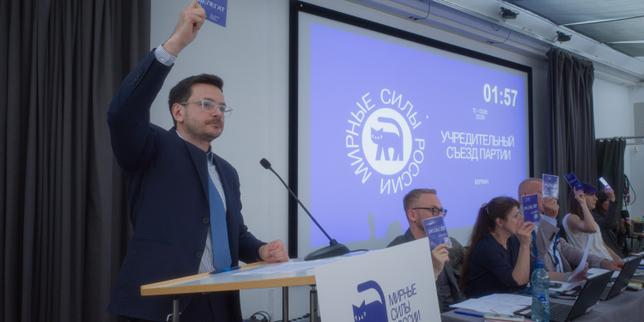
They meet in the starkly lit backrooms of Vilnius cafes, across encrypted Telegram channels rooted in Berlin, and within the drafty co-working spaces of Tbilisi. Thousands of exiled Russian activists, intellectuals, and former politicians share a singular, consuming obsession: the collapse of Vladimir Putin’s regime. Yet, more than four years into the intensified crackdowns that drove them abroad, this diaspora remains fundamentally broken. They cannot unite. The brutal truth is that Russia's exiled opposition is currently failing to build a viable alternative to the Kremlin because they are fighting each other with almost as much ferocity as they fight the autocratic state they left behind.
For decades, the standard narrative surrounding political exiles has been one of romantic resilience. We want to believe in the noble dissident gathering forces abroad to reclaim the homeland. Observable reality paints a much darker picture. Historically, fractured political exiles rarely topple entrenched home regimes without an overwhelming, external systemic shock or direct foreign military intervention. Right now, the Russian opposition in exile possesses neither. Instead, it is drowning in historical grievances, ideological purism, and a profound disconnect from the very population it claims to represent.
The Mirage of the United Front
To understand why a cohesive coalition remains elusive, one must look at the structural layout of the diaspora itself. It is not a monolithic entity. It is a scattered archipelago of competing fiefdoms, each built around charismatic personalities rather than shared institutional goals.
The most prominent faction remains the Anti-Corruption Foundation, originally established by the late Alexei Navalny. Operating largely from Lithuania and other European hubs, this group possesses the most formidable media apparatus and fundraising capability. Yet, their operational strategy has historically skewed toward isolationism. They frequently reject alliances with older guard figures or rival factions, demanding that any unified front form under their specific banner and ideological framework.
On the other side sits a loose coalition of liberals, constitutionalists, and former oligarchs like Mikhail Khodorkovsky. This camp favors broad-tent assemblies and transitional councils. They want to plan for a post-Putin institutional vacuum. Then there are the radical fringes, including groups that openly advocate for armed resistance inside Russian territory or the complete geopolitical dissolution of the Russian Federation.
When these factions attempt to sit at the same table, the conversations predictably disintegrate. They argue over who bears responsibility for the rise of Putinism in the 1990s. They litigate old betrayals. They weaponize allegations of secret Kremlin ties against one another. This infighting is not just petty; it is a structural barrier that paralyzes collective action. While the Kremlin operates with a highly centralized, ruthless command structure, the opposition counters with a discordant shouting match.
The Disconnect from the Russian Street
There is a deeper, more existential crisis whispering through the halls of exile forums. It is the widening chasm between those who left and those who stayed behind.
An activist living in Riga or Warsaw experiences a fundamentally different reality than a citizen navigating daily life in Novosibirsk or Nizhny Novgorod. In exile, the language shifts toward global human rights, international law, and systemic decoloniality. Inside Russia, the daily struggle revolves around managing inflation, navigating state bureaucracy, avoiding mobilization, and surviving under a blanket of pervasive wartime propaganda.
When exiled leaders call for mass civil disobedience or sweeping sabotage from the safety of European capitals, it often strikes those inside the country as profoundly out of touch. The risks are asymmetrical. A social media post that brings a shrug in Prague can net a seven-year prison sentence in St. Petersburg.
"It is very easy to preach martyrdom from a cafe in Berlin," notes one independent sociologist who recently managed to leave Moscow. "To the average Russian who is just trying to shield their family from the state, the exiled opposition looks less like a government-in-exile and more like a collection of foreign commentators."
This disconnect is actively exploited by state media inside Russia. The Kremlin’s propaganda machine successfully frames the exiled intelligentsia as pampered traitors living on Western grants. Because the opposition has failed to articulate a clear, grounded economic and social vision for the average Russian citizen—one that doesn't simply promise trials and lustration—they struggle to build any meaningful leverage over domestic public opinion.
The Financial Dependency Trap
Money changes everything in politics, and the economics of dissent abroad are treacherous. Stripped of domestic crowdfunding networks due to state sanctions and asset seizures, exiled organizations must rely heavily on Western philanthropic foundations, international awards, and foreign government grants.
This shifting financial reality alters the incentives for political behavior. Instead of designing campaigns that resonate with the industrial workers of the Urals, exiled groups find themselves inadvertently tailoring their messaging to satisfy the criteria of Western donors. Success begins to be measured in metrics that do not damage the Kremlin: the number of views on a YouTube broadcast, attendance at European policy conferences, or the publication of white papers that few policy makers actually read.
Furthermore, competition for these limited pools of international funding drives the factions further apart. To secure a grant or a high-profile meeting with European lawmakers, one faction must prove it is the only legitimate voice of the Russian resistance. This turns rival opposition groups into direct financial competitors. The resulting dynamic incentivizes public denunciation and institutional sabotage over coordination.
The Irony of Digital Isolation
Technology was supposed to bridge the geographical divide. Telegram, YouTube, and encrypted VPN networks allow exiled media outlets to reach millions of screens inside Russia every single day. The numbers are undeniably impressive. Millions of citizens still tune in to watch independent news broadcasts anchored from studios in Riga and Amsterdam.
Yet, information delivery does not automatically translate into political organization. High viewership figures create a false sense of security. It is entirely possible to consume anti-regime content as a form of passive, psychological catharsis without ever taking a physical or political risk. The digital space has become a substitute for real-world infrastructure rather than a tool to build it.
Worse, the digital sphere acts as an echo chamber. The algorithm rewards outrage and purity. When exiled figures attempt to propose pragmatic, compromised steps—such as engaging with low-level regional elections or exploiting internal rifts within the regional bureaucratic elite—they are frequently torn apart by their own digital followers for compromising with the enemy. The pressure to maintain radical ideological purity online prevents the development of flexible, realistic political strategies on the ground.
Navigating the Path to Real Leverage
If the current trajectory leads to irrelevance, how does an exiled opposition actually build power? History offers a few uncomfortable lessons. The forces that successfully pressured home regimes from abroad—such as the Chilean anti-Pinochet movement or the Polish solidarity network—did not rely solely on moral pronouncements or media broadcasting. They built deep, clandestine operational links with domestic labor unions, local governments, and underground civic groups.
The Russian opposition must stop viewing the domestic population as a passive audience to be educated. They must find ways to offer tangible support to the quiet networks of resistance already functioning inside the country. This means shifting focus away from mass street protests, which the police state can crush instantly, and toward supporting localized, decentralized actions: defense funds for political prisoners, underground mutual aid networks, and independent labor advocacy.
They must also learn the art of elite fracture. No authoritarian regime falls simply because the population is unhappy; it falls when the ruling elite splits. The opposition's current rhetoric treats every single individual within the Russian state apparatus as an irredeemable war criminal. While morally understandable, this strategy is politically counterproductive. It leaves mid-level bureaucrats, military officers, and technocrats with no exit strategy, forcing them to bind their personal survival directly to the preservation of the current regime.
A sophisticated political strategy requires offering a clear, credible path for defection. It requires mapping the quiet discontent within the regional administrations and providing a framework for how a post-authoritarian Russia would protect those who choose to stop cooperating with the center.
The Reality of the Long Game
The ultimate enemy of the exiled dissident is time. As years pass, the energy of the initial exodus inevitably wanes. Activists must find jobs, secure long-term visas, learn new languages, and integrate into their host societies. The burning desire to transform the homeland can easily mutate into the quiet nostalgia of a permanent diaspora.
The Kremlin understands this perfectly. Their strategy is to wait the opposition out, keeping the borders porous enough to let internal dissent drain away into exile, where it can safely rot in the vacuum of international conferences and internal social media bickering.
To break this cycle, the factions scattered across Europe must face a brutal truth: their current structures are obsolete. True unity does not mean signing a meaningless joint declaration at a summit in Brussels. It means creating a unified operational command that pools resources, shares intelligence, coordinates domestic underground networks, and speaks with a single, pragmatic voice to both the West and the Russian public. Until the opposition fears its own irrelevance more than it dislikes its rivals, the gates of the Kremlin will remain firmly shut against them. Turning the tide requires abandoning the comforting theater of exile politics and beginning the quiet, dangerous work of building real domestic leverage.