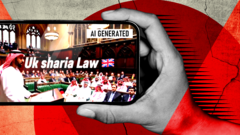
You see them every time you scroll through X or Facebook. Accounts with Union Jack avatars, handles like "ProudBrit1966," and a relentless stream of posts about "taking our country back" or "stopping the invaders." They look like your neighbor or that guy from the pub. They sound angry, patriotic, and authentically British. Except they aren't.
Investigations into the 2024 UK riots and the subsequent surge in anti-immigration vitriol have pulled back the curtain on a massive digital deception. Thousands of these "British" accounts are actually operated by click farms and marketing consultants in Sri Lanka and Vietnam. They don't care about British borders or social cohesion. They care about ad revenue.
The Business of Targeted Chaos
It's easy to assume that online hate is always driven by ideology. We want to believe there’s a shadowy political mastermind behind every bot network. The reality is much more mundane and, in some ways, more cynical. It’s a commercial operation.
The Institute for Strategic Dialogue (ISD) recently tracked a network of over 100 Facebook pages and groups run entirely out of Sri Lanka. These weren't just bot accounts; they were sophisticated "engagement hubs" with over 1.6 million followers. They used AI-generated images of "leering" men and fake "protest" crowds to trigger emotional responses in British users.
Why? Because outrage sells. Every share, every angry comment, and every click on a linked "news" site puts money into the pockets of creators thousands of miles away. These digital entrepreneurs have realized that the UK’s immigration debate is a goldmine for high-engagement "slop" content. They aren't trying to start a revolution; they're trying to hit their monthly traffic targets.
How a Marketing Consultant in Sri Lanka Built a Hate Empire
One of the most striking examples is Gith Soryapura, a marketing consultant in Sri Lanka. He didn't just stumble into this. He built a business out of it. Reports show he made hundreds of thousands of dollars by generating anti-migrant and anti-Muslim AI content.
His strategy is simple:
- Create dozens of dummy accounts with British-sounding names.
- Post AI-generated videos and images designed to provoke fear.
- Target older audiences who are statistically more likely to share content without verifying the source.
- Monetize the resulting traffic through ad networks.
When the 2024 summer riots broke out in the UK, these accounts didn't just report the news—they fueled it. They amplified rumors like the "Ali Al Shakati" hoax, a completely fabricated name for the Southport attacker that reached 27 million impressions in hours. By the time the truth came out, mosques were already being attacked. The creators in Sri Lanka and Vietnam were just watching the numbers go up.
The Vietnamese Connection and Professional Disinformation
While the Sri Lankan networks often focus on high-volume Facebook "slop," operations in Vietnam have shown a different level of technical polish. There’s a distinct trend of "news" operations that look like professional media outlets but are actually shell companies for disinformation.
Take the case of Channel3Now. It looked like a legitimate American or British news site. It had professional branding, a YouTube channel, and multiple social feeds. Yet, it was one of the primary drivers of the false information that sparked the UK riots. While part of that specific operation was linked to Pakistan, similar setups in Vietnam have been documented using "patriotic" branding to funnel UK users toward shady investment schemes or ad-heavy clickbait sites.
Why Your Fact-Checking Isn't Working
The problem isn't just that these accounts exist. It's that they're getting better at mimicking us. They don't just post "I hate migrants." They use specific cultural triggers. They talk about the "Great Replacement." They use "Raise the Colours" campaigns to encourage people to post flags.
They use your own patriotism as a weapon against you.
If you see a post that makes your blood boil, pause. Look at the page transparency tools on Facebook. Check the "About" section on X. You’ll often find that the "British Patriot" you're arguing with was created three months ago and is managed by three people in Colombo.
Spotting the Digital Grifters
You don't need to be a tech expert to see through the facade. Most of these accounts leave a trail of digital breadcrumbs.
- The AI "Slop" Aesthetic: Look closely at the images. Do the people have six fingers? Are the banners in the background filled with gibberish text? AI is great at "vibes" but terrible at details.
- Engagement Bait: If an account only posts hyper-partisan content and constantly asks you to "Share if you agree," it’s a red flag.
- The History Shuffle: Many of these pages were originally fan pages for cricketers or Bollywood stars. Check the page history; a sudden pivot from "I Love Virat Kohli" to "Stop the Boats" is a dead giveaway.
The next time you see a viral post about a UK protest, don't just react. Realize that someone in a tropical office might be counting the pennies every time you hit "share." They don't live in your town. They won't have to deal with the social fallout of the hate they're spreading. They're just in it for the clicks.
Stop giving them what they want. Before you engage with an inflammatory post, check the source. If it looks like a "patriot" but smells like a click farm, block it. The most effective way to kill these networks is to make them unprofitable. If you stop clicking, they stop earning. It’s that simple.
Don't let a marketing firm in Vietnam dictate how you feel about your own neighbors.