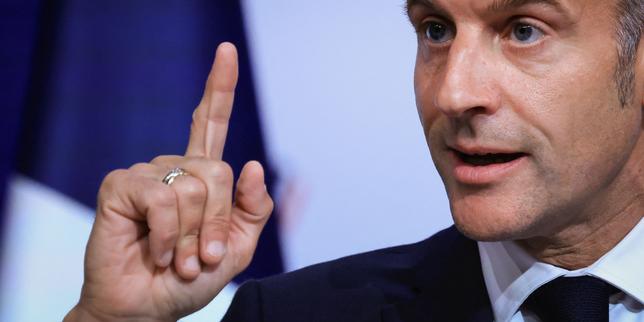
Emmanuel Macron wants you to believe that a handshake in Evian cures months of structural paralysis.
When the French President stood before the cameras to salute a "moment of unity" following a bitter stretch of international friction, the mainstream press dutifully took the bait. They spun a narrative of redemption. They painted a picture of Western leaders putting aside their differences to forge a grand, collective path forward.
It is a comforting bedtime story. It is also entirely wrong.
In global politics, "unity" is not a sign of success. It is a lagging indicator of compromise, watered-down policies, and a collective refusal to tackle structural crises. When world leaders emerge from a closed-door summit smiling and holding a joint communiqué, it means they have successfully scrubbed every ounce of meaningful substance from the agenda. They did not resolve their disagreements; they merely agreed to stop talking about them in public so the markets wouldn't crash before Monday morning.
I have spent two decades analyzing sovereign risk and watching how these international summits operate from the inside. I have seen G7 delegations spend fourteen consecutive hours arguing over the placement of a single comma in a draft agreement, completely ignoring the fact that the underlying economic treaty was already obsolete. The Evian summit was no different. The celebrated "unity" is a marketing campaign designed to project stability where none exists.
The Fatal Flaw of the Consensus Economy
The core premise of the modern G7 is built on a lie: the idea that the world’s largest advanced economies can move forward by finding the lowest common denominator.
Consider what happens when you force countries with completely divergent domestic pressures into a single room and demand a unified front. France is grappling with massive public debt and a restless electorate demanding protectionism. Germany is watching its industrial engine sputter under the weight of high energy costs and rigid fiscal rules. The United States is aggressively pursuing an industrial policy that actively drains capital away from its European allies through massive domestic subsidies.
To suggest that a weekend in a luxury resort on the shores of Lake Geneva aligns these competing national interests is absurd.
When leaders agree on everything, they achieve nothing. Genuine economic progress requires friction. It requires one nation to take a hard, unyielding stance that forces its partners to adapt or suffer the consequences. Instead, summits like Evian produce what economists call a "pooling equilibrium"—a state where every participant acts the same way to signal competence, even if that action is entirely detached from economic reality.
The Math Behind the Posturing
Let us look at the structural reality that the Evian communiqué conveniently brushed under the rug.
Take a look at the divergence in manufacturing output and capital expenditure between the US and the Eurozone over the last decade. While the US has used aggressive unilateral measures to secure supply chains, Europe has relied on multilateral consensus. The results are stark.
| Metric | United States (Unilateral Focus) | Eurozone (Consensus Focus) |
|---|---|---|
| Avg. Annual GDP Growth (Post-2010) | ~2.3% | ~1.2% |
| Share of Global Venture Capital | ~50% | ~14% |
| Energy Costs for Heavy Industry | Baseline | 2x - 3x US Baseline |
This table does not reflect an alliance of equals finding common ground. It reflects a structural imbalance that no amount of diplomatic rhetoric can fix. Macron’s celebrated unity is a band-aid on a compound fracture.
Dismantling the Myths of Transatlantic Harmony
The mainstream narrative surrounding Evian centers on three specific questions that analysts love to ask. Let us break down exactly why the premises of these questions are completely broken.
Question 1: How can the G7 enforce global trade stability?
The Brutal Truth: It cannot. The G7 is an informal club, not a governing body. It has zero enforcement mechanisms. When a summit concludes with a promise to "coordinate on supply chain resilience," it is an admission that no country is willing to bind itself to a concrete, enforceable treaty.
True trade stability does not come from high-level summits; it comes from bilateral leverage. The US enforces its will through tariff threats and access to the dollar clearing system. The European Union enforces its will through regulatory barriers like the Carbon Border Adjustment Mechanism. The idea that these two distinct blocks are working in harmony ignores the aggressive regulatory warfare happening beneath the surface.
Question 2: Did the Evian summit successfully counter foreign economic coercion?
The Brutal Truth: No. It merely shifted the target. Every time the G7 issues a joint statement warning against "economic dependencies," they are not solving the problem; they are telling domestic corporations to find new supply chains without providing the capital to build them.
I have watched multinational firms attempt to implement these summit directives. They spend millions of dollars trying to pivot away from restricted markets, only to realize that the alternative infrastructure does not exist. The corporate executive who relies on G7 proclamations to map out a five-year supply chain strategy will find their company bankrupt long before the next summit convenes.
Question 3: Can international unity lower sovereign bond volatility?
The Brutal Truth: The bond market does not care about photo opportunities. Traders do not look at a picture of Emmanuel Macron and other world leaders smiling in Evian and decide to buy French OATs or German Bunds.
The bond market cares about fiscal math. It cares about debt-to-GDP ratios, central bank balance sheets, and structural inflation. When a summit focuses entirely on geopolitical unity while ignoring the massive fiscal deficits of its member states, it tells the market that political survival has been prioritized over fiscal sanity. The immediate aftermath of these show-piece summits is almost always met with a quiet, steady sell-off in sovereign debt because the underlying structural issues remain unaddressed.
The High Cost of Politeness
There is a distinct downside to taking a contrarian stance against diplomatic unity. If a nation breaks ranks and refuses to sign a toothless joint communiqué, it faces immediate blowback. The financial press will scream about a "diplomatic crisis." Currency markets might experience short-term volatility as algorithms react to the word "disagreement."
But that short-term pain is the cost of entry for long-term structural health.
When a state refuses to participate in the theater of international consensus, it regains its regulatory autonomy. It allows a government to protect its domestic industries, negotiate targeted bilateral deals that actually serve its citizens, and deploy capital where it matters—rather than where an international committee deems it politically correct.
Consider the alternative. By chasing the illusion of unity, France and its European partners tie themselves to a slow-moving, bureaucratic apparatus that cannot react to rapid economic shifts. While the G7 debates the wording of a climate pledge, nimbler economies outside the group are locking up long-term contracts for raw materials, building infrastructure, and undercutting Western industrial capacity.
Stop Looking for Consensus, Start Building Leverage
If you are an investor, a corporate strategist, or a policymaker, you must change how you read the news coming out of these international summits.
Stop reading the communiqués. Ignore the press conferences. Turn off the television when the leaders gather for the family photo.
Instead, look at the bilateral actions taken the week before the summit. Look at the export controls issued unilaterally by individual commerce departments. Look at where sovereign wealth funds are quietly deploying capital. That is where the real policy is being made.
The next time a politician stands at a podium and praises a "moment of unity" after months of disagreement, do not applaud. Recognize it for what it truly is: an admission of gridlock.
True economic power is not negotiated over mineral water in Evian. It is seized through unilateral economic policy, industrial dominance, and a ruthless commitment to national self-interest. The leaders who understand this will dominate the next decade. The leaders who prefer the warm embrace of international consensus will continue to watch their economies slide into irrelevance, one unified summit at a time.