You have probably heard the fairy tale about Iceland's energy. It is a story of a pristine island heating every single home with volcanoes and running an entire society purely on steam and rushing water.
It sounds magical. It also happens to be a massive exaggeration. If you enjoyed this piece, you should look at: this related article.
Let's clear up the math immediately. Iceland does not heat 100% of its homes with volcanic heat. The actual number is about 90%. The other 10% relies on electricity, though that power is indeed green.
And while its electricity grid is virtually carbon-free, fossil fuels are still very much alive in Iceland. Step outside of Reykjavik, and you will see heavy trawlers burning marine diesel and massive SUVs guzzling petrol to traverse rough gravel roads. For another angle on this story, refer to the recent coverage from AFAR.
Yet, even without the fairy tale, what Iceland has built is staggering. It is not just about having volcanoes; it is about how they turned a geologic hazard into an economic engine.
The Island Built on Fire and Ice
To understand how this works, you have to look down. Iceland sits directly on top of the Mid-Atlantic Ridge. This is where the Eurasian and North American tectonic plates are actively ripping apart.
Because the crust is thin, magma sits incredibly close to the surface. Rainwater and melting glacier runoff seep deep into the earth, hit this scorching rock, and boil.
The result? High-pressure steam and scalding water trapped in underground reservoirs.
Icelanders don't just use this resource for electricity. They use it directly.
In low-temperature areas, engineers tap into water reservoirs that are under 150°C. This water is pumped directly into massive, heavily insulated pipelines and sent straight to municipal district heating systems.
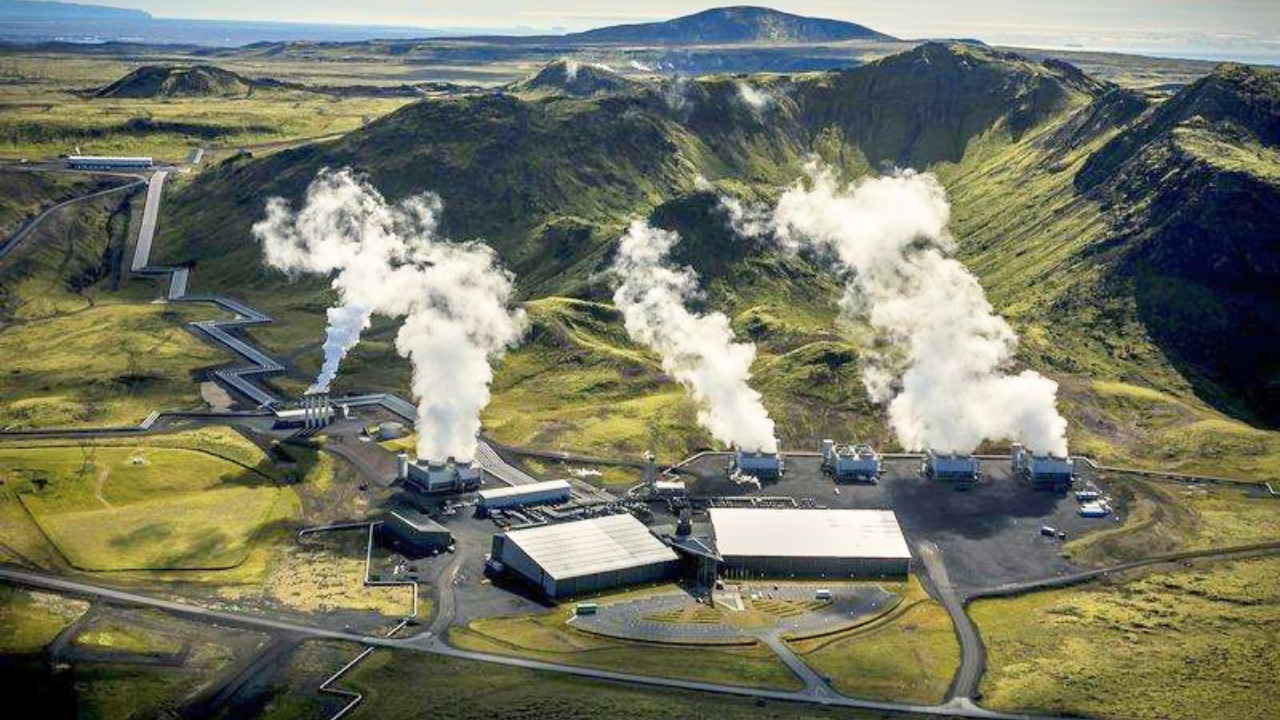
In high-temperature zones where temperatures exceed 200°C, the pressure is so intense that the water flashes into steam. That steam spins turbines to generate electricity.
Once the steam is used, the residual hot water isn't thrown away. It warms up fresh water via heat exchangers, which is then sent to heat the radiators of Reykjavik.
Why Cheap Heat Changes Everything
The economic impact of this system is hard to overstate. It is not just about saving the planet; it is about saving cash.
A century ago, Iceland was one of the poorest nations in Europe, choking on coal smoke and relying on imported oil just to stay warm. Today, it is an economic powerhouse.
Geothermal district heating saves the country an estimated 7% of its annual GDP. That is roughly $3,000 per citizen every single year.
This cheap, abundant heat has sparked some highly unusual industries:
- Year-round agriculture: Farmers use geothermal greenhouses to grow tomatoes, cucumbers, and even bananas just south of the Arctic Circle.
- Heated pavements: Snow shovels are largely obsolete in downtown Reykjavik. The runoff water from the district heating system is piped under sidewalks and streets to melt ice automatically.
- Industrial cooling: Global tech giants build massive data centers here because the climate provides free cooling, and the grid offers cheap, uninterrupted power.
The Dark Side of Volcanic Power
No energy source is perfect, and geothermal energy is no exception. It is clean, but it is definitely not impact-free.
First, there is the smell. Geothermal plants release hydrogen sulfide gas. It smells like rotten eggs. While residents get used to it, visitors are often shocked when they turn on the hot tap in a Reykjavik hotel and get a whiff of sulfur.
Second, geothermal power is not entirely carbon-free. Deep underground reservoirs contain trapped carbon dioxide and other gases. When wells are drilled, these gases are released into the atmosphere.
To solve this, Icelandic scientists developed a process called Carbfix. They capture the CO2 from the power plant emissions, dissolve it in water (essentially making sparkling water), and inject it deep back into the basaltic rock. Within two years, the carbon reacts with the rock and turns into solid stone, locking it away forever.
Can the Rest of the World Copy This?
Many politicians look at Iceland and ask why their own countries cannot do the same.
The honest answer is that most places lack the geology. You cannot build a massive geothermal grid if you do not have hot rocks close to the surface.
But you do not need volcanic activity to use geothermal energy.
Almost any backyard can support a ground-source heat pump. These systems do not rely on volcanic steam. Instead, they tap into the constant, mild temperature of the earth just a few meters down. It is highly efficient, incredibly reliable, and works anywhere from Ohio to Munich.
Iceland's real lesson isn't about volcanoes. It is about long-term planning and committing to a local resource when fossil fuels seem like the easier, cheaper option.
If you want to experience this volcanic system firsthand, skip the crowded tourist spots. Head to a local neighborhood pool like Laugardalslaug in Reykjavik. It is heated entirely by geothermal runoff, and it is where locals actually go to debate politics, relax, and enjoy the heat of the earth.