The Lebanese health ministry confirmed that seven people were killed in a recent Israeli strike on south Lebanon, a figure that adds to a rapidly mounting death toll in a region that has become a permanent theater of high-intensity conflict. This is no longer a series of isolated skirmishes or "tit-for-tat" exchanges. What we are witnessing is the systematic dismantling of the informal rules of engagement that have governed the border for nearly two decades. While official reports focus on the immediate casualty counts, the broader strategic reality is that the threshold for lethal force has dropped significantly, pulling both Hezbollah and the Israeli Defense Forces (IDF) into a cycle where every strike necessitates a more destructive response to maintain a semblance of deterrence.
The strike targeted a residential building in an area that had previously seen less frequent kinetic activity, suggesting an expansion of the target bank. Local sources indicate the victims included emergency responders and civilians, though the IDF consistently maintains that its operations are precision-targeted at military infrastructure or operational commanders. This discrepancy is the hallmark of the current conflict. In the chaos of the borderlands, the line between a civilian dwelling and a logistical hub for armed groups has blurred to the point of invisibility.
The Architecture of a Border War
To understand why seven deaths in a single strike matter beyond the immediate tragedy, one must look at the geography of the southern front. The Litani River, situated roughly 30 kilometers north of the border, serves as the theoretical boundary for a demilitarized zone under UN Resolution 1701. In practice, that resolution is a ghost. Hezbollah has integrated its presence into the very fabric of southern Lebanese villages, utilizing a network of tunnels, hidden launch sites, and observation posts that make any kinetic strike against them high-risk for collateral damage.
Israel’s tactical shift involves using intelligence-driven strikes to decapitate local leadership and destroy specific hardware, such as anti-tank guided missile (ATGM) cells. However, these strikes often occur in densely populated areas. When a building collapses in a village like Bint Jbeil or Khiam, the impact ripples far beyond the physical debris. It hardens the resolve of the local population and forces Hezbollah’s hand. They cannot afford to look weak in front of their primary constituency, nor can they allow Israel to establish a new "normal" where such strikes go unanswered.
The Intelligence Failure of Deterrence
For years, the prevailing wisdom among military analysts was that neither side wanted a full-scale war. The logic was simple. Israel did not want the economic and human cost of 150,000 rockets raining down on Tel Aviv, and Hezbollah did not want to see Beirut suffer the same fate as Gaza. This "balance of terror" held firm from 2006 until October 2023.
That logic has now soured. Israel is under immense domestic pressure to return 60,000 displaced citizens to their homes in the north. These citizens refuse to go back as long as Hezbollah’s Radwan forces are perched on the fence. Consequently, the Israeli government has shifted its objective from "managing" the threat to "removing" it. This is a fundamental change in mission profile. You do not remove a deeply embedded guerrilla force with occasional airstrikes; you do it with a scorched-earth policy or a ground invasion. We are currently in the preparatory phase of one of those two options.
The Human Cost of Strategic Ambiguity
Behind the casualty figures released by the Lebanese health ministry lies a collapsed economy. South Lebanon is an agrarian society. Tobacco, olives, and citrus are the lifeblood of these hills. Today, the fields are contaminated with white phosphorus and unexploded ordnance. Farmers cannot harvest. Businesses are shuttered. The seven individuals killed in this latest strike are symbols of a dying way of life.
The Lebanese state, meanwhile, is a bystander in its own territory. The Lebanese Armed Forces (LAF) lack the air defense capabilities to challenge Israeli jets and the political mandate to disarm Hezbollah. This power vacuum is filled by non-state actors and foreign interests. When the health ministry issues a statement, it is an act of record-keeping in a country that has lost control over its own borders and its own fate.
Weapons Systems and the New Tech Front
The technical nature of the strikes has evolved. We are seeing the heavy use of loitering munitions and AI-assisted targeting. These systems are designed to minimize the time between "sensor and shooter"—the moment a target is identified and the moment it is destroyed. This speed is lethal. It leaves no room for warnings or the "roof-knocking" tactics seen in other theaters.
Hezbollah has responded by deploying more sophisticated drones of its own, attempting to bypass the Iron Dome and David’s Sling. This technological arms race means that even a "minor" exchange can result in high casualties if a single drone hits a sensitive target. The strike that killed seven people was likely a high-yield munition designed to ensure the total destruction of a reinforced structure, a choice that inherently increases the risk to anyone in the immediate vicinity.
The Displacement Crisis
On the Israeli side, the Galilee is a collection of ghost towns. On the Lebanese side, schools in Tyre and Sidon are overflowing with displaced families. This mass movement of people is a weapon of war in itself. By depopulating the border zones, both sides are creating a "gray zone" where anything that moves is considered a legitimate target.
The political pressure on the Lebanese government to provide for these refugees is immense, yet the treasury is empty. This creates a fertile breeding ground for further radicalization. Every funeral held for those killed in these strikes becomes a recruitment event. The cycle is self-sustaining and remarkably efficient at producing more violence.
Diplomacy at a Dead End
International mediators, primarily from the United States and France, have been shuttling between Beirut, Tel Aviv, and Paris for months. Their proposals usually involve a phased withdrawal of Hezbollah fighters to the north of the Litani River and an increase in the presence of the Lebanese Army and UNIFIL (United Nations Interim Force in Lebanon).
The problem is enforcement. Hezbollah views its presence in the south as a matter of existential survival and religious duty. Israel views Hezbollah’s presence as an unacceptable threat to its sovereignty. There is no middle ground when both sides define their security by the total absence or total submission of the other. The diplomatic efforts are not failing because of a lack of will; they are failing because the underlying assumptions of Resolution 1701 are no longer compatible with the reality on the ground.
The Role of Regional Actors
One cannot discuss south Lebanon without discussing Tehran. Hezbollah is the crown jewel of Iran’s "Axis of Resistance." It provides Iran with a forward operating base on the Mediterranean and a direct lever against Israel. Any decision regarding a full-scale war will not be made solely in the southern suburbs of Beirut; it will be vetted in Tehran.
Conversely, Israel’s actions are closely monitored by Washington. While the U.S. provides the munitions and diplomatic cover, there is a clear desire in the White House to avoid a regional conflagration that could drag American forces into another Middle Eastern quagmire. This creates a strange friction where Israel is pushing for more aggressive action while its primary benefactor is pulling on the reins. The result is the current state of "controlled escalation," a dangerous game where one miscalculation—like a strike that kills too many civilians or a rocket that hits a hospital—could trigger the very war everyone claims to want to avoid.
The Calculus of the Next Strike
Military commanders are currently looking at the data from the strike that killed seven. They are assessing the reaction. Did Hezbollah retaliate with a deeper strike into Israel? Did they use a new type of missile? If the reaction is deemed "proportional," the IDF may feel emboldened to strike similar targets tomorrow.
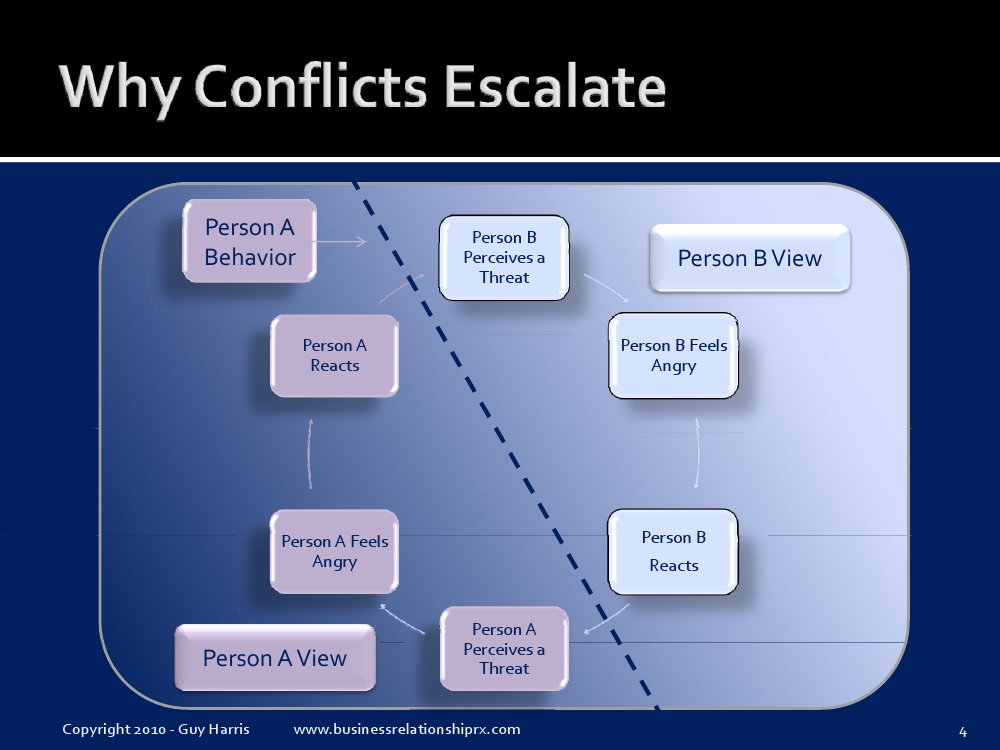
This is the grim arithmetic of the border. Success is measured not by peace, but by the ability to inflict pain without crossing the invisible line that leads to total war. But that line is moving. It moves every time a residential block is leveled. It moves every time a family is buried. We are reaching a point where the line will have moved so far that it ceases to exist.
The international community often speaks of "preventing a second front." The reality is that the second front has been open for months. It is active, it is bloody, and it is expanding. The seven deaths reported by the Lebanese health ministry are not a footnote; they are a pulse check on a conflict that is rapidly outgrowing its cage. When the "balance of terror" finally breaks, it won't be because of a single grand plan, but because the cumulative weight of these daily tragedies became too heavy for the floor to hold.
The strategic patience of all parties is wearing thin. Israel cannot leave its northern panhandle empty forever, and Hezbollah cannot allow its infrastructure to be picked apart piece by piece. The friction at the border is generating a heat that diplomacy cannot cool. We are watching the slow-motion start of a much larger disaster, hidden behind the clinical language of daily military briefings and casualty counts.
Expect the frequency of these high-casualty strikes to increase as the "target bank" moves from purely military assets to dual-use infrastructure. The distinction between a combatant and a non-combatant in south Lebanon has become a luxury that neither side seems willing to afford anymore.
Stop looking for a peace deal that isn't coming and start looking at the logistics of the escalation. The movement of heavy artillery, the calling up of reserves, and the rhetoric of "unavoidable conflict" all point in one direction. The seven dead in south Lebanon are a warning of the thousands that will follow if the current trajectory remains unchallenged. There are no more red lines, only different shades of blood in the dust.