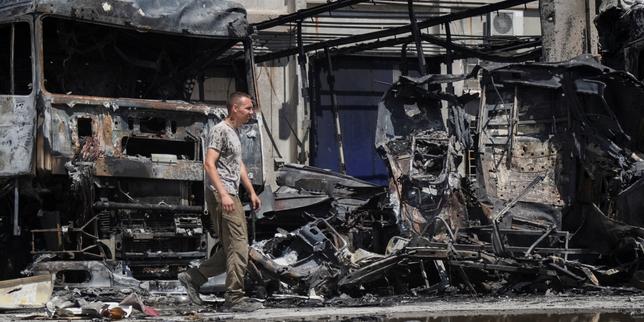
We are becoming numb to the numbers. Every week, a fresh headline arrives detailing yet another wave of drone and missile attacks slicing through Ukrainian cities. The latest reports confirm that a single day of intense Russian bombardment on Tuesday left fourteen people dead across multiple regions. It's a grim tally that should spark international outrage. Instead, it often gets buried underneath a mountain of rapid-fire news updates.
Civilians are bearing the brunt of a war that shows no signs of slowing down. The UN Human Rights Monitoring Mission in Ukraine recently flagged a terrifying spike in casualities, noting that monthly civilian losses reached their highest level in years. Moscow's forces are raining down explosives far behind the front lines, targeting neighborhoods, apartment complexes, and basic civilian infrastructure. If you think this conflict is confined to trenches in the east, you're looking at a completely wrong picture.
The Human Cost of Tuesday Strikes
Air raid sirens aren't just background noise. For millions of Ukrainians, they mean a chaotic scramble for survival. The recent Tuesday strikes hit multiple residential and industrial districts, leaving behind charred rubble and shattered lives. Emergency crews pulled bodies from collapsed structures all morning. Fourteen individuals woke up, went about their daily routines, and never made it home.
Among the hardest-hit areas were regional hubs and civilian sectors that have repeatedly faced the blunt force of long-range weapons. It's not an accident. The choice of targets reveals a clear pattern of psychological terror aimed at wearing down domestic resolve. When a missile drops on an apartment block or a local industrial yard, the message is clear. No one is safe anywhere.
Local officials have been forced into a tragic routine. First comes the explosion, then the smoke, then the agonizing wait as search dogs look for signs of life. The numbers are fluid at first. A few wounded, a couple missing. Then the finality sets in. Fourteen dead. Dozens more are currently sitting in hospital beds with life-altering injuries, wondering how they survived while their neighbors didn't.
The Strategy Behind Long Range Bombardment
Why does this keep happening? Look at the battlefield dynamics. Russia's ground forces have struggled to secure massive, lightning-fast breakthroughs on the actual front lines. To compensate for slow territorial gains, Moscow relies on its massive stockpile of ballistic missiles and cheap, Iranian-designed attack drones. It's an strategy of attrition designed to bleed Ukraine dry from a distance.
By forcing Ukraine to constantly expend its limited air defense ammunition on protecting cities, Russia creates vulnerabilities elsewhere. Kyiv's air defense teams do an incredible job. They regularly intercept a huge percentage of incoming threats. But no defense system is perfect. A single missile slipping through can level a block.
- Drones as Decoys: Low-cost drones fly in swarms to overwhelm and map out defense radars.
- Ballistic Missiles: Heavy weapons like Iskander missiles strike with minimal warning times.
- Glide Bombs: Modified conventional bombs hit areas near the border with devastating explosive power.
This multi-layered approach keeps civilian populations in a perpetual state of hyper-vigilance. You can't run an economy or live a normal life when your power grid or home could vaporize at three in the morning.
The Toll Beyond The Headlines
Focusing only on the death toll misses the broader destruction of Ukrainian society. The United Nations tracks these casualties meticulously, but numbers on a spreadsheet don't capture the systemic ruin. Entire generations are growing up inside bomb shelters.
Schools operate underground. Hospitals run on diesel generators because the local power plant was turned to ash weeks ago. The cultural fabric is getting torn apart too. Recent strikes have severely damaged historic religious landmarks, museums, and film studios. This isn't collateral damage. It's a systematic effort to erase Ukrainian identity and historical memory.
International bodies have repeatedly declared that targeting cultural heritage sites violates the 1954 Hague Convention. Does it stop the missiles? Not at all. Moscow continues to deny targeting civilians or cultural assets, claiming they only strike military objectives. The burning hulls of residential apartments tell a completely different story.
What Normalization Does to Global Politics
The biggest danger right now isn't just the missiles. It's global fatigue. When the full-scale invasion began, every strike dominated global news cycles. Western nations responded with swift packages of military and economic aid. Now, a strike that kills fourteen people barely registers as a breaking news notification on your phone.
This normalization plays directly into the Kremlin's hands. They are betting they can outlast Western attention spans and political will. As political debates heat up in Washington and European capitals, aid packages get delayed. Those delays have immediate, lethal consequences on the ground. Fewer air defense interceptors mean more missiles hit their targets.
It's easy to look at this as a distant geopolitical chess match. For the families in Sumy, Kharkiv, and Dnipro, it's a daily lottery of life and death. The international community needs to wake up to the reality that defensive aid can't be treated as an optional charity. It's a shield holding back absolute catastrophe.
Steps to Take Right Now
You don't have to sit back and watch this happen without doing anything. Staying informed through verified, independent journalism is the first step to fighting off news fatigue. Don't let these tragedies turn into background noise.
Support organizations that provide immediate humanitarian relief on the ground. Groups like the Ukrainian Red Cross and local volunteer networks are the ones providing food, medical aid, and shelter minutes after a strike occurs.
Press your elected officials to maintain and accelerate shipments of air defense systems. These weapons don't prolong the war. They save innocent civilian lives from being snuffed out in their sleep. Talk about what's happening. Keep the conversation alive, because silence is exactly what the aggressors are counting on.