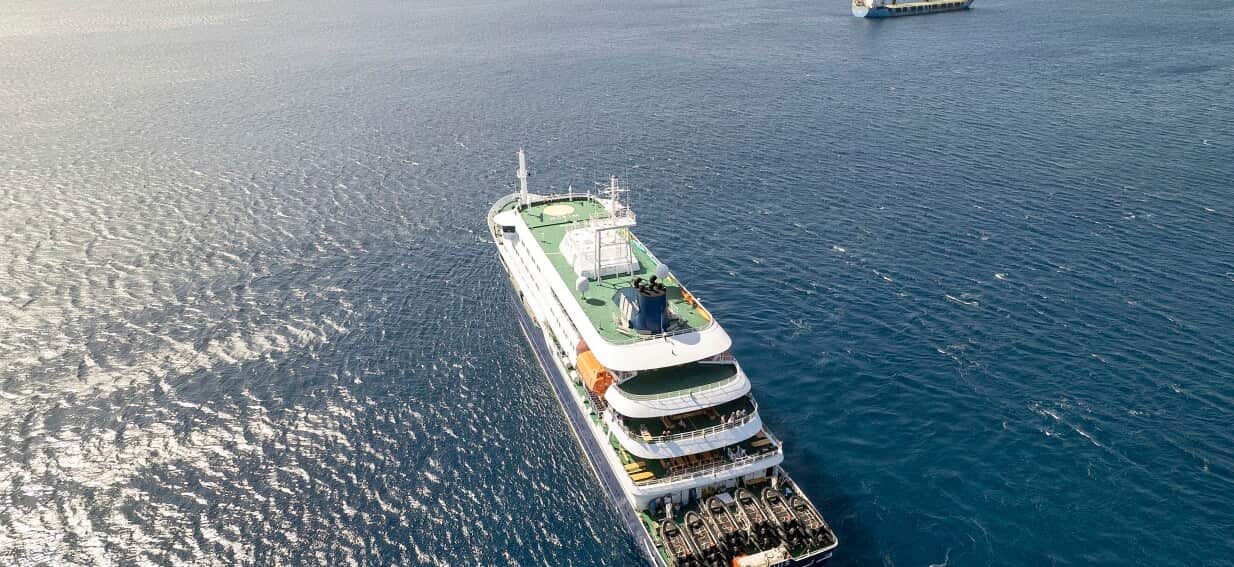
The confirmed deaths of three passengers on an Atlantic cruise ship, attributed by the World Health Organization (WHO) to a suspected Hantavirus outbreak, represents a significant breach in maritime biosafety protocols. Standard epidemiological modeling suggests that Hantavirus—traditionally a rodent-borne pathogen with localized transmission—should not manifest in a high-density, controlled environment like a modern cruise vessel. The occurrence indicates a failure in the structural integrity of the ship’s pest management systems or a shift in the viral vector’s behavioral patterns. Analyzing this event requires deconstructing the transmission mechanism, the logistical failures of the vessel, and the resulting public health trajectory.
The Viral Vector and Maritime Vulnerability
Hantaviruses are primarily transmitted to humans through the aerosolization of excreta from infected rodents. While the maritime industry has historically focused on Rattus norvegicus (Brown rat) and Rattus rattus (Black rat) as primary vectors for plague or leptospirosis, Hantavirus is typically associated with specific New World rodents such as the deer mouse (Peromyscus maniculatus) or the cotton rat (Sigmodon hispidus).
The presence of this virus on an Atlantic crossing implies one of three logistical breaches:
- Supply Chain Infiltration: Infected rodents entered the vessel during the loading of provisions at a port of call where the virus is endemic.
- Construction/Maintenance Dormancy: Rodents established a colony within the ship’s internal voids (plenum spaces, cable runs, or HVAC insulation) during a recent dry-docking or layup period.
- Cargo Contamination: The virus was introduced via contaminated dry goods or equipment rather than a live vector, though Hantavirus viability outside a host is typically measured in hours or days, not weeks.
The primary mechanism of infection in this outbreak is likely the ship’s HVAC (Heating, Ventilation, and Air Conditioning) system. If a rodent colony exists within the ventilation ducting, the forced air effectively acts as a distribution network for aerosolized viral particles. This bypasses the need for direct contact between passengers and rodents, creating a high-velocity infection radius that can affect multiple decks simultaneously.
Quantifying the Pathogenic Impact
Hantavirus Pulmonary Syndrome (HPS) presents a clinical challenge due to its high case-fatality rate, which often exceeds 35%. The progression is defined by a distinct two-stage physiological collapse.
Stage I: The Febrile Prodrome
During the initial 3 to 5 days, patients experience non-specific symptoms: myalgia, fever, and fatigue. In a cruise ship environment, these symptoms are frequently misidentified as influenza, norovirus, or general sea-sickness. This diagnostic ambiguity creates a critical window of transmission where the infected individual remains in public spaces, though Hantavirus is not known for person-to-person transmission (with the rare exception of the Andes virus strain).
Stage II: Cardiopulmonary Failure
The transition to the second stage is abrupt. Capillary leak syndrome leads to rapid pulmonary edema. The lungs fill with fluid, and the patient experiences severe hypotension and shock. The three fatalities reported on the Atlantic vessel likely reached this stage before adequate intensive care could be administered. Maritime medical facilities are equipped for stabilization but lack the Extracorporeal Membrane Oxygenation (ECMO) units required to manage advanced HPS.
Structural Failures in Containment
The failure to prevent three deaths suggests a breakdown in the Integrated Pest Management (IPM) framework. A rigorous IPM for a vessel of this scale relies on three pillars of defense:
- Exclusion: Sealing entry points and maintaining physical barriers between the exterior environment and the ship’s interior.
- Sanitation: Eliminating food sources and nesting materials within the ship's infrastructure.
- Surveillance: Utilizing sensors and physical inspections to detect rodent activity before a colony can establish.
In this instance, the "Pillar of Exclusion" was compromised. If the vessel was at sea for several days before the deaths occurred, the incubation period (typically 1 to 8 weeks) suggests the infection likely happened shortly before or during the initial embarkation. The ship's density—thousands of passengers in a confined volume—creates an "amplification effect." While the virus doesn't spread between people, the shared air supply and high-touch surfaces ensure that any localized viral shedding from a rodent reaches a maximum number of potential hosts.
The Economic and Operational Cost Function
The impact of a Hantavirus outbreak extends beyond immediate mortality. The operational cost function for the cruise line involves:
- Vessel Devaluation: The "stigma" of a lethal outbreak can lead to a sustained 20-40% drop in booking rates for the specific ship and the broader fleet.
- Litigation Liability: Failure to maintain a "seaworthy" and safe environment for passengers leads to massive class-action settlements.
- Regulatory Sanctions: The WHO and the CDC’s Vessel Sanitation Program (VSP) can issue "No Sail" orders, resulting in daily revenue losses of $500,000 to $2,000,000 depending on the ship's capacity.
- Decontamination Overhaul: Eradicating Hantavirus requires professional biohazard remediation, involving the stripping of HVAC systems and the deep-cleaning of every cabin and galley with high-grade disinfectants (e.g., 10% bleach solutions or specialized virucides).
Strategic Intervention Requirements
To prevent the escalation of this outbreak into a systemic crisis for the maritime industry, immediate tactical shifts are required in how shipboard environments are managed.
Epidemiological Trace-Back
Authorities must identify the specific port of origin for the rodent vector. This involves DNA sequencing of viral samples from the deceased to match them with known regional Hantavirus strains. If the strain is identified as Andes virus, the ship must be placed under total quarantine, as this specific strain carries the risk of person-to-person transmission, fundamentally changing the risk profile.
HVAC System Re-Engineering
Modern ships must transition from simple filtration to high-efficiency particulate air (HEPA) systems and Ultraviolet Germicidal Irradiation (UVGI) within the ductwork. These technologies neutralize aerosolized pathogens before they reach passenger cabins.
Enhanced Port-to-Ship Protocols
The interface between land-based supply chains and the ship’s stores is the weakest link. Current protocols often rely on visual inspections. A move toward "Smarter Containers" equipped with infrared rodent sensors or carbon dioxide monitors would provide a data-driven barrier against vector infiltration.
The deaths on the Atlantic cruise ship are not merely a tragic accident; they are a signal of a systemic vulnerability in global maritime logistics. The industry must move beyond reactive cleaning and toward a model of "Biological Structural Integrity." This involves treating the ship’s interior as a closed, sterile ecosystem that must be defended with the same rigor as the hull's watertight integrity. The immediate priority for cruise operators is the implementation of real-time bio-surveillance to detect pathogens in the air and waste streams before they manifest as clinical cases. Failing to adapt to these zoonotic threats will lead to increasingly frequent and lethal disruptions in transoceanic travel.


00128-7/asset/c466084c-91d2-4e7e-b9c9-54c0be1ccc1c/main.assets/gr1_lrg.jpg)