The ink on the parchment was meant to dry, but instead, it bled across sixteen centuries of battlefields.
In the year 418, Aurelius Augustinus—the man history remembers as Saint Augustine—sat in the coastal city of Hippo, watching the Roman Empire crumble under the weight of barbarian invasions. He was terrified. To save his flock from annihilation, he formulated a theological loophole. He argued that violence, when authorized by a legitimate ruler to avenge injuries or restore peace, could be a moral necessity.
He called it jus ad bellum. Just war.
For 1,600 years, that concept served as the ultimate moral armor. It was the intellectual shield tucked into the breastplates of crusaders, the legal framework cited by kings, and the quiet comfort whispered by military chaplains to young men about to charge into the mud. It told humanity that God could look upon a slaughterhouse and see righteousness.
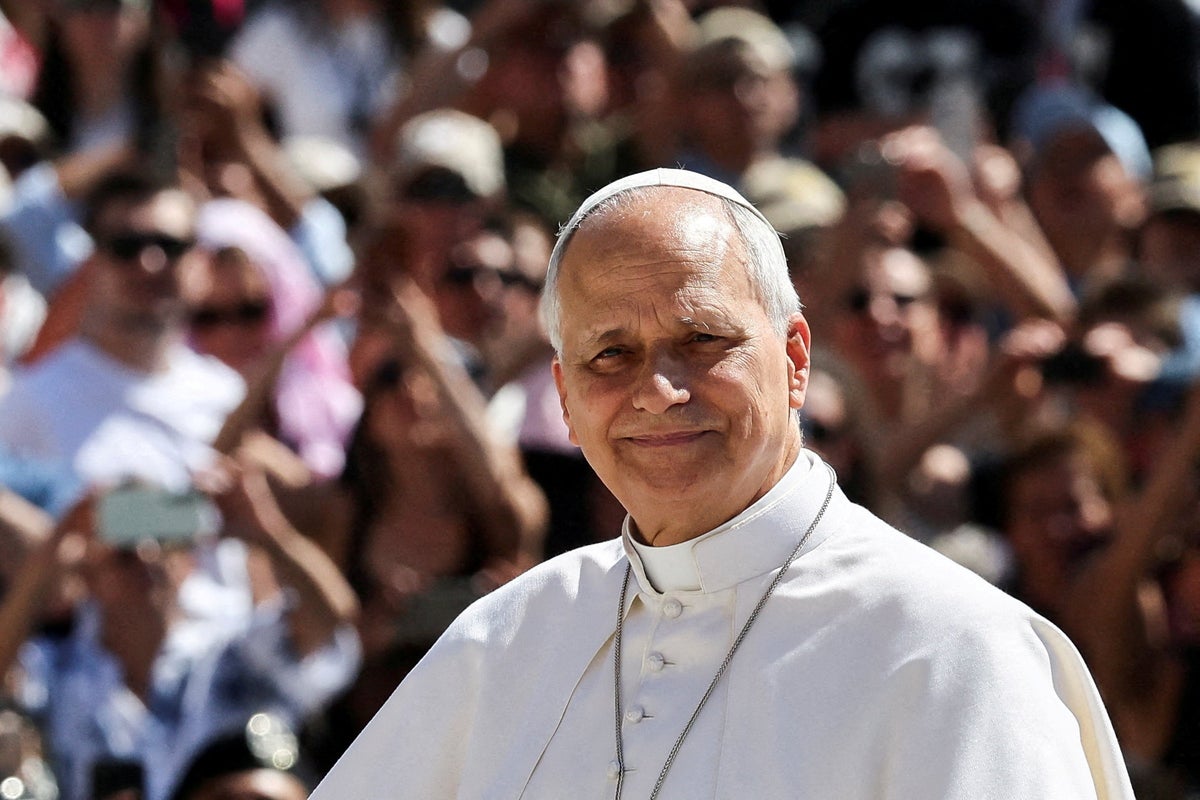
Then, a man in a white cassock stepped up to a microphone in Rome and tore the armor away.
When Pope Leo stood before the global stage to explicitly disavow the Catholic Church’s long-standing "just war" theory, the silence in the diplomatic chambers was deafening. This was not a minor tweak to a catechism. This was a theological earthquake. By declaring that the concept of a just war is no longer tenable in the modern world, the leader of 1.3 billion Catholics did something radical. He stripped the world’s superpowers of their favorite justification.
To understand why this matters, we have to look past the geopolitical chessboards and sit in a concrete basement in a city under siege.
Consider a hypothetical mother named Elena. She does not read papal encyclicals. She does not study international humanitarian law. Tonight, she is holding her five-year-old son in the dark while the walls of her apartment building vibrate from artillery fire.
The munitions shaking Elena’s windows are precise. They are engineered by brilliant minds, purchased with transparent budgets, and deployed by a nation state claiming the absolute right to self-defense. According to the traditional tenets of just war theory, this violence is justified because it meets the criteria: it was declared by a legitimate authority, it possesses a right intention, and it is viewed as a last resort.
But as the plaster dust falls like snow onto her son's hair, the abstract logic of Augustine shatters.
Modern weapons do not recognize the nuance of theological loopholes. A missile powered by artificial intelligence or a drone striking from the stratosphere cannot weigh the moral equilibrium of "proportionality." When a single blast radius can erase an entire neighborhood, the line between combatant and bystander ceases to exist.
This is the precise reality that forced the Vatican’s hand.
For decades, the Catholic Church crept toward this edge. The atomic flashes at Hiroshima and Nagasaki first shook the foundations of the old doctrine. Pope John XXIII openly questioned how any war could be considered "just" in the nuclear age. Pope John Paul II begged world leaders to halt the invasion of Iraq, sensing the chaotic quagmire that would follow.
But Pope Leo went a step further. He closed the loophole entirely.
The rationale behind this shift is deeply practical, rooted in the terrifying evolution of modern conflict. The traditional doctrine relies on three core pillars, all of which have been rendered obsolete by twenty-first-century warfare.
The first pillar is proportionality—the idea that the good achieved by a war must outweigh the destruction it causes. In an era of cyberwarfare capable of shutting down electrical grids for millions of civilians, thermobaric weapons that vaporize human lungs, and nuclear arsenals on hair-trigger alert, the calculation is broken. The potential downside of modern war is always total annihilation. The ledger cannot be balanced.
The second pillar is discrimination, or the protection of non-combatants. Yet, the statistics of modern warfare tell a grim story. In the conflicts of the nineteenth century, the vast majority of casualties were soldiers. Today, civilians bear the overwhelming brunt of violence. They are the collateral damage of smart bombs, the victims of engineered famines, and the refugees displaced by the millions.
The final pillar is the probability of success. A war can only be just if it actually stands a chance of achieving a stable peace. Look closely at the conflicts of the last twenty-five years. Where are the clean victories? Where are the stable, flourishing democracies built on the ashes of shock-and-fwe? War today does not resolve conflict; it merely seeds the ground for the next generation of insurgencies.
The Vatican's decision to discard the doctrine is an admission of a painful truth: the theory of just war has become an enabler of endless war.
Predictably, the backlash from global capitals was swift and fierce. Military strategists and political realists argued that the Pope's stance is dangerously naive, a utopian fantasy that leaves innocent nations defenseless against ruthless aggressors. If we abandon the concept of just war, they ask, do we not hand the world over to tyrants who care nothing for morality?
It is a terrifying question. It makes the chest tighten.
But the Pope's counter-argument is far more unsettling: by maintaining the fiction that war can be holy, civilized, or just, we give those same tyrants the exact vocabulary they need to justify their crimes. Every aggressor in human history has claimed their cause was defensive, necessary, and just. The vocabulary of Augustine has been weaponized to sanitize human slaughter.
The alternative being proposed is not passive surrender. It is a grueling, aggressive commitment to active non-violence and pre-emptive diplomacy. It demands that nations invest the same trillions of dollars into conflict prevention, poverty alleviation, and diplomatic infrastructure that they currently pour into the military-industrial complex.
It requires a fundamental shift in how human beings define strength.
True authority does not lie in the capacity to destroy. It lies in the capacity to endure, to negotiate, and to build systems where Elena and her son do not have to rely on the restraint of a missile guidance system for their survival.
The decision from Rome leaves us standing in a cold, exposed clearing. The theological cover is gone. We can no longer pretend that our grand geopolitical conflicts carry a divine blessing. If we choose to fight, we must face the mirror and admit exactly what we are doing: we are engaging in a human failure, a collective breakdown of imagination and empathy.
The bells of St. Peter’s Basilica are not ringing for a victory. They are tolling for the end of an illusion. The responsibility for peace has been dropped squarely back into human hands, heavy, raw, and bleeding.