The plastic chairs in the sports bar in Buenos Aires smell like stale beer and decades of desperation. It is three in the afternoon on a Friday, but nobody in this room is thinking about the workday they abandoned. A man named Mateo, whose hands are calloused from forty years of fixing radiators, is staring at a television screen with a intensity that looks almost painful. His thumb aggressively rubs a small, faded plastic replica of the 1986 World Cup trophy. He does not blink. Across the ocean, in a sleek, glass-fronted café in Utrecht, a twenty-two-year-old student named Femke is experiencing the exact same physiological response: a spike in cortisol, a dry mouth, and a sudden, acute awareness of her own heartbeat.
They are strangers, separated by oceans, languages, and generations. Yet they are bound by a brutal, beautiful reality.
The World Cup quarterfinals are about to begin.
Standard television listings will tell you that the quarterfinals are merely a set of four football matches scheduled over forty-eight hours. They will give you the kick-off times, the broadcast networks, and the stadium names. They treat it like a corporate logistics problem. But anyone who has ever watched their country reach this specific ledge of the tournament knows that a spreadsheet cannot capture the true weight of what is happening.
The round of sixteen is about survival. The semifinals are about glory. But the quarterfinals? The quarterfinals are the psychological crucible of modern civilization. It is the exact point where the dream becomes dangerously, terrifyingly real. To lose here is to be cast out into a specific kind of darkness, knowing you were close enough to smell the grass of the final match, only to have the door slammed in your face.
The Geometry of the Precipice
Consider the cold reality of the bracket. Thirty-two nations arrived. Sixteen moved on. Now, only eight remain.
Mathematically, the tournament sheds its skin with a violent efficiency. For the teams stepping onto the pitch this weekend, the margins have shrunk to the width of a blade of grass. In the group stage, a bad bounce is a setback. In the quarterfinals, a bad bounce is a national tragedy that will be debated in bars and bakeries for the next twenty years.
The schedule itself acts as a ticking clock, dividing global attention into four distinct acts. Each match possesses its own atmospheric pressure, its own historical ghosts, and its own specific viewing logistics.
Act I: The Friday Matinee
The madness begins on Friday at 6:00 PM local time (3:00 PM GMT / 10:00 AM ET). For viewers in the Americas, this creates a collective, unspoken conspiracy to skip work. Offices empty out under the guise of early lunches; productivity plunges into an abyss. This opening match is always marked by a frantic, nervous energy. The tournament has reawakened after a two-day hiatus, and the hunger is palpable. You can watch this opening clash broadcast live on FOX, or stream it through the Fox Sports App and FuboTV.
Act II: The Nightcap under the Floodlights
As Friday bleeds into evening, the second match kicks off at 10:00 PM local time (7:00 PM GMT / 2:00 PM ET). The tone shifts here. The sun has set, the stadium floodlights cut through the humidity, and the stakes feel heavier, almost theatrical. This is the prime-time slot where legends are cemented or broken under the gaze of a billion eyes. Like the afternoon match, television coverage is anchored on FOX, with Spanish-language broadcasts available on Telemundo and streaming options via Peacock.
Act III: The Saturday Morning Awakening
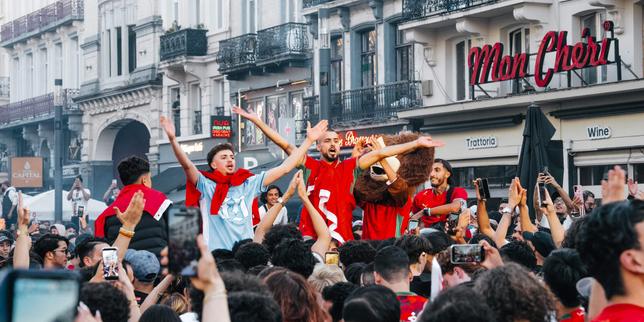
The tension resets on Saturday at 6:00 PM local time (3:00 PM GMT / 10:00 AM ET). For fans waking up on the other side of the world, this match is accompanied by strong coffee and a knot in the stomach. The weekend has arrived, meaning the crowd size doubles. Every pub, living room, and public square is packed to maximum capacity. The broadcast remains locked into the FOX network, ensuring that no matter where you are, the spectacle is unavoidable.
Act IV: The Final Judgment
The ultimate semifinal spot is decided on Saturday night at 10:00 PM local time (7:00 PM GMT / 2:00 PM ET). By the time this match kicks off, three teams have already booked their passage to the inner sanctum. The remaining two teams are fighting not just for victory, but to avoid being the final, tragic footnote of the weekend. The curtain comes down on the quarterfinals through FOX and Telemundo, closing the chapter on four of the eight survivors.
The Ghost in the Living Room
To understand why people like Mateo and Femke subject themselves to this, you have to understand the concept of collective memory.
A World Cup quarterfinal is never just played by the eleven men on the pitch. It is played by every team that came before them. When the whistle blows, the ghosts of past failures and historic triumphs pull on the jerseys. The players carry the weight of decades of national neurosis.
Imagine standing in the tunnel. You are twenty-four years old. You have spent your entire life running, training, and sacrificing. You are in peak physical condition. But as you step out into the blinding light of the stadium, you aren't just carrying your own ambition. You are carrying the emotional baggage of forty million people who have had their hearts broken in this exact round in 1994, in 2006, in 2018.
The pressure is a physical entity. It sits on the chest. It shortens the breath.
This is why we see world-class athletes, men who earn millions of dollars a week playing in the most glamorous leagues on earth, suddenly lose the ability to complete a simple five-yard pass. The ball becomes heavy. The goalposts seem to shrink. The grass feels sticky. The tactical plans drawn up on whiteboards by frantic managers in expensive suits dissolve under the sheer, blinding heat of the moment.
The Logistics of the Obsession
But how do you actually witness this unraveling of human composure? The modern media landscape has turned the act of watching a match into a complex exercise in digital navigation. The days of simply turning on a television set and adjusting the antenna are gone.
To ensure you do not miss a single second of the drama, a tactical plan of your own is required.
| Match | Day | Kick-off Time (ET) | English Broadcast | Spanish Broadcast | Streaming Options |
|---|---|---|---|---|---|
| Quarterfinal 1 | Friday | 10:00 AM | FOX | Telemundo | Fubo, Peacock, Fox Sports App |
| Quarterfinal 2 | Friday | 2:00 PM | FOX | Telemundo | Fubo, Peacock, Fox Sports App |
| Quarterfinal 3 | Saturday | 10:00 AM | FOX | Telemundo | Fubo, Peacock, Fox Sports App |
| Quarterfinal 4 | Saturday | 2:00 PM | FOX | Telemundo | Fubo, Peacock, Fox Sports App |
For those navigating this without a traditional cable subscription, the digital battlefield requires preparation. FuboTV offers a haven for the cord-cutters, while Peacock provides the Spanish-language feed that many fans prefer for its raw, unfiltered emotional intensity. The key is to have the apps downloaded, the logins verified, and the bandwidth cleared long before the referee raises the whistle to his lips. A buffering screen at the ninety-first minute is a self-inflicted wound.
The Cruelest Fiction
There is a specific, agonizing phenomenon that occurs only during this weekend. It is the illusion of control.
When you watch a regular league match in October, you are a spectator. You observe. But during a World Cup quarterfinal, the human brain undergoes a strange, irrational shift. We begin to believe that our actions in our own living rooms can somehow influence the trajectory of a leather ball moving at eighty miles an hour on a pitch thousands of miles away.
Mateo will not change his seating position, even if his leg goes numb, because his country scored while he was sitting exactly that way. Femke will wear the same unwashed jersey she wore during the round of sixteen, defying all laws of hygiene in the name of metaphysical assistance. We sit closer to the screen. We shout instructions at the glass. We bargain with whatever deities we believe in.
Then comes the ultimate test of human endurance: extra time.
If the scores are level after ninety minutes, the match enters a thirty-minute period of pure, unadulterated exhaustion. The tactics are thrown into the bin. The players are running on nothing but adrenaline and fear. Cramps seize their calves. They fall to the turf, gasping for air, looking like soldiers in a war of attrition.
And if that does not settle it? The penalty shootout.
A penalty shootout is not football. It is a psychological execution. Five men from each side are asked to walk from the halfway line to the penalty spot. That walk is the longest walk in sports. It is eighty yards of absolute isolation. Every camera on earth is zoomed in on their eyes. You can see the exact moment a player's confidence evaporates. You can see the fear of becoming the national scapegoat, the man whose name will be muttered with a sigh for the next generation.
When the final penalty is kicked, the contrast is violent. One half of the pitch erupts into a chaotic, weeping celebration. Grown men sprint across the grass like children, throwing themselves into heaps of pure joy.
On the other half, men collapse onto their backs, staring blankly at the sky, utterly broken.
The television cameras will linger on the winners, but the real human story is found in the eyes of the losers. They look entirely hollowed out, as if the tournament has reached inside them and removed their very essence. They know that four years of preparation, four years of dreaming, and an entire lifetime of work have just evaporated in the space of a single weekend.
Back in Buenos Aires, Mateo will either scream until his throat bleeds or walk out into the cool night air in absolute silence. In Utrecht, Femke will either embrace her friends in a beer-soaked frenzy or quietly close her laptop and stare at her own reflection in the dark screen. The schedule will tell you who won and who lost. The broadcasters will transition to commercial breaks, selling cars and insurance. But for the eight nations involved, the world will have completely shifted on its axis, all because of forty-eight hours where twenty-two men chased a ball across a patch of grass.