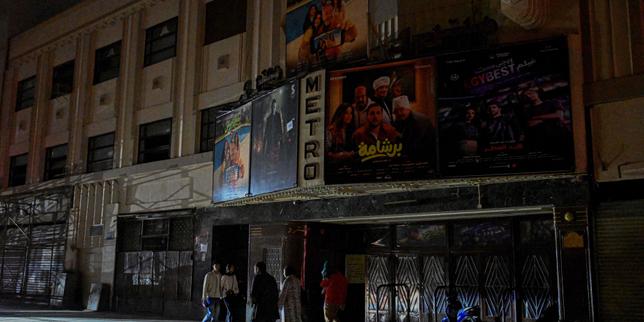
The Egyptian government recently issued a nationwide mandate forcing shops, malls, and commercial venues to shutter their doors by 10 PM. While official rhetoric frames this as a necessary measure to stabilize the national power grid during a blistering summer, the timing suggests a far more desperate calculation. This is not just about keeping the air conditioning running in Cairo’s suburbs. It is a defensive crouch by a state trying to insulate its fragile economy from the escalating regional volatility triggered by the conflict involving Iran and its proxies. By slashing domestic energy consumption, Cairo hopes to preserve its dwindling natural gas reserves for export or industrial use, creating a thin buffer against the shockwaves of a wider war.
The Mirage of Energy Independence
Egypt’s transition from a regional energy hub to a nation struggling to keep its lights on has been swift and brutal. Only a few years ago, the discovery of the massive Zohr gas field promised a new era of prosperity and self-sufficiency. That promise has largely evaporated. Domestic production is falling at a rate that has caught planners off guard, forcing the state to transform back into a net importer of Liquefied Natural Gas (LNG) at a time when global prices are hyper-sensitive to every missile launch in the Persian Gulf.
The "commercial curfew" is a blunt instrument designed to mask a structural deficit. When the government shuts down a bustling retail district in Alexandria or a mall in New Cairo, it is effectively "mining" electricity from its own citizens to pay off international creditors. Every megawatt saved is a megawatt that doesn't have to be bought on the expensive spot market using scarce foreign currency.
Why the Iran Factor Changes the Math
In a vacuum, a power shortage is a manageable domestic crisis. However, the shadow of a direct or indirect confrontation involving Iran changes the risk profile for every economy in the Eastern Mediterranean. Egypt is particularly exposed. If the conflict disrupts shipping through the Strait of Hormuz or leads to further instability in the Red Sea, the cost of importing the fuel needed to run Egyptian power plants will skyrocket.
Cairo is currently operating on a razor-thin margin. The Suez Canal, a primary source of US dollars, has already seen revenues plummet as shipping firms reroute around the Cape of Good Hope to avoid drone strikes. If an escalation with Iran further chokes off trade or drives oil prices toward the triple digits, the Egyptian treasury will face an existential threat. The early closures are an attempt to build a "liquidity of energy"—saving today to ensure the state doesn't go bankrupt trying to buy fuel tomorrow.
The Crushing Cost for Small Business
While the state views the 10 PM closure through the lens of macroeconomics, for the average Egyptian shopkeeper, it is a death sentence by a thousand cuts. The Egyptian economy has long relied on a vibrant "night economy." Due to the intense daytime heat, much of the country’s commerce happens after sunset. Families shop, eat, and socialize late into the night. Shifting the deadline to 10 PM cuts the most productive hours out of the business day.
Retailers are facing a triple threat
- Reduced Foot Traffic: Customers who work until 6 or 7 PM no longer have time to visit physical stores, pushing more commerce toward under-taxed informal markets or international e-commerce platforms.
- Operating Inefficiency: Fixed costs like rent and labor remain static, but the window to generate revenue has shrunk by 20% to 30%.
- Inventory Loss: For grocery stores and small food vendors, the constant threat of rolling blackouts—which often accompany these mandates—means spoiled stock and ruined margins.
The government’s gamble is that the private sector can absorb these losses for the "greater good" of national stability. But the private sector is already gasping for air. After multiple currency devaluations and a persistent inflation rate that has eroded the purchasing power of the middle class, there is very little fat left to trim.
The Natural Gas Trap
To understand why Egypt is so desperate to save electricity, one must look at the mechanics of its power generation. Over 75% of Egypt’s electricity comes from thermal power plants fueled by natural gas. When the Zohr field began underperforming due to water infiltration and technical setbacks, the surplus disappeared.
The state is now caught in a vicious cycle. To maintain its credit rating and satisfy IMF requirements, it needs to prove it can manage its debts. This requires foreign currency. Historically, Egypt exported its surplus gas to Europe to get that currency. Now, it is forced to choose between keeping the lights on at home and selling that gas abroad to stay solvent.
Hypothetical Breakdown of Energy Allocation
Consider a scenario where the national grid requires 35 gigawatts during peak summer hours. If domestic production only yields 30 gigawatts, the state must fill the 5-gigawatt gap. It can either buy expensive LNG on the global market—depleting its dollar reserves—or it can force a 5-gigawatt reduction in consumption through blackouts and commercial curfews. Choosing the latter is a clear signal that the state prizes its balance sheet over the daily convenience and economic vitality of its population.
Regional Geopolitics as an Economic Catalyst
The tension between Iran and its regional rivals creates a "war premium" on everything Egypt touches. It isn't just about the price of gas. It's about the cost of insurance for ships, the willingness of foreign investors to park capital in a "borderline" zone, and the stability of the tourism sector.
Egypt has spent the last decade positioning itself as a reliable partner for Europe and the Gulf. It has built massive infrastructure projects and expanded its military capabilities. However, all that hardware is useless if the country cannot maintain its internal social contract. That contract is built on the government providing basic services—like electricity—in exchange for social order.
The 10 PM curfew is an admission that the social contract is under strain. It is a controlled retreat. By imposing these restrictions now, the authorities are trying to prevent a chaotic collapse of the grid later in the year, especially if a regional explosion makes energy imports even more difficult to secure.
The Tourism Risk
Tourism remains a vital artery for the Egyptian economy. When international visitors see headlines about curfews and energy crises, it creates a perception of instability. While the government has tried to exempt major tourist hubs like Sharm El-Sheikh and Hurghada from the harshest restrictions, the general atmosphere of "emergency measures" is a deterrent. A resort town cannot thrive if the supporting infrastructure in the nearby cities is crumbling under the weight of a managed energy crisis.
Technical Failures and Missed Opportunities
Why hasn't Egypt pivoted faster to renewables? Despite having some of the best solar and wind potential on the planet, the transition has been hampered by bureaucracy and a heavy reliance on legacy gas infrastructure. Significant projects like the Benban Solar Park are a start, but they represent a fraction of the total energy mix.
The current crisis exposes the danger of over-reliance on a single commodity. By tying the nation's fortunes so closely to natural gas, the government made itself vulnerable to both geological disappointment and geopolitical volatility. Now, the people are paying the price for a lack of diversification.
The move to shut down shops early is also a tacit acknowledgment that the recent multi-billion dollar deals with the IMF and UAE (specifically the Ras El Hekma land deal) were not a "fix," but a "delay." The influx of cash provided a temporary reprieve for the Egyptian pound, but it did nothing to fix the underlying energy deficit.
Institutional Inertia and the Road Ahead
The administration's response to the crisis has been characterized by a lack of transparency. For months, the "load shedding" schedules—planned blackouts—were erratic and poorly communicated. The commercial curfew is at least a predictable policy, but predictability does not equal sustainability.
Business leaders are now questioning how long these "temporary" measures will last. In Egypt, temporary measures have a habit of becoming permanent fixtures of the landscape. If the war in the region intensifies, or if Iran decides to further squeeze the energy markets, 10 PM could easily become 8 PM.
The state is currently trying to manage a three-dimensional chess game with only two dimensions of resources. It is trying to satisfy the IMF, maintain domestic peace, and navigate a regional war zone. The commercial curfew is a sign that the government is running out of moves. It is an attempt to buy time, but time is a luxury that an economy under these conditions can ill afford.
There is no easy exit from this scenario. Even if the regional tensions subside tomorrow, the structural issues with Egypt's gas production and its debt-to-GDP ratio will remain. The darkness on the streets of Cairo is a physical manifestation of an economic reality that can no longer be ignored or subsidized away.
Shop owners are currently being told that this is a sacrifice for the nation. But as the sun sets and the shutters come down prematurely, the question isn't just about how much electricity is being saved. It is about how much of the future is being sacrificed to pay for the mistakes of the past. The state must move beyond these reactive, emergency-style tactics and address the fundamental mismanagement of its energy sector, or it will find itself permanently stuck in the dark, regardless of what happens in Tehran or Tel Aviv.
Diversify the energy mix immediately by stripping away the red tape for private solar providers. Anything less is just waiting for the next fuse to blow.