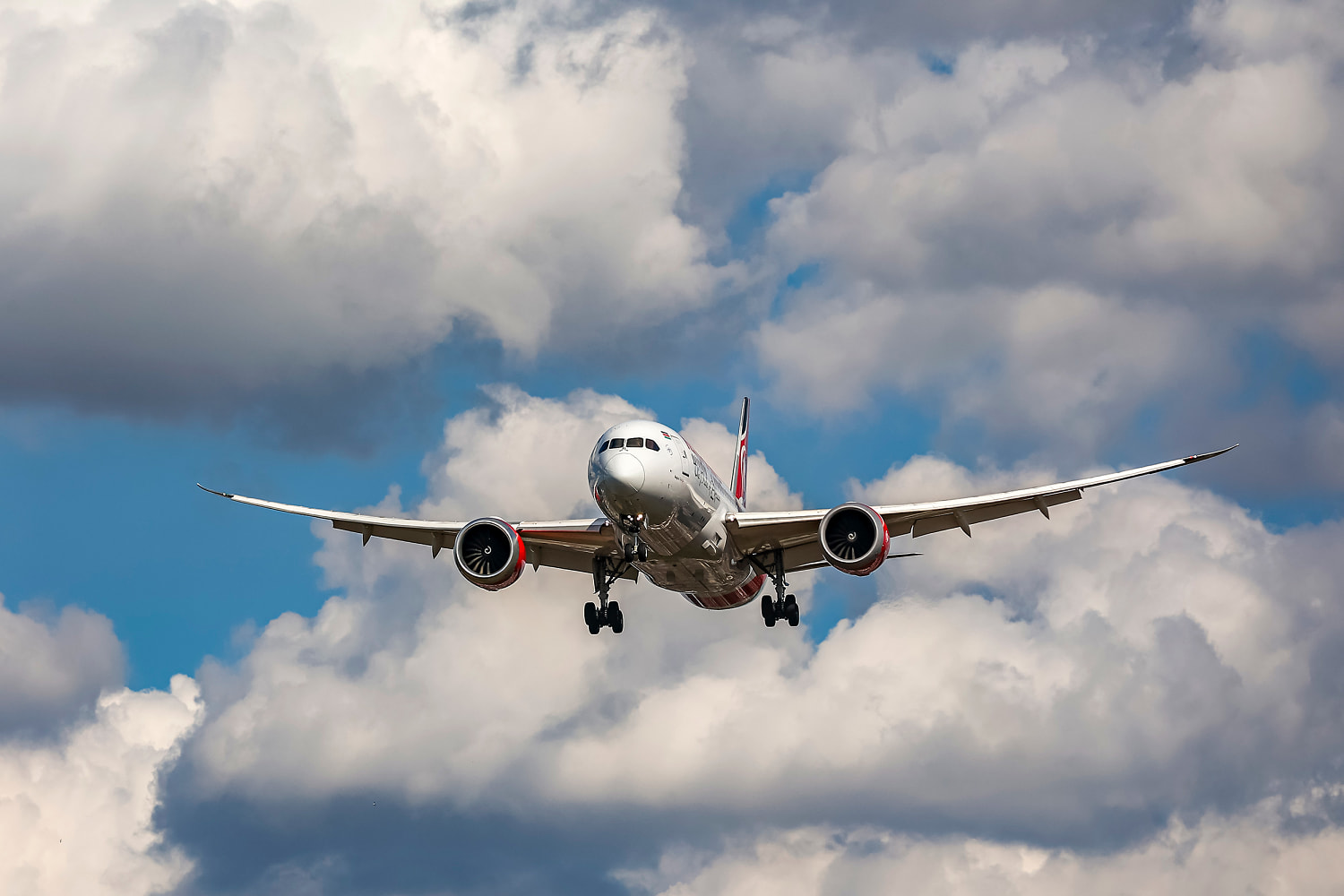
The traditional correlation between corporate travel volume and revenue growth is decoupling, replaced by a rigorous assessment of return on friction (RoF). While superficial headlines celebrate the return of pre-pandemic flight frequencies, the underlying mechanics of business travel have shifted from a default operational requirement to a high-stakes capital allocation decision. Companies are no longer asking if travel is "back"; they are quantifying the precise threshold where the marginal utility of a face-to-face encounter exceeds the escalating logistical and environmental costs of physical displacement.
The Macroeconomic Compression of Corporate Mobility
Three structural forces are currently compressing the business travel sector, forcing a move from quantity-based models to quality-driven outcomes.
- Monetary Tightening and Opex Scrutiny: High interest rates have ended the era of "growth at any cost." Every line item in the SG&A (Selling, General, and Administrative) budget, of which travel is often the second or third largest controllable expense, is now subject to hurdle rates similar to capital investments.
- Sustainability Mandates: Corporate Sustainability Reporting Directive (CSRD) and similar global frameworks have transformed carbon footprints from a PR concern into a regulatory liability. Scope 3 emissions—specifically business travel—now carry a tangible "carbon price" that must be factored into the cost of every ticket.
- The Digital Proxy Maturation: Video conferencing is no longer a stop-gap; it is a sophisticated baseline. To justify travel, the objective must require "high-bandwidth" human interaction—negotiation, complex problem-solving, or cultural integration—that exceeds the 2D capacity of digital tools.
The Triad of Modern Travel Value
To analyze the "good news" for business travellers, one must categorize the improvements into three distinct pillars of value: Temporal Efficiency, Cognitive Preservation, and Infrastructure Fluidity.
Temporal Efficiency and the Death of Dead Time
The primary cost of business travel is not the airfare, but the opportunity cost of the traveller’s time. A senior executive earning $300,000 annually has an hourly cost to the company of approximately $150. Every hour spent in security lines or during "layover leakage" is a direct drain on corporate EBITDA.
- Biometric Acceleration: The deployment of Digital Travel Credentials (DTC) and advanced facial recognition at hubs like Singapore Changi or Dubai International is not a luxury; it is a temporal optimization. Reducing terminal transit time by 30% scales across a 5,000-person workforce to return thousands of productive hours to the firm.
- Point-to-Point Network Restoration: Airlines are increasingly bypassing hub-and-spoke models for mid-market city pairs using ultra-long-range narrow-body aircraft (e.g., Airbus A321XLR). This reduces the "transfer risk"—the probability of delays or missed connections—which is the single greatest disruptor of travel ROI.
Cognitive Preservation: The Science of "On-Arrival" Performance
A business traveller who arrives exhausted is a failed investment. Modern cabin design and hotel integration are pivoting toward physiological management rather than just aesthetic comfort.
The implementation of circadian lighting, lower cabin altitudes (enabled by carbon-fiber fuselages in the Boeing 787 and Airbus A350), and higher humidity levels directly addresses the "cognitive tax" of long-haul travel. By maintaining cabin pressure at 6,000 feet rather than the traditional 8,000 feet, airlines are reducing the severity of hypoxia and dehydration symptoms. This ensures that the traveller can transition immediately from the aircraft to a high-stakes meeting without a 24-hour recovery period.
Infrastructure Fluidity and the Integrated Stack
The fragmentation of the travel experience—booking, transit, lodging, and expense management—has historically been a source of significant administrative friction. The "good news" for the modern traveller is the emergence of a verticalized tech stack.
- NDC (New Distribution Capability): This protocol allows airlines to offer personalized, unbundled services directly to corporate booking tools. Companies can now negotiate for "productivity bundles" (Wi-Fi, lounge access, fast-track) rather than generic fares.
- Automated Expense Reconciliation: The shift toward real-time, AI-driven auditing removes the "post-travel lag" where employees spend productive hours categorizing receipts.
The Cost-Benefit Calculus of the "Premium Leisure" Hybrid
The rise of "bleisure"—the blending of business and leisure—is often dismissed as a perk, but a data-driven analysis reveals it as a retention and recruitment strategy. In a labor market where high-level talent is scarce, the "Travel Friction Index" is a key metric in employee churn.
Allowing employees to extend business trips for personal time effectively de-risks the burnout associated with high-frequency travel. From a corporate perspective, the marginal cost is zero (the flight is already paid for), while the perceived value to the employee is equivalent to a significant cash bonus. This is a rare example of a non-zero-sum game in corporate procurement.
Measuring Success Beyond the Ticket Price
The traditional "Total Cost of Trip" metric is fundamentally broken because it ignores the output side of the equation. To truly quantify the value of travel, firms must adopt a Total Value of Mobility (TVM) framework.
$TVM = \frac{(Potential Revenue \times Probability of Close) - (Logistical Cost + Opportunity Cost of Time)}{Environmental Impact Score}$
In this model, a $2,000 business class seat that ensures an executive is mentally sharp for a $1,000,000 contract negotiation is significantly cheaper than a $600 economy seat that results in a fatigued performance and a lost deal.
The Latent Risks in the New Travel Equilibrium
Despite the technological and logistical improvements, several systemic bottlenecks remain:
- Air Traffic Control (ATC) Fragility: Global ATC systems are operating on legacy infrastructure that cannot handle the current density of "optimized" flight paths. This creates a volatility in travel schedules that technology cannot yet solve.
- Hotel Labor Shortages: While the "transit" portion of travel has digitized rapidly, the "hospitality" portion remains human-dependent. Service degradation in mid-tier hotels creates a "friction floor" that offsets aircraft-side improvements.
- Data Sovereignty: The move toward biometric and integrated travel stacks requires the movement of sensitive personal data across borders. The conflict between convenience and GDPR-style privacy regulations is a looming legal bottleneck for global corporations.
Tactical Implementation for the Modern Strategy
Organizations must stop treating travel as a commodity procurement and start treating it as a strategic lever.
First, audit your travel policy to replace "Lowest Logical Fare" with "Highest Productive Path." This means prioritizing direct flights and cabin classes that minimize recovery time, even at a 15-20% price premium. The gains in executive output far outweigh the savings in procurement.
Second, integrate your sustainability goals directly into the booking interface. By showing the carbon cost alongside the dollar cost, you nudge travellers toward high-impact, low-frequency trips rather than low-impact, high-frequency "status check" visits.
Third, leverage the current technological "sweet spot" of biometric and unbundled services. Shift contracts toward airlines and hotel chains that offer integrated digital identities to minimize terminal and check-in friction.
The future of business travel belongs to the firms that view movement not as an expense to be minimized, but as a deployment of human capital to be optimized. The current landscape offers unprecedented tools to achieve this, provided the strategy shifts from cost-containment to value-maximization.