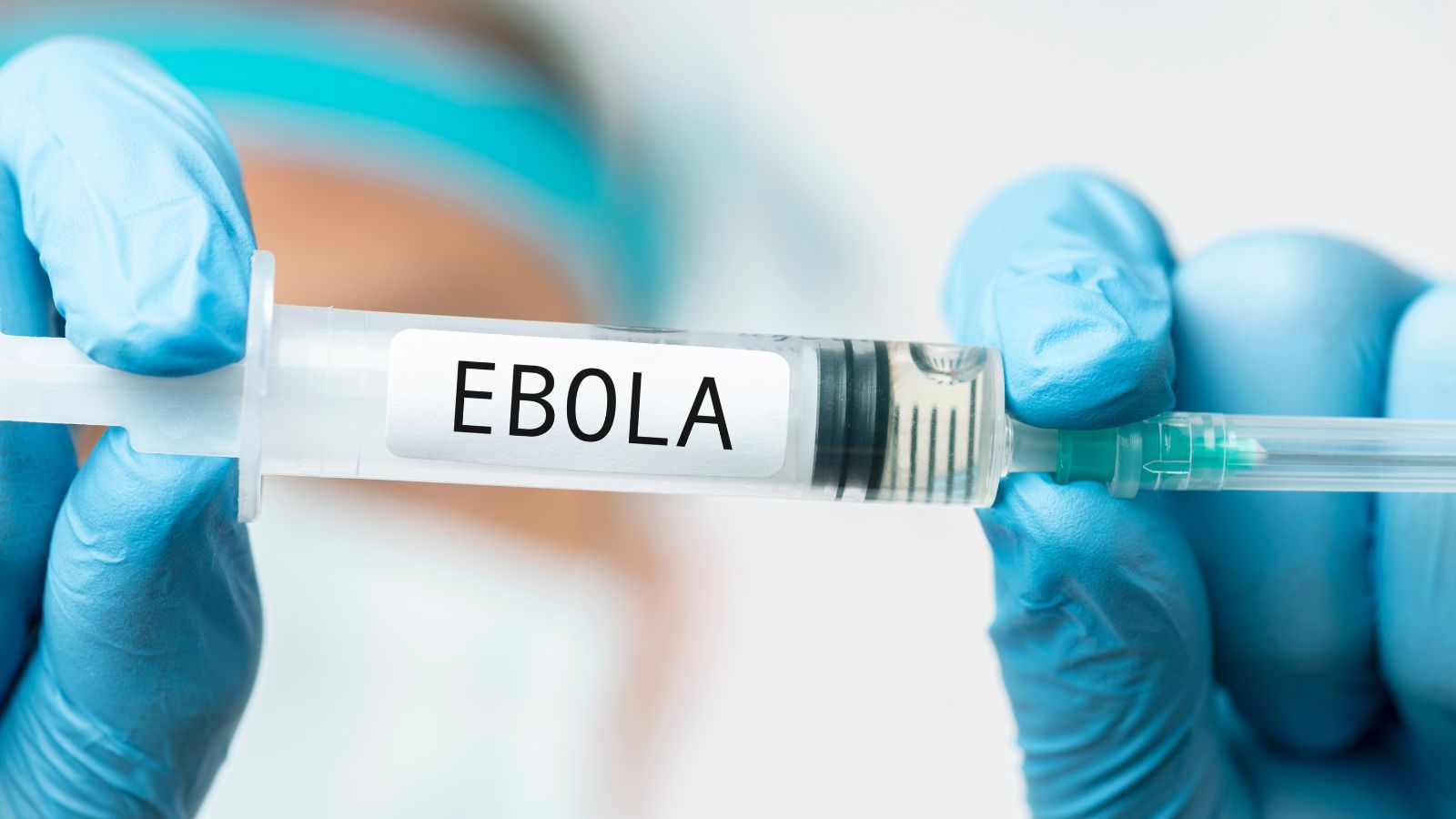
The World Health Organization just hit the panic button again. By declaring a Public Health Emergency of International Concern (PHEIC) for the Ebola outbreak in the Democratic Republic of Congo and Uganda, they’ve followed a tired script that prioritizes Geneva’s bureaucracy over Kinshasa’s reality.
Mainstream media laps it up. They paint a picture of a world on the brink of a viral apocalypse, framing the declaration as a "call to action." They’re wrong. These declarations have become hollow rituals—bureaucratic flare guns fired into a void of systemic neglect. When everything is an international emergency, nothing is.
The Myth of the Global Safety Net
The "lazy consensus" suggests that a PHEIC declaration is the catalyst for a surge in funding and logistical support. History tells a different story. Look at the 2014 West Africa outbreak. The WHO waited months to declare an emergency, fearing economic fallout for trade partners. When they finally did, the "surge" was a disorganized mess of competing NGOs and late-to-the-party government aid.
A PHEIC isn't a magic wand; it's a legal definition under the International Health Regulations (2005). Its primary function isn't to save lives—it's to prevent "interference with international traffic and trade." The priority is keeping the engines of global commerce humming while a localized tragedy unfolds.
We treat these outbreaks like sudden, unpredictable lightning strikes. They aren't. Ebola is endemic to these regions. Declaring an emergency every time a known pathogen behaves exactly how we know it behaves is a failure of long-term strategy. It’s like declaring an "emergency" every time it snows in Siberia.
The Sovereignty Tax
What the headlines ignore is the devastating cost of being labeled a global threat. The moment the WHO clears its throat, borders tighten. Airlines cancel flights. Trade routes for essential goods—often the very medical supplies needed to fight the virus—dry up.
I’ve seen how this plays out on the ground. Local economies in the DRC don't just take a hit; they're leveled. When you treat a country like a biohazard ward, you destroy the infrastructure necessary to maintain public health in the first place. You can’t fight a hemorrhagic fever in a country where the economy has been strangled by "precautionary" trade barriers.
The status quo focuses on the virus ($Ebolavirus$). The contrarian truth is that the virus is the least of our problems. The real killers are the secondary effects of the declaration:
- The Trust Deficit: Foreign-led interventions often ignore local power structures, leading to community resistance.
- The Resource Diversion: When all money flows to Ebola, people start dying of malaria, measles, and malnutrition in record numbers.
- The Brain Drain: International NGOs swoop in, hire away the best local doctors for three times their government salary, and leave the general health system gutted.
Stop Chasing the Red Ball
Public health experts keep asking: "How do we speed up the global response?"
That is the wrong question.
The right question is: "Why does the global response need to exist at all?"
If we spent one-tenth of the money wasted on emergency logistics—shipping bottled water and plastic tents from Europe—on building permanent, high-security pathology labs and training local epidemiologists in North Kivu, the "emergency" would be managed before it reached the WHO's radar.
We are addicted to the "firefighter" model of global health. We wait for the house to be engulfed in flames, then fly in a thousand people to throw buckets of water at it. It’s expensive, it’s cinematic, and it’s deeply inefficient. We should be building fireproof houses.
The Vaccine Illusion
The development of the Ervebo vaccine is frequently cited as a triumph. It is a remarkable piece of biotechnology. But a vaccine is not a strategy; it’s a tool.
In the DRC, the challenge isn't the lack of a vaccine. It's the "last mile" problem. It’s the fact that you have to transport a drug that requires ultra-cold chain storage through a war zone with no paved roads and unreliable electricity.
$$T = \frac{D}{V}$$
In the equation of outbreak control, Time ($T$) is determined by Distance ($D$) over Velocity ($V$). The global response treats $V$ as the speed of a cargo plane from Geneva. In reality, $V$ is the speed of a motorbike on a mud track. Until we solve the $V$ on the ground, the $V$ in the air is irrelevant.
The Border Fallacy
Western nations push for these declarations because they want an early warning system. They want to ensure the "fire" doesn't jump the pond. This "fortress mentality" is scientifically illiterate.
Biosecurity is an illusion. In a hyper-connected world, you cannot wall off a virus with a 21-day incubation period. By the time a PHEIC is declared, the virus has already had ample opportunity to travel. The only way to protect London, Paris, or New York is to ensure that the healthcare worker in a rural clinic in Uganda has the tools, the pay, and the authority to contain the first three cases.
Instead, we wait until there are 300 cases, trigger the alarm, and then act surprised when the virus shows up at an international airport.
Practical Nihilism: A New Way Forward
We need to stop pretending that the WHO is a global health government. It’s a specialized agency of the UN with no enforcement power and a budget smaller than many major US hospitals.
If we actually want to stop Ebola, we have to stop treating it as a "global concern" and start treating it as a local infrastructure project.
- Decentralize the Lab: Every province in an endemic zone should have PCR testing capabilities that don't require shipping samples to a capital city.
- The "Shadow" Health System: Stop creating parallel NGOs. Every cent of international aid should be funneled through existing local health ministries, with strict, transparent auditing. If the ministry is corrupt, fix the ministry; don't bypass it. Bypassing it ensures it stays broken forever.
- End the "Emergency" Funding Cycle: We need "peace-time" funding for surveillance. The current model—where money only appears when people are dying on camera—is a moral and logistical failure.
Imagine a scenario where the DRC has a robust, well-paid corps of community health workers who are respected more than the rebel groups in the east. That is a better defense against Ebola than a thousand PHEIC declarations.
The Hard Truth About "Global Concern"
The term "Public Health Emergency of Global Concern" is a misnomer. It’s really about "Western Concern." We don't declare these emergencies for the 1.5 million people who die of tuberculosis every year, despite it being a transmissible, global killer. We declare them for Ebola because it has a high "horror factor" and makes for good television.
This isn't about saving African lives; it's about soothing Western anxieties.
The next time you see a headline about a WHO emergency declaration, don't feel a sense of relief that "someone is doing something." Feel a sense of dread that we are once again opting for a PR-friendly band-aid instead of the surgical systemic overhaul required to actually solve the problem.
Stop looking at the maps with red dots. Start looking at the maps without roads. That’s where the battle is lost.
Get your hands off the panic button and put them on a shovel. Build the clinics. Pay the local doctors. Then shut up and let them do their jobs.