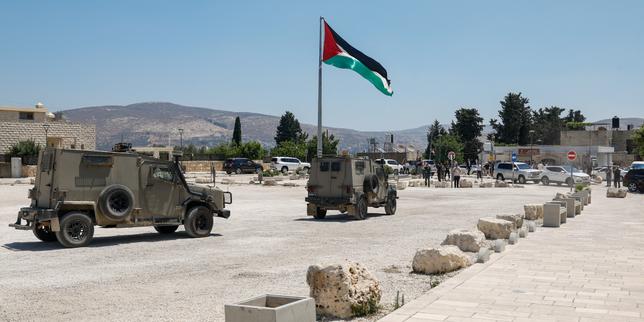
The sound of an engine in the hills of the West Bank is rarely just a sound. For generations of families living among the olive groves, it is a calculation. Is it a neighbor returning from the market? Is it a military patrol? Or is it the heavy, grinding machinery of a new construction crew?
Lately, that grinding sound has become a permanent feature of the landscape.
The United Nations recently released a report detailing what it called an "implacable acceleration" of settlement expansion in the occupied West Bank. It is a phrase built from diplomatic stone—heavy, formal, and distant. But on the ground, away from the glass towers of New York, that acceleration looks like concrete trucks pouring foundations into terraced hillsides that used to grow figs. It looks like new asphalt ribbons cutting through ancient grazing lands, dividing village from village.
To understand what is happening here, you have to look past the political grandstanding and focus on the quiet erosion of everyday life.
The Geography of Separation
Imagine waking up one morning to find a fence running through your backyard. You can still see your olive trees on the other side, but to reach them, you now need a permit from a foreign authority. A permit that may take months to arrive, or may never come at all.
This is not a hypothetical inconvenience. It is the structural reality for hundreds of thousands of Palestinians.
The expansion of settlements is not just about building houses; it is about creating facts on the ground. When a new outpost is established, it brings with it a network of infrastructure. Security zones are declared. Roads are paved—roads that are often restricted, connecting the new settlements directly to major cities inside Israel while bypassing the Palestinian towns right next door.
Consider the geometry of displacement.
A village is surrounded by three hills. For centuries, those hills were used for grazing sheep. One year, a few mobile homes appear on the northern ridge. A few years later, those trailers become permanent stone houses. A security fence expands around them. Suddenly, the shepherds cannot use the northern hill. Then a road is built along the eastern ridge to connect the new settlement to the main highway. Now the eastern hill is cut off.
The village is not destroyed by a sudden explosion. It is choked, slowly, by development.
The Weight of Numbers
Diplomacy often gets lost in percentages and legal definitions, but the scale of this expansion is measurable. Over the past year, the authorization of new housing units in the West Bank has reached record highs. Thousands of new homes have been approved, locking in a future where a contiguous Palestinian state becomes geographically impossible.
The UN Secretary-General’s warning was not an isolated complaint. It was a recognition that the window for a peaceful, two-state solution is being physically walled off.
Every new foundation poured is a statement of permanence. It signals to the world, and to the people living under occupation, that the current status quo is not temporary. The lines on the map are being redrawn by bulldozers, day by day, hour by hour.
But the real problem lies elsewhere. It is not just about land; it is about the dual legal system that grows alongside the concrete.
In the West Bank, two populations live side by side, yet they inhabit entirely different worlds. An Israeli settler living in a newly constructed apartment block is subject to Israeli civil law. They enjoy freedom of movement, protection by the state, and access to modern infrastructure. A Palestinian living fifty yards away in a historic village is subject to military law. They face checkpoints, permit regimes, and the constant threat of home demolition.
This disparity creates a friction that never dissipates. It hangs over the valleys like the summer heat.
The Disappearing Groves
Old trees have deep roots. In this part of the world, an olive grove is not just agriculture; it is an inheritance. Some trees have been tended by the same family since the Ottoman Empire. They represent a tangible link to ancestors, a livelihood, and an identity.
When a settlement expands, these trees are often the first things to go.
Sometimes they are uprooted by machinery to clear space for a bypass road. Other times, they are fenced off, rendered inaccessible to the farmers who spent their lives pruning them. Without care, the leaves turn gray and the yield drops to nothing.
The loss is economic, certainly. But it is also deeply psychological. To watch a tree that your grandfather planted be buried under the gravel of a new parking lot is to watch your history be erased in real-time. It tells you that your presence is considered an obstacle to be cleared away.
The international community watches this happen and issues statements of deep concern. Phrases like "obstacles to peace" and "violations of international law" are repeated so often they have lost their edge. They have become part of the background noise, as predictable as the changing of the seasons.
Meanwhile, the concrete cures. The paint dries on the new villas.
A Landscape Redefined
The transformation of the West Bank is often described in terms of geopolitics, but its true impact is measured in the minutes added to a daily commute. It is measured in the hours spent waiting at a checkpoint to visit a hospital in the next city. It is measured in the quiet anxiety of a parent wondering if their children will have a future in the place they were born.
The acceleration is implacable because it does not stop for negotiations, resolutions, or protests. It moves forward with the steady, unblinking momentum of state bureaucracy and heavy machinery.
The hillsides are changing color. The pale, limestone terracing that defined the region for millennia is being replaced by the uniform gray of prefabricated walls and the black of fresh asphalt. The ancient paths are blocked. The old horizons are gone.
On the hills that remain untouched for now, the elders sit in the shade, watching the dust rise from the new construction sites across the valley. They know that dust will eventually settle, and when it does, the landscape will be unrecognizable.