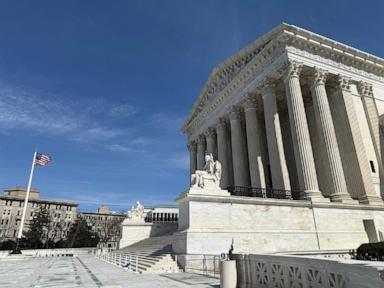
The Supreme Court’s decision to allow anti-abortion pregnancy centers to challenge subpoenas for donor identities represents a critical tension between state investigative powers and the First Amendment right to "freedom of association." This conflict is not merely a localized legal dispute; it is a structural collision between two competing legal doctrines: the state’s interest in consumer protection and the constitutional protections afforded to private organizational funding. When state actors attempt to pierce the veil of donor anonymity, they trigger a strict scrutiny analysis that requires the government to prove a compelling interest and a narrowly tailored method.
The core of this dispute lies in the 2026 ruling regarding the reach of discovery in civil litigation involving non-profit advocacy groups. By granting these centers the right to fight donor disclosures, the Court has reinforced a shield that prevents the "chilling effect"—a quantifiable reduction in political or social participation caused by the fear of public or private retaliation.
The Dual-Prong Risk to Organizational Viability
For a non-profit entity, particularly one operating in highly polarized sectors, donor data is the primary asset for operational continuity. The threat of disclosure creates two distinct vectors of organizational decay.
Economic Attrition
Donors often contribute under the expectation of privacy to avoid professional or social repercussions. When a subpoena threatens this anonymity, the immediate result is a cessation of funding. This is not a theoretical concern but a documented economic behavior where the perceived cost of a donation (potential harassment or loss of employment) exceeds the personal utility of the contribution.Associational Dissolution
The First Amendment protects the right to associate privately for the advancement of beliefs. Compelled disclosure functions as a tax on this association. If a state can force an organization to reveal its internal roster, the state effectively gains the power to map and dismantle political movements by targeting their financial foundations.
State Investigative Power Versus Constitutional Immunity
State attorneys general often utilize consumer protection laws or civil investigative demands (CIDs) to examine the operations of crisis pregnancy centers (CPCs). The stated logic is often based on the "Prevention of Deception" framework. Under this framework, the state argues that if a center provides medical misinformation, the state has a mandate to identify the parties funding such operations to determine if there is a broader conspiracy of consumer fraud.
However, the Supreme Court has historically placed a high burden of proof on the state to link donor lists to the actual investigation. The "Direct Nexus" requirement dictates that a state cannot simply request a list of all donors as a fishing expedition; they must demonstrate that specific donors were involved in the alleged illegal activity. In the current ruling, the Court identified a failure in the lower courts to apply this nexus, signaling that the mere existence of a non-profit does not waive the privacy rights of its contributors.
The Mechanism of the Chilling Effect
To understand why the Court intervened, one must quantify the chilling effect as a functional bottleneck in democratic participation. Legal analysts use a "Probability of Retaliation" (Pr) model to assess the damage of disclosure.
- Internal Pressure: When donor lists are made public, organizations face internal pressure from staff or volunteers who may also fear exposure.
- External Pressure: Publicly accessible databases of donors lead to boycotts, doxxing, and physical protests at donor residences.
The Court’s logic suggests that if the Pr reaches a certain threshold, the First Amendment is effectively nullified. By allowing these centers to fight subpoenas, the Court is upholding the precedent set in NAACP v. Alabama (1958), which established that the government cannot force a group to reveal its members when doing so would lead to "economic reprisal, loss of employment, threat of physical coercion, and other manifestations of public hostility."
The Compelling Interest Threshold
The state’s counter-argument hinges on the "Compelling Interest" doctrine. In the context of reproductive health, states like California or New York argue that the public health implications of deceptive advertising are so severe that they outweigh the privacy rights of the center’s backers.
To bridge this gap, the legal system employs the "Least Restrictive Means" test. If a state wants to investigate fraud, can it do so without the donor list?
- Can they audit the financial records with redacted names?
- Can they interview the employees who directly interact with patients?
- Can they review the advertising materials themselves?
If the answer to any of these is "yes," the subpoena for donor IDs is considered overbroad and unconstitutional. The Supreme Court’s recent stance indicates that the lower courts were too permissive in allowing states to bypass these less-intrusive methods.
Structural Implications for Non-Profit Governance
This ruling shifts the burden of proof back to state regulators. It forces an "Evidence-First" investigative model rather than a "Funding-First" model.
- Strategic Redaction: Organizations will now move toward more aggressive redaction strategies during the discovery phase of litigation.
- Protective Orders: There will be an increased reliance on "Attorneys’ Eyes Only" (AEO) designations, where the state’s lawyers may see the data, but the names cannot be shared with the public or other government branches.
The limitation of this victory for pregnancy centers is that it does not grant absolute immunity. It only grants the right to challenge the subpoena. If a state can eventually prove that a specific donor was an architect of a fraudulent scheme, the court may still compel disclosure. The ruling protects the "passive donor"—the individual who gives money but does not direct operations—while leaving the "active participant" vulnerable to legal scrutiny.
The Polarization of Discovery Law
The outcome of this case reflects a broader trend where procedural law (how evidence is gathered) is becoming as politicized as substantive law (the actual legality of abortion). In states with "Shield Laws," protections for reproductive health providers are being codified, while in other jurisdictions, similar protections are being sought by anti-abortion groups.
This creates a fragmented legal geography. A donor in one state may have their privacy protected by federal precedent, while a donor in another state might find their information exposed through state-level administrative actions that circumvent federal oversight.
Strategic Trajectory for Legal Counsel
Legal teams representing advocacy groups must now pivot toward a "Privacy-by-Design" operational model. This involves:
Information Minimization
Collecting only the data required for tax compliance and avoiding the retention of detailed demographic or professional profiles of donors that could be used for "mapping" in future litigation.Jurisdictional Arbitrage
Establishing financial hubs in states with the strongest privacy protections and the most rigorous requirements for civil investigative demands.Interventionist Defense
Filing motions to quash subpoenas at the earliest possible stage, citing the NAACP v. Alabama and the 2026 Supreme Court guidance as a per se barrier to donor identification in the absence of a proven criminal conspiracy.
The state’s ability to use the subpoena as a weapon of attrition is significantly diminished by this ruling. It forces a return to traditional investigative techniques—focusing on the actions of the entity rather than the identities of its supporters. This re-centers the legal battle on the conduct of the pregnancy centers themselves, rather than the political network that sustains them.
State attorneys general must now refine their investigative strategies to focus on verifiable consumer harm. For the pregnancy centers, the focus shifts to ensuring that their internal communications and public-facing advertisements can withstand scrutiny without relying on the anonymity of their funders as their only defense. The legal landscape is no longer about whether these lists can be seized, but under what specific, narrowly defined conditions of misconduct such a seizure becomes a necessity of justice.