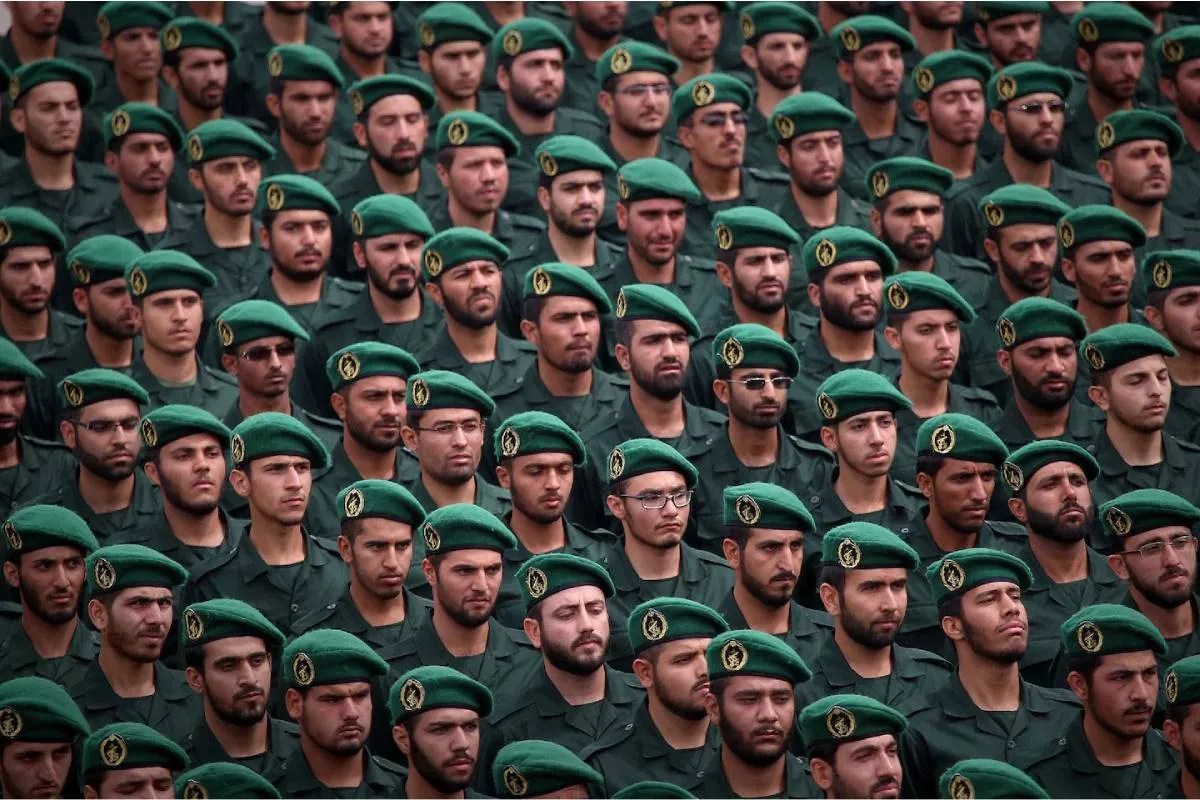
The Strait of Hormuz is a narrow stretch of water that keeps the global economy breathing. If it chokes, the world feels it instantly. Right now, the Iranian Revolutionary Guard Corps (IRGC) isn't just watching the horizon—they're sending a blunt, aggressive message to Donald Trump. They’ve warned that even a single mistake in these waters will carry a price too heavy for Washington to pay. This isn't just typical Middle Eastern rhetoric. It’s a calculated move in a high-stakes game of naval chicken.
You've probably heard the IRGC's threats before, but the timing here is everything. With Trump’s return to the spotlight and his history of "maximum pressure" tactics, Tehran is drawing a line in the sand—or rather, the salt water. They’re telling the U.S. President that the rules of engagement have changed. If you think the U.S. Navy can just sail through without consequence, you’re not paying attention to the tactical shifts on the ground. For another view, read: this related article.
Why the Strait of Hormuz is the Worlds Biggest Choke Point
Look at a map and you'll see why this place is a nightmare for military planners. At its narrowest, the shipping lane is only about two miles wide in either direction. About a sixth of the world’s oil and a third of the world’s liquefied natural gas pass through here. It’s the jugular vein of global energy.
The IRGC knows they don't need a massive fleet to win here. They use asymmetric warfare. Think hundreds of fast-attack boats, sea mines, and shore-based anti-ship missiles. They aren't trying to win a traditional naval battle against a U.S. carrier strike group. They’re trying to make the cost of conflict so high that nobody wants to start it. When the IRGC tells Trump that "one mistake is too many," they're referring to the ease with which a minor tactical error could escalate into a full-blown energy crisis. Further reporting regarding this has been published by Associated Press.
The IRGC Tactical Playbook Under Trump
Tehran remembers the 2016-2020 era vividly. They remember the drone strikes, the sanctions, and the constant threat of escalation. But they also learned. They’ve spent the last few years hardening their positions and diversifying their drone tech. The IRGC Navy (IRGCN) has moved away from just "swarm" tactics to integrated strike packages.
- Fast Attack Craft: Small, hard-to-hit boats armed with missiles.
- Loitering Munitions: Suicide drones that can stay airborne until they find a target.
- Subsurface Threats: Small submarines that are incredibly difficult to track in the shallow, noisy waters of the Persian Gulf.
I've seen analysts argue that the U.S. has the technological edge. Sure, on paper, that's true. But in the tight confines of the Strait, technology doesn't always save you from a swarm of fifty boats coming at you from different angles. It’s messy. It’s chaotic. And that’s exactly how the IRGC likes it.
Trump Maximum Pressure vs Iranian Resistance
Donald Trump’s approach to Iran has always been about leverage. He wants them at the table, but he wants them there while they’re gasping for air. The IRGC’s latest ultimatum is a direct response to this "maximum pressure" philosophy. They want to show that pressure works both ways. If the U.S. squeezes their economy, they will squeeze the world's energy supply.
Critics of the U.S. policy often say that aggressive posturing only invites more aggression. They’re right. Every time a U.S. ship gets "harassed" by Iranian boats, the risk of a sailor making a split-second decision that leads to gunfire increases. That’s the "mistake" the IRGC is talking about. They are betting that Trump, despite his tough talk, doesn't actually want another forever war in the Middle East that sends gas prices to eight dollars a gallon.
Miscalculations That Could Lead to War
History is full of wars that nobody actually wanted. In the Strait of Hormuz, the margin for error is nearly zero.
- Identification Errors: A civilian vessel gets mistaken for a military one during a high-tension standoff.
- Navigation Accidents: In these crowded waters, a collision could be interpreted as a deliberate act of ramming.
- Communication Breakdowns: Without a direct "red phone" between Washington and the IRGC, intent is often guessed rather than known.
The IRGC’s warning to Trump is essentially an admission that they are on high alert. When a military is on high alert, they're "hair-trigger" ready. They don't wait for confirmation; they react.
The Economic Fallout of a Hormuz Shutdown
If the IRGC follows through on their threats because of a "mistake," the economic impact would be domestic and immediate for Americans. We aren't just talking about a few cents at the pump. We're talking about a global supply chain shock that makes the 2020 disruptions look like a practice run.
Oil markets are jittery. They trade on fear as much as they trade on supply. Just the threat of the IRGC closing the Strait is enough to send Brent Crude soaring. Trump knows this. His entire political brand is built on a strong economy and low energy costs. The IRGC is poking at his most vulnerable spot.
What the U.S. Navy is Doing Differently Now
It’s not like the U.S. is just sitting ducks. The Navy has been integrating unmanned systems—basically sea drones—to monitor the Gulf. This reduces the risk to human sailors and provides a constant "eye" on IRGC movements.
However, the IRGC has been capturing or harassing these unmanned vessels too. It’s a constant cycle of "I can see you" and "I can touch you." The IRGC’s ultimatum suggests they don't care about the new tech; they care about the political will in the White House. They believe they can outlast American patience.
Navigating the Tensions
The IRGC isn't just talking to Trump; they're talking to the world. They want every country that relies on Middle Eastern oil to pressure Washington to settle down. It’s a classic leverage play. They’re using the geography of the Strait as a weapon of diplomacy.
Don't expect the IRGC to back down. Their entire identity is built on being the "defenders" of the Gulf against "foreign intruders." For them, a confrontation isn't a failure—it's a reason to exist. They thrive in the friction.
If you’re watching this situation, keep your eye on the "incidents." The small stuff matters. A drone being shot down or a tanker being diverted is a signal. The IRGC has made its position clear. Now the ball is in Trump’s court. He has to decide if he wants to keep the pressure on or find a way to de-escalate before a "mistake" turns the Persian Gulf into a graveyard of ships.
Monitor the daily shipping insurance rates in the region. When those spike, you know the "mistake" is closer than anyone wants to admit. Check the movements of the 5th Fleet. If they start moving carriers away from the coast and into deeper water, they're bracing for impact. Stay informed, stay skeptical of the "official" lines from both sides, and watch the water. The next move won't be a tweet; it'll be a maneuver in the world's most dangerous shipping lane.