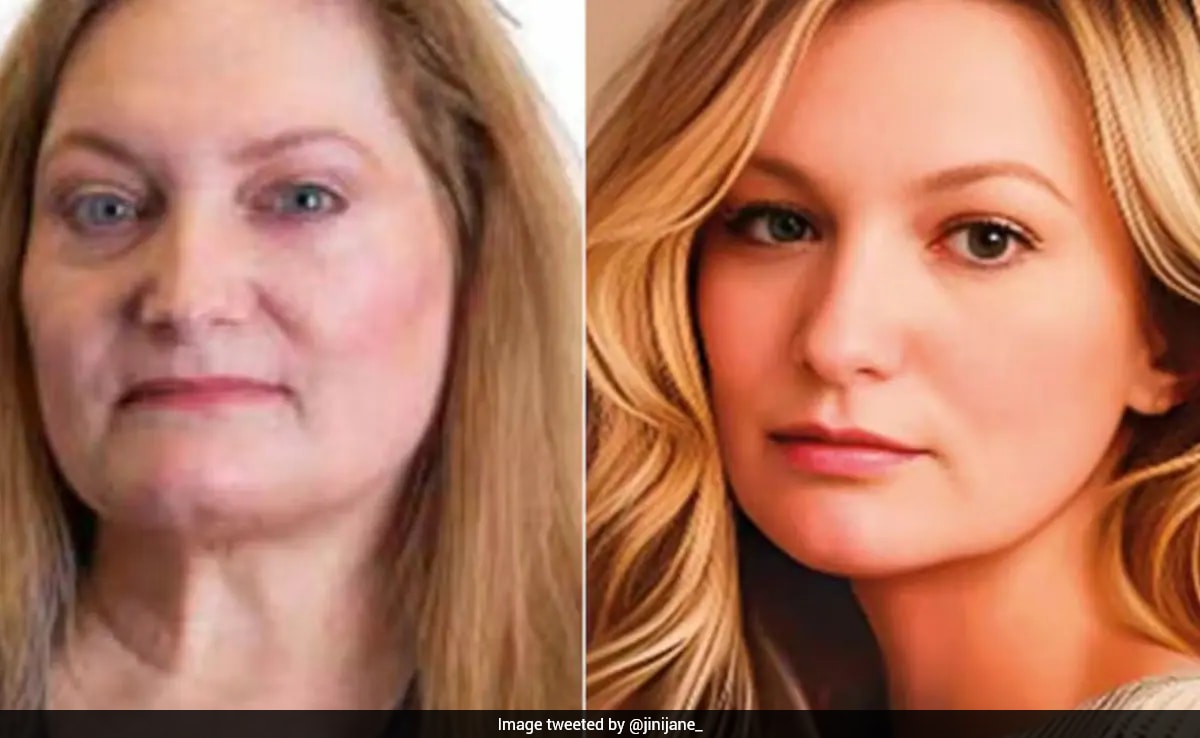
Henk Krol stands at the intersection of a pixel and a prayer.
At 59, the Dutch politician should be a familiar face to his constituency—a man whose wrinkles tell the story of decades in the public eye, a veteran of the House of Representatives, and a former editor of a prominent LGBTQ+ magazine. Instead, he became a viral ghost. When Krol released his campaign photo for the local elections in Zevenaar, the man looking back from the screen didn't just look refreshed. He looked reborn.
His skin was a porcelain expanse, devoid of the craters and canyons that time carves into a human life. His eyes possessed a synthetic shimmer. He looked like a version of himself that had never seen a budget meeting, never lost an election, and certainly never aged past thirty-five.
The backlash was instant. It was visceral.
The public didn't just see a touched-up photo; they felt a sense of uncanny betrayal. In an era where "deepfakes" are a looming shadow over democracy, a politician using generative AI to shave twenty years off his resume feels less like a cosmetic choice and more like a structural lie.
The Ghost in the Machine
We have always lied to ourselves in the mirror. From the first time a Roman senator adjusted his toga to hide a protrusion to the airbrushed covers of 1990s fashion magazines, the "public self" has always been a curated fiction. But AI changes the math.
Traditional Photoshop is a scalpel; AI is a skin graft.
When Krol defended the image, his argument was deceptively simple: "I look very young for my age." He insisted the AI wasn't inventing a new person but merely reflecting a vitality that the camera often fails to capture. He spoke of his "young spirit," suggesting that the biological reality of his 59-year-old face was the actual liar, and the AI was finally telling the truth about his energy.
It is a seductive argument. We all feel younger than the person staring back at us in the morning. But in the theater of politics, the face is the contract.
Imagine a voter in Zevenaar. Let’s call her Elize. Elize has lived in the district for forty years. She knows the smell of the rain on the brick streets and the sound of the bells. When she looks at a campaign poster, she isn't looking for a movie star. She is looking for a witness. She wants to see someone who has lived through the same seasons she has. When Krol presents a face that has been mathematically scrubbed of experience, he isn't just hiding his age. He is erasing his history.
The stakes are invisible until they are absolute. If a politician can't be trusted to present their own face to the world, how can they be trusted to present the truth of a city’s finances or the reality of a housing crisis?
The Mathematics of Vanity
To understand why this feels so wrong, we have to look at how these tools actually function. Generative AI doesn't "fix" a photo. It predicts what a "better" version of that photo should look like based on billions of other images.
When Krol’s photo went through the processor, the algorithm didn't care about his soul or his political platform. It cared about averages. It smoothed the forehead because the average "attractive" face in its database has a smooth forehead. It brightened the eyes because the data says bright eyes equal health.
The result is a strange, mathematical beauty that feels hollow. It is the "uncanny valley"—that dip in human emotional response when something looks almost human, but not quite. It triggers a primal "fight or flight" response. We see the image, and our lizard brain whispers: Predator. Impostor. Not one of us.
Krol isn't an isolated case. He is the canary in the digital coal mine. Across the globe, candidates are experimenting with AI-generated avatars to reach younger voters or "deepfake" versions of themselves that can speak fifty languages fluently. They call it "efficiency." They call it "innovation."
But there is a cost.
The Erosion of the Authentic
Consider the texture of a real life. The squint lines come from years of laughing or worrying about the future. The sagging jawline is a testament to gravity—the one law no politician can veto. These are the credentials of the lived experience.
When we replace these markers with AI-generated perfection, we enter a post-truth aesthetic. If everything can be "optimized," then nothing can be believed.
Krol’s defense—that he simply looks young—ignores the fundamental shift in how we perceive reality. We are moving from a world of "seeing is believing" to a world of "seeing is a suggestion." This transition is terrifying because it removes the floor from under our feet.
The Dutch public’s reaction wasn't just about vanity; it was about the fear of being tricked. In a world of fake news and digital manipulation, the physical body of the politician was the last tether to the real world. Now, even that is being digitized, smoothed, and uploaded.
The Mirror Crack’d
One might wonder: why does it matter? If the policies are good, who cares if the chin is a little tighter?
It matters because politics is the art of human connection. You cannot connect with a calculation. You cannot empathize with a prompt.
The danger of the "Krol Effect" is that it creates an arms race of artificiality. If one candidate looks like a flawless 30-year-old, their opponent—who might actually be 30 but has the audacity to have a blemish—suddenly looks "unpresidential" or "haggard" by comparison. We begin to judge our leaders not by their character, but by their ability to manipulate their metadata.
History is full of leaders who used their physical presence to command trust. Think of the weathered face of Abraham Lincoln, a map of a nation's trauma. If Lincoln had access to Krol’s AI tools, would he have smoothed out the lines of the Civil War? Would he have presented a "fresher" version of the Union?
If he had, we might have a prettier portrait, but we would have a smaller soul.
The real tragedy for Henk Krol isn't the mockery he faced on social media. It’s the missed opportunity. He had the chance to stand as a veteran, a man of nearly sixty years who had survived the tempests of Dutch politics. He could have worn his age as a badge of endurance.
Instead, he chose to hide behind a mask of mid-range pixels.
He told the press that the photo was simply a "nice" picture. But "nice" is the enemy of the true. We don't need "nice" leaders. We need real ones. We need people who are willing to be seen, in all their imperfect, aging, human glory.
As the sun sets over Zevenaar, the posters still hang. They show a man who does not exist, running for an office that deals with very real problems. The voters will walk past, looking at the smooth, digital skin, and they will wonder if the promises are as artificial as the jawline.
The AI can give you a perfect face. It just can't give you a pulse.
In the end, the lines on our faces are the only diary we can't delete. They are the evidence that we were here, that we felt something, and that we survived it. To erase them is to pretend the journey never happened.
We are watching the death of the witness.
Would you like me to explore how other global leaders are using AI-generated personas to shift public perception during election cycles?