A federal court just dealt a massive blow to voting rights advocates in Mississippi, and the fallout is going to shake up local southern politics for years.
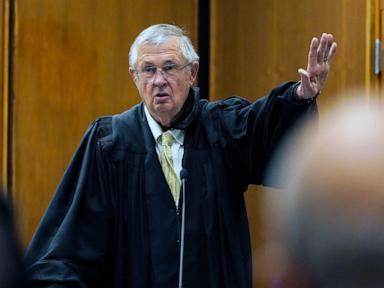
Senior U.S. District Judge Glen H. Davidson ruled against a high-stakes effort to reshape local election maps in DeSoto County. The lawsuit, Harris v. DeSoto County, alleged that the county's 2022 redistricting plan systematically diluted Black voting power. Civil rights groups wanted new, majority-Black districts drawn. Instead, the court completely shut it down.
If you want to understand why local representation in the American South is hitting a brick wall, you have to look closely at this case. It isn't just about five county supervisor districts. It's a clear window into how modern federal courts are using recent Supreme Court precedents to quietly dismantle the historic Voting Rights Act.
The Raw Math Behind the Fight
DeSoto County sits right south of Memphis in the northwest corner of Mississippi. It's the fastest-growing county in the state. People are moving in, communities are changing, and the demographics are shifting fast.
Look at the numbers. The county holds around 190,000 residents. The Black population has surged and now makes up more than 30% of that total. In communities like Horn Lake, the Black voting-age population skyrocketed from 12% to nearly 52% over a 20-year span.
Yet, here is the stark reality of local government in DeSoto County. The local maps determine who wins 25 specific county offices. This includes the Board of Supervisors, the Board of Education, the Election Commission, justice court judges, and constables.
Want to guess how many of those 25 officials are Black? Zero. Every single one of them is white.
Local civil rights groups, backed by the DeSoto County NAACP and the ACLU of Mississippi, argued that this math isn't an accident. They claimed the 2022 map purposely carved up dense Black neighborhoods, scattering those voters across multiple districts so they could never band together to elect a candidate of their choice.
The High Court Ghost Haunted the Decision
When this case started moving to trial in early 2025, things looked promising for the plaintiffs. Judge Davidson, a Reagan appointee, originally noted that the plaintiffs easily demonstrated the standard benchmarks for a voting rights challenge. They proved Black voters in the county voted cohesively, while white voters voted as a strict bloc to defeat Black-preferred candidates.
But then the legal ground shifted beneath everyone's feet.
The U.S. Supreme Court issued its landmark ruling in Louisiana v. Callais. That single Supreme Court decision altered how federal judges must handle Section 2 of the Voting Rights Act. Historically, Congress designed Section 2 to focus on the concrete results of a map. If a map resulted in minority communities being completely shut out of power, it was vulnerable to a legal challenge.
The Callais precedent flipped that logic on its head. It raised the bar for what plaintiffs have to prove, forcing them to find a smoking gun showing that local officials acted with explicit, intentional racial animus when drawing lines.
That's exactly where the DeSoto County challenge fell apart. In his final ruling, Judge Davidson wrote that the plaintiffs simply didn't provide enough evidence to prove that the county maps were drawn with the explicit intention to dilute Black voting power. Because they couldn't prove bad intent, the county won.
Two Wildly Conflicting Realities
The reactions to the decision reveal two completely different versions of reality coexisting in Mississippi.
Civil rights advocates see a system designed to shut them out. The ACLU of Mississippi blasted the decision, arguing that the federal courts are essentially closing their eyes to discriminatory maps. They argue that requiring proof of "intent" is an impossible standard because smart politicians know better than to leave a paper trail when they gerrymander a district.
On the other side, local establishment politicians see a simple case of partisan sour grapes. Mike Hurst, the state Republican Party chairman who represented DeSoto County in the lawsuit, didn't hold back. He dismissed the entire legal battle as a partisan stunt, claiming that Democrats are just mad they can't win elections in a heavily Republican county.
County defenders also point out that DeSoto has elected a Black sheriff in a countywide vote, and possesses Black state legislators representing the area in Jackson. But the plaintiffs counter that those legislative lines are different, and a countywide sheriff race doesn't change the fact that localized neighborhood representation on the school board and supervisor board remains entirely locked up.
What Happens Next on the Ground
If you are a voting rights advocate or a local organizer, you can't rely on the federal courts to fix local maps anymore. The Callais decision has effectively broken the traditional legal tools used to fight gerrymandering.
The battle shifts entirely to raw political organizing. If you want to change the leadership in places like DeSoto County, you have to work within the boundaries of the maps you have.
First, focus heavily on countywide races. The sheriff's race proved that a Black candidate can win countywide in DeSoto if the coalition is broad enough. Organizers need to target other countywide seats where gerrymandered lines don't matter.
Second, pivot to intense, long-term voter registration and turnout operations. When the courts refuse to redraw the lines, the only option left is to overwhelm the existing lines with sheer numbers. That means registering the thousands of new residents moving into the Memphis suburbs every year and turning local school board and supervisor elections into high-turnout events. The legal route is blocked for now, meaning the ballot box is the only tool left.