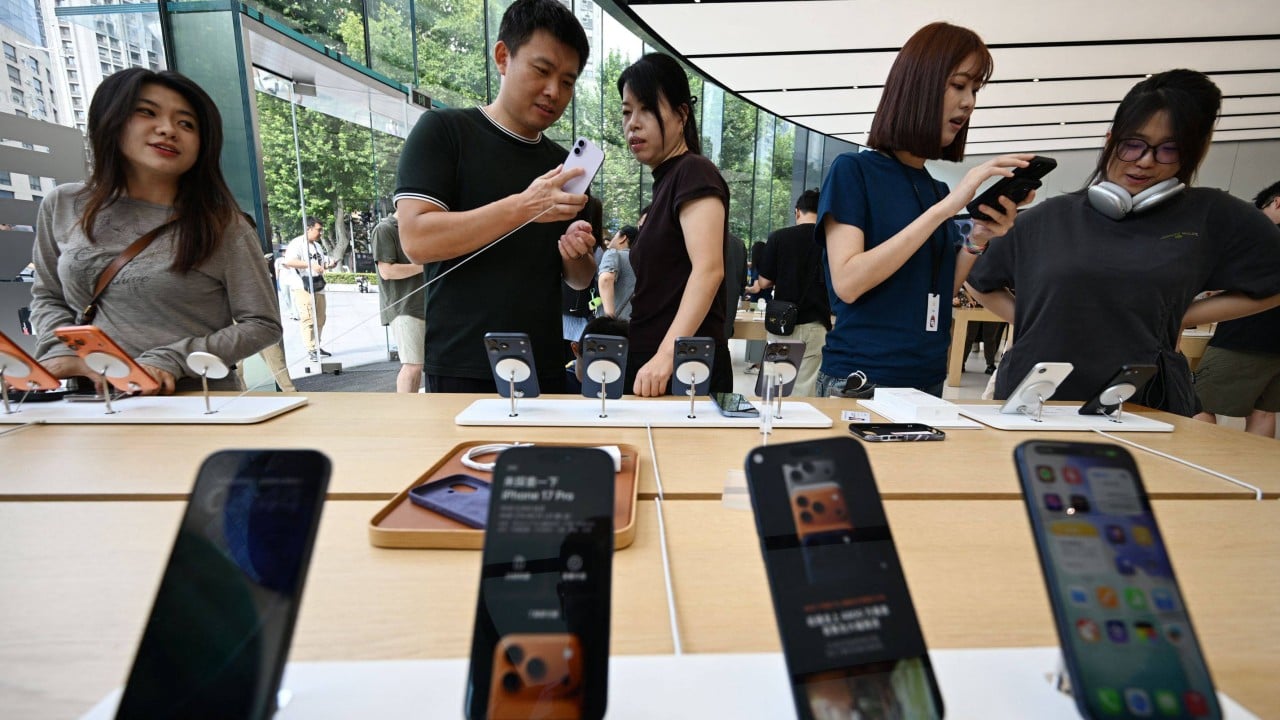
The era of selling mobile data by the gigabyte is structural history. For three decades, telecom operators globally generated fortunes by taxing every megabyte passing through their fiber-optic lines and cellular towers. That revenue engine has flatlined.
In a coordinated, aggressive market shift, China’s state-owned telecom giants have launched the world’s first nationwide, commercial AI token subscription plans. Led by China Telecom’s national rollout on May 17, 2026, alongside regional rollouts by China Mobile and China Unicom, these carriers are treating artificial intelligence compute power exactly like a utility. Instead of buying 40 gigabytes of 5G data, consumers and developers now buy 40 million tokens.
This is not a marketing gimmick; it is a fundamental reconfiguration of the digital infrastructure business model. As mobile data commoditizes to near-zero margins, the operators are pivoting to control the transactional currency of the generative AI economy.
The Token Economy Inoculation
A token is the baseline structural unit processed by large language models, roughly translating to four characters of text, or fractions of an image and a line of code. To the telecom industry, a token is the new megabyte.
China Telecom’s new tariff structure exposes how aggressively these companies are undercutting traditional AI cloud providers. For retail users and households, plans start at 9.9 yuan ($1.40 USD) per month for 10 million tokens, scaling up to 49.9 yuan ($6.90 USD) for 80 million tokens. For developers and small-to-medium enterprises (SMEs), packages span from 39.9 yuan ($5.50 USD) for 15 million tokens up to 299.9 yuan ($41.50 USD) for 250 million tokens.
The strategy hinges on an aggregation play that American tech ecosystems cannot currently replicate. Instead of locking a customer into a single model, China Telecom’s subscription acts as an all-access pass. A developer can route queries to China Telecom’s proprietary Xingchen model, swap to Alibaba's options, or leverage DeepSeek’s V3.2 within the exact same monthly quota.
+------------------------------------------------------------+
|                CHINA TELECOM AI SUBSCRIPTIONS              |
+--------------------------+---------------------------------+
| Consumer Tiers           | 10M to 80M tokens/month         |
|                          | (9.9 to 49.9 CNY / $1.40-$6.90) |
+--------------------------+---------------------------------+
| Developer / SME Tiers    | 15M to 250M tokens/month        |
|                          | (39.9 to 299.9 CNY / $5.5-$41.5)|
+--------------------------+---------------------------------+
| Bundled Utilities        | Broadband upload boosts,        |
|                          | Unified billing, Cybersecurity  |
+--------------------------+---------------------------------+
China Mobile immediately followed suit, partnering with Tencent to launch an AI-native workspace offering 400,000 tokens for a single yuan, billed directly to the consumer’s phone bill.
This model solves the friction point that has crippled individual AI software adoptions: fragmented, unpredictable usage costs spread across half a dozen corporate subscriptions. By embedding token counts into standard utility bills, the carriers have simplified the consumption architecture.
Why the Data Monopoly Failed
Carriers are forced into this corner because 5G failed to yield the enterprise windfalls promised a decade ago. Network pipes grew wider, but the applications riding those pipes captured all the value. Telecom operators became passive, low-margin conduits for ByteDance, Tencent, and Meituan.
Simultaneously, the volume of AI compute requests in China skyrocketed. The National Data Administration tracked daily token consumption leaping from 100 billion in early 2024 to a staggering 140 trillion by March 2026. The plumbing of the internet is chattering with machine-to-machine inference requests rather than human video streams.
If a telecom company only charges for the transport of those tokens rather than the generation of the tokens themselves, they are leaving the highest-margin component of the network stack on the table.
The State-Backed Compute Grid
This strategy succeeds in China because the underlying computing infrastructure has been nationalized into a public grid. The Ministry of Industry and Information Technology (MIIT) is actively orchestrating a centralized cloud architecture that pools spare computing capacity across China Mobile, China Telecom, and China Unicom.
When a user executes an AI query through a China Telecom token plan, the calculation doesn't just run on a random server farm. It is routed dynamically across a state-engineered network that operates like an electrical grid. West China's massive, energy-abundant data centers handle heavy, asynchronous training, while edge nodes near coastal metro areas handle instant inference.
This structural layout brings the cost of inference down to levels Western firms struggle to match. A million tokens from Chinese providers like MiniMax or Moonshot cost between $2 and $3. Competing Western models hover much higher.
The carriers are positioning themselves as the ultimate distributors of this cheap compute. They are bundling token quotas with enterprise connectivity perks, such as enhanced broadband upload speeds and hardware-level cybersecurity. It is a moat built on top of physical glass and copper.
The Blind Spots of the Tokenized Bill
The model is elegant on paper, but it presents deep operational liabilities that carriers have yet to solve.
The first is the structural volatility of token pricing. Unlike a gigabyte of data, which costs a predictable, declining amount of electricity and hardware depreciation to transport, a token's actual cost changes wildly depending on the complexity of the task. A token used for simple text summary requires negligible compute; a token processed by a complex agent executing multi-step reasoning or high-fidelity code generation consumes exponentially more hardware cycles.
By selling flat-rate token buckets that allow cross-model switching, carriers risk getting burned by heavy users who maximize their quotas entirely on high-cost, third-party models. If an enterprise buyer exhausts a 250-million token package entirely on compute-heavy reasoning models, the carrier's profit margin evaporates into third-party infrastructure fees.
Furthermore, it creates an uncomfortable gatekeeper dynamic. When a state-controlled telecom provider dictates which large language models are bundled into the basic monthly subscription, it effectively picks the winners and losers of the domestic AI software sector. Startups left outside the carrier bundle will find themselves starved of access to the consumer and SME markets, no matter how efficient their underlying architectures are.
The Warning to Global Operators
Western carriers like AT&T, Verizon, and Vodafone are watching their domestic capital expenditures decline while their core revenues remain flat. They have largely stayed out of the model layer, viewing AI purely as an internal tool to cut customer service costs or optimize cell tower maintenance.
That hands-off approach is an existential mistake.
By ceding the token layer entirely to hyperscalers like Microsoft, Google, and Amazon, Western carriers are repeating the exact policy error they made during the mobile app explosion of the 2010s. They are building the roads while letting someone else charge the tolls. The Chinese model demonstrates that the network operator does not need to build the absolute best foundational model to control the market. They simply need to control the billing relationship, the edge routing, and the local fiber that connects the consumer to the cluster.
The transformation from data traffic to token value is an structural reality. The carrier of the future does not measure its value by how much data it can move across a city. It measures its value by how many decisions it can compute per second for the devices inside that city.
The gigabyte plan is dead. The token economy is live.
/arc-anglerfish-arc2-prod-mco.s3.amazonaws.com/public/BHPBP5TJJFF5XBWKSOQWZ6G55A.JPG)