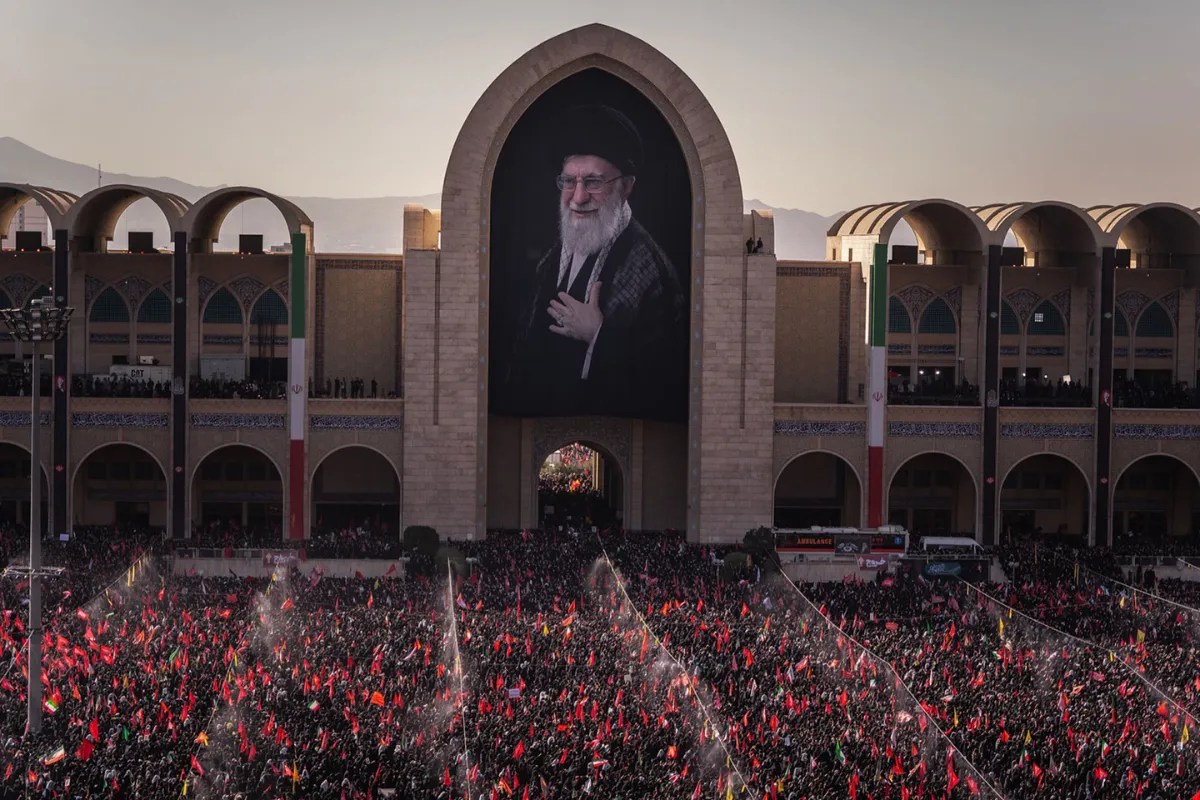
The tarmac at Mehrabad International Airport did not sleep. Heavy transport planes, sleek diplomatic jets, and chartered airliners lined the runways like silver beads on a dark string. Outside, the Tehran air carried the scent of exhaust, crushed rosewater, and the unmistakable, static hum of history shifting on its axis.
Seventy nations. More than seventy distinct geopolitical agendas, historical grievances, and economic alliances, all compressed into a few square miles of black asphalt and draped mourning halls.
When a towering figure who has defined the calculus of the Middle East for decades steps off the stage, the vacuum left behind is not empty. It is instantly filled by the quiet, urgent rustle of silk suits, military uniforms, and traditional robes. The world did not just send condolences. It sent its eyes and ears.
The Geography of Grief
Consider a room where officials from nations that routinely block each other’s resolutions at the United Nations are suddenly forced to share the same breathing space. They stood shoulder to shoulder under the immense dome, watching the sea of hundreds of thousands of mourners flooding the streets outside.
To the casual observer watching the grainy television broadcasts in Delhi, London, or Washington, it looked like a standard state funeral. A sea of black banners. Monotone chants. The rhythmic, thumping cadence of collective mourning.
But look closer at the front rows.
The human element of diplomacy is rarely found in the official press releases. It is found in the micro-expressions. A nod exchanged between an Asian diplomat and a Gulf state envoy. The way a delegation from New Delhi adjusted their shawls as they walked past representatives from the global North.
India’s presence was particularly telling. For decades, New Delhi has walked a tightrope, balancing its deep energy and strategic ties with Tehran against its burgeoning partnerships in the West. Sending a high-level delegation wasn't just a courtesy. It was a calculated statement of continuity. In the theater of global affairs, showing up is the ultimate currency. If you are not at the table—or in this case, the funeral procession—you are irrelevant.
The View from the Street
To understand the stakes, you have to leave the VIP enclosures and stand where the asphalt meets the worn leather of ordinary shoes.
Imagine a local shopkeeper named Reza. For forty years, his entire world view, his economic reality, and the daily rhythm of his life were tethered to the decisions made by the office of the Supreme Leader. The sanctions, the regional triumphs, the domestic struggles—they were not abstract foreign policy points to Reza. They were the price of bread. They were the reason his son couldn't find a job as an engineer, and the reason his daughter had to learn how to navigate a heavily restricted internet.
Now, Reza stands on a street corner, watching motorcades with tiny foreign flags zip past.
"They come to say goodbye," he might whisper to a neighbor, shielding his eyes from the glare of the afternoon sun. "But they are really looking to see who stands closest to the door."
He is right. The funeral was less about the past and entirely about the morning after. Every foreign intelligence agency, every diplomatic mission, and every regional analyst was micro-analyzing the seating arrangements. Who sat next to whom? Who received a longer handshake from the transitional authorities?
These are not trivial details. In highly centralized systems, proximity is power. The distance between two chairs can signify the birth of a new security pact or the quiet death of an old trade agreement.
The Friction of Convergence
Gathering representatives from seventy countries creates an intense logistical and emotional friction. The air in the capital was thick with it. Security personnel, wired with earpieces and carrying automatic weapons, formed human walls around the foreign dignitaries.
The challenge wasn't just keeping people safe from external threats; it was keeping the peace among the guests.
Imagine the sheer friction of housing delegations from nations currently locked in proxy conflicts within the same hotel corridors. Elevators became accidental summits. A brief, icy silence as two opposing diplomats realized they were sharing a ride to the lobby. These are the unscripted moments that shape the modern world—moments that never make it into the official state media reports.
The Indian delegation navigated this minefield with practiced, bureaucratic precision. India’s relationship with Iran is ancient, rooted in shared linguistic history and centuries of trade. Yet, modern realities mean India must also protect its maritime trade routes and its standing with global superpowers. By standing in that room, the Indian representatives were silently asserting that their strategic autonomy remains non-negotiable. They were there to secure India’s interests in the Chahbahar port, to ensure regional stability, and to remind the incoming leadership that New Delhi remains a steady, independent pillar in an unstable neighborhood.
What Follows the Silence
The chants eventually faded. The crowds dispersed into the labyrinthine alleys of Tehran, leaving behind discarded plastic water bottles and the quiet, heavy dust of millions of moving feet. The foreign jets taxied back onto the runways, their engines roaring to life as they lifted off into the night sky, carrying their respective dignitaries back to their capitals.
The real test begins now.
History shows us that the immediate aftermath of a monumental transition is rarely marked by sudden, dramatic explosions. Instead, it is marked by a slow, agonizingly quiet realignment. The commitments made in whispered conversations on the sidelines of the funeral will begin to manifest in trade data, naval movements, and diplomatic votes over the coming months.
The world gave its final farewell, yes. But as the stadium lights shut down and the capital returned to its uneasy routine, the true realization settled in. The funeral was over. The race to define the next era had just begun.