The global economy is not a series of abstract graphs or stock tickers flashing green and red on a glass wall in Manhattan. It is a physical thing. It is made of steel, salt water, and diesel smoke. It breathes through a handful of narrow geographical throats scattered across the map, places where the vast, sprawling momentum of human commerce is forced to squeeze through a needle’s eye.
The narrowest of those throats is the Strait of Hormuz.
On an ordinary morning, twenty-one million barrels of oil slide through this twenty-one-mile-wide ribbon of water separating Iran from Oman. That is one-fifth of the world’s daily petroleum consumption. When the tankers move, lights stay on in Tokyo, factories hum in Shanghai, and a commuter in Munich fills her hatchback without thinking twice. But when the shipping lanes go quiet, the silence is deafening. It ripples outward from the Persian Gulf, triggering a chaotic chain reaction that touches everything from the price of a gallon of milk to the geopolitical calculus of superpowers.
The announcement from Tehran came with the suddenness of a lightning strike, though the storm clouds had been gathering for months. Citing what it characterized as blatant, repeated violations of the fragile regional ceasefire by the United States and Israel, the Iranian government declared the shipping lane closed. The diplomatic jargon used in the official state broadcast spoke of sovereign rights and defensive measures. The reality on the water, however, was far more immediate. Naval vessels maneuvered into position. Drills were announced. Commercial vessels already en route were forced to drop anchor or turn around, their captains suddenly saddled with the terrifying responsibility of navigating a flashpoint.
To understand how a localized political fracture can immediately threaten the stability of global life, consider a hypothetical captain named Marcus. He has spent thirty years at sea, guiding massive ultra-large crude carriers across the globe. He is not a politician. He does not vote in Middle Eastern elections or sit in Pentagon briefing rooms. His world is measured in knots, drafts, and the steady thrum of a two-stroke marine diesel engine beneath his feet.
As his ship approaches the outer edge of the Gulf of Oman, the radar screen reflects an unsettling reality. The standard shipping lanes, usually a predictable highway of transponders, are a mess of confused vectors. Warships appear as sharp, unidentified blips. Radio chatter is frantic, filled with overlapping warnings in multiple languages. For Marcus and his crew, the high-stakes chess match between Washington, Jerusalem, and Tehran is no longer a headline on a smartphone. It is a tangible, looming shadow on the horizon. If they push forward, they risk seizure or worse. If they turn back, the economic penalties for their cargo could run into the millions of dollars per day.
They wait. The world waits with them.
The immediate reaction in global financial markets was both predictable and violent. Oil prices surged by double digits within hours of the announcement. But the true danger of a blockade in the Strait of Hormuz lies not in the initial spike, but in the secondary and tertiary waves that follow. Modern supply chains operate on a principle of razor-thin margins and instantaneous delivery. There are no massive stockpiles of oil waiting in reserve to cushion a prolonged disruption. The global energy infrastructure is a continuous pipeline, and when you crimp the hose, the pressure builds instantly at the source while the destination starves.
Consider what happens next when a vital maritime artery is severed. Insurance companies immediately reclassify the entire region as a war zone. Premiums skyrocket overnight, making it financially ruinous for merchant fleets to even attempt passage. Shipping conglomerates are forced to reroute their vessels around the Cape of Good Hope at the southern tip of Africa. This detour adds thousands of miles and weeks of travel time to every single journey. More fuel is burned. More crews must be paid. The global supply of available shipping containers and tankers shrinks because vessels are trapped at sea for much longer periods.
This is how a dispute over a ceasefire agreement in the Middle East transforms into an invisible tax on a family thousands of miles away. The cost of shipping ripples into the agricultural sector because fertilizer requires massive amounts of energy to produce and transport. Diesel prices rise, meaning the trucks that deliver food to supermarkets cost more to operate. Within weeks, the price of basic groceries reflects the tension of a naval standoff in a body of water most consumers could not find on an unlabelled map.
The political justifications offered by Tehran center on an narrative of betrayal. The ceasefire, negotiated after months of back-channel diplomacy and international pressure, was supposed to offer a breathing room, a chance to de-escalate a region that has spent decades on the precipice of total war. Iranian officials argue that clandestine operations, intelligence gathering, and targeted strikes by Western allies rendered the agreement a dead letter. In their view, closing the strait is not an act of aggression, but the leverage of their ultimate strategic card.
From the perspective of Washington and its allies, the blockade is viewed as an unacceptable provocation, an act of economic warfare against the international community. The freedom of navigation in international straits is a foundational tenet of global maritime law. For decades, the United States Fifth Fleet, stationed in nearby Bahrain, has operated under the explicit mandate to keep these waters open. The closure represents a direct challenge to that naval hegemony.
The danger of this standoff is that it leaves very little room for diplomatic retreat. When both sides frame their actions in terms of national survival and existential honor, compromise looks like weakness. A single miscalculation—a nervous young radar operator on a destroyer, an Iranian fast-attack craft getting too close to a commercial vessel, a misinterpreted radio transmission—could transform a cold blockade into a hot war.
The human cost of these grand geopolitical maneuvers is often obscured by the language of international relations. We talk of state actors, sanctions, strategic deterrence, and naval assets. We treat nations as if they are monolithic blocks moving across a game board. But nations are made of people.
The people bearing the immediate weight of this crisis are the mariners stranded in the crosshairs, the families in coastal communities who watch the horizons with growing anxiety, and the ordinary citizens worldwide who watch their economic stability erode because of decisions made in distant capitals. The invisible stakes are found in the quiet panic of a small business owner calculating whether they can survive another energy spike, or the desperation of developing nations that rely on affordable fuel imports to keep their nascent infrastructure from collapsing.
The global community has faced threats to the Strait of Hormuz before. During the Tanker War of the 1980s, commercial ships were routinely targeted, forcing the international community to reflag vessels and provide military escorts. But the world of forty years ago was less interconnected, less dependent on the hyper-efficient, fragile networks that define contemporary life. Today, our vulnerability is absolute.
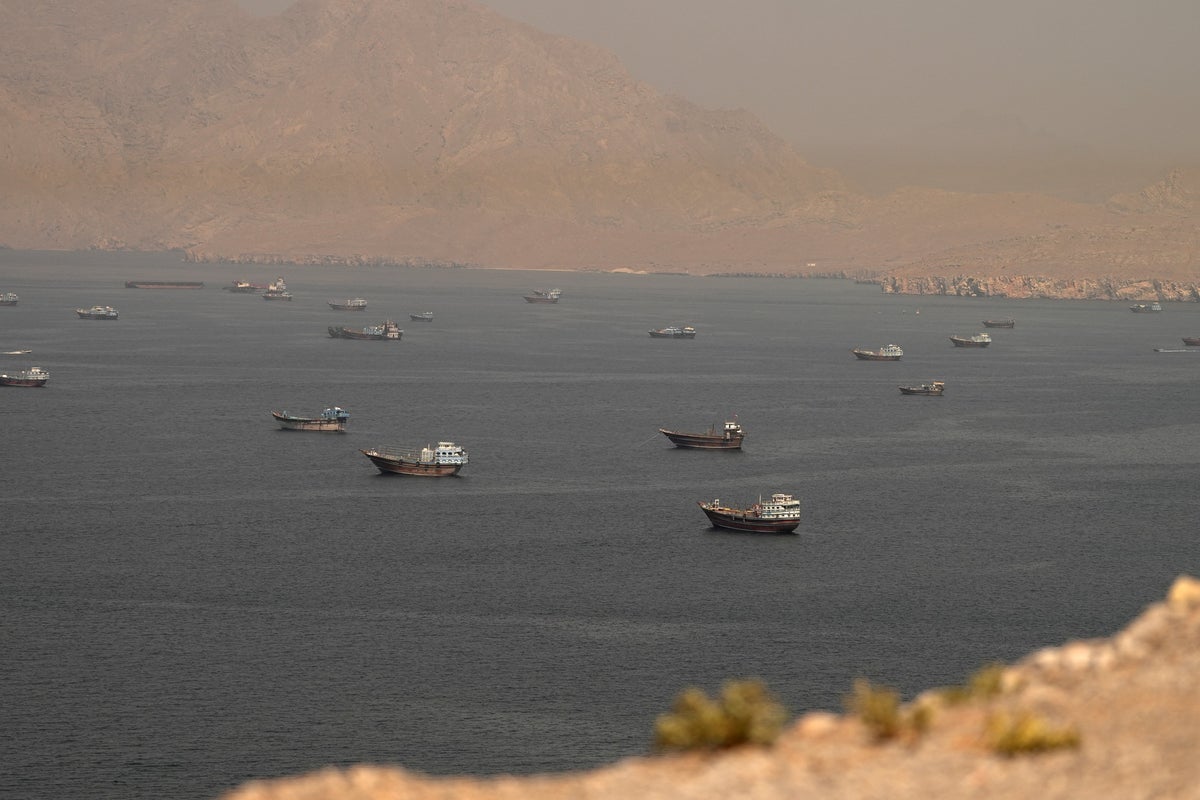
The ships continue to idle in the blue waters of the Arabian Sea, their hulls reflecting the harsh desert sun. Their crews watch the gray shapes of warships patrolling the horizon. The economic machinery of civilization slows down, waiting to see if diplomacy can find a way through the narrow strait, or if the throat will close entirely, choking off the lifeblood of the modern world.