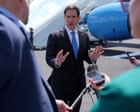
The predictable theater of American foreign policy on Cuba has returned, and with it, the same tired script that has failed for over six decades. Media outlets scramble to cover the standard talking points: Marco Rubio expresses profound skepticism about diplomatic breakthroughs, while Donald Trump brandishes the threat of military intervention. The mainstream consensus swallows this hook, line, and sinker, framing the situation as a high-stakes standoff where the choice is between weak-kneed appeasement and decisive muscular force.
This framework is fundamentally flawed. It misreads the geopolitical reality, misinterprets the actual levers of power, and completely ignores the historical data. Decades of watching Washington policymakers recycle these exact threats reveal a glaring truth: the aggressive saber-rattling and the defeatist diplomatic posturing are two sides of the same ineffective coin. They are designed for domestic political consumption in Florida, not for achieving actual strategic outcomes in Havana.
To understand why the current rhetoric is empty, look at the structural mechanics of the US-Cuba relationship. The assumption that military pressure or total isolation will force a regime collapse is a fantasy that ignores the endurance of the Cuban state apparatus under far worse conditions.
The Myth of the Effective Blockade
For more than sixty years, the underlying assumption of US policy has been that economic deprivation correlates directly with political transformation. I have analyzed decades of trade data and sanctions regimes across the globe, and the reality is stark: comprehensive embargoes rarely trigger the collapse of autocratic governments. Instead, they frequently provide those governments with a permanent, convenient scapegoat for their internal economic mismanagement.
When Washington intensifies sanctions or threatens kinetic action, it does not empower the Cuban citizenry to overthrow their leaders. It does the exact opposite. It triggers a predictable siege mentality. The ruling elite uses the external threat to justify increased domestic surveillance, crackdowns on dissent, and the consolidation of state control over remaining resources.
Consider the logic of the Helms-Burton Act of 1996. It was designed to choke off foreign investment and accelerate the end of the regime. Decades later, the Cuban government remains intact, while European and Canadian firms simply found workarounds or adjusted their risk premiums. The lazy consensus insists that the policy just needs more time or stricter enforcement. Einstein’s definition of insanity comes to mind.
Why Military Threats Lack Credibility
The threat of military action against Cuba is treated by the press as a serious, terrifying leverage point. It is not. It is a bluff that Havana called decades ago, and they know the Pentagon has no desire to execute it.
An actual military intervention in Cuba would be a strategic disaster for American interests in the Western Hemisphere, and every serious analyst inside the Department of Defense knows it.
- The Refugee Crisis: Any kinetic strike or destabilization campaign would immediately trigger a mass migration event that would dwarf the 1980 Mariel boatlift. Hundreds of thousands of migrants fleeing chaos would overwhelm US Coast Guard and border resources within days.
- The Geopolitical Vacuum: Forcing a sudden, violent collapse of the Cuban state without a viable, organized opposition ready to govern creates a failed state ninety miles from Florida. That vacuum would not be filled by Jeffersonian democrats; it would be exploited by transnational criminal organizations and drug cartels.
- Adversarial Exploitation: Beijing and Moscow would relish a US military intervention in the Caribbean. It would instantly alienate Washington’s democratic partners across Latin America, shattering decades of diplomatic capital and handing America's chief global rivals a massive propaganda victory.
When politicians threaten military options, they are not speaking to Cuban generals. They are speaking to voters in Miami. It is a domestic campaign strategy masquerading as national security doctrine.
The Flawed Premise of Modern Diplomacy
If the hardline military approach is an illusion, the standard diplomatic alternative pushed by Washington moderates is equally detached from reality. The conventional wisdom suggests that opening embassies, loosening travel restrictions, and engaging in cultural exchange will naturally dissolve the Cuban state's ideological foundations.
This approach fails to understand the nature of the Cuban regime's survival strategy. During the Obama-era thaw, the influx of American dollars and tourists did not democratize the island. Instead, the state-run tourism conglomerate, GAESA—managed directly by the Cuban military—monopolized the financial benefits. The hard currency flowing from American travelers went directly into state coffers to fund the security apparatus, while the average Cuban entrepreneur received crumbs.
Diplomacy that does not aggressively target the financial infrastructure of the military elite is just subsidized stabilization for the regime. True engagement requires a cold-eyed focus on economic subversion, not polite summits and symbolic flag-raisings.
Dismantling the PAA Conventional Wisdom
When people look at the Cuba dilemma, they consistently ask the wrong questions because the public debate is framed by partisan echo chambers. Let's address the most common premises directly.
Does isolating Cuba prevent foreign adversaries from gaining a foothold?
The exact opposite is true. Total US isolation forces Cuba deeper into the orbits of China and Russia. When Washington cuts off economic and diplomatic channels, Havana looks for patrons who do not condition their support on human rights or democratic reforms. China's development of electronic spy bases on the island and Russia's renewed naval visits are direct consequences of a vacuum left by American inflexibility. Isolation does not contain foreign influence; it invites it.
Can targeted sanctions ever work?
Yes, but only if they are weaponized against specific individuals and networks rather than the general economy. The mistake of US policy is using broad, blunt-force sanctions that crush the emerging Cuban private sector—the very group capable of challenging state dependency. Instead of banning all transactions, policy should explicitly permit and protect direct financial pipelines to independent Cuban businesses, while aggressively freezing the offshore assets of GAESA officials and their families.
The Counter-Intuitive Path Forward
Stop trying to fix Cuba through the binary lens of military threats or naive diplomatic resets. The current strategy is a self-perpetuating loop that serves politicians on both sides of the aisle but achieves zero strategic goals.
If the objective is genuine political evolution and the reduction of adversarial influence in the Caribbean, Washington must shift from a policy of emotional punishment to a strategy of asymmetric economic integration.
Imagine a scenario where the US lifts restrictions on telecommunications infrastructure and direct banking for verified private citizens, while simultaneously maintaining strict, surgical sanctions on the military elite. By flooding the Cuban population with independent means of communication and financial self-sufficiency, you systematically erode the state’s primary lever of control: the citizen’s total economic dependence on the government for survival.
This approach has distinct downsides. It requires tolerating the existence of the Cuban regime in the short term, which is politically unpalatable for lawmakers who rely on fiery rhetoric for re-election. It requires accepting that progress will be slow, messy, and non-linear. But it replaces a policy of theatrical failure with a strategy designed for the long game.
The current debate between Rubio's skepticism and Trump's threats is a distraction from a fundamental institutional failure. Washington has spent sixty years wishing for a different reality ninety miles south. It is time to stop playing to the cameras, drop the empty threats that deceive no one, and dismantle the regime's control through the one thing they fear more than American marines: an economically independent Cuban population.
Empty threats do not project strength; they expose a lack of imagination. Put down the megaphone. Weaponize the market. Change the game.


