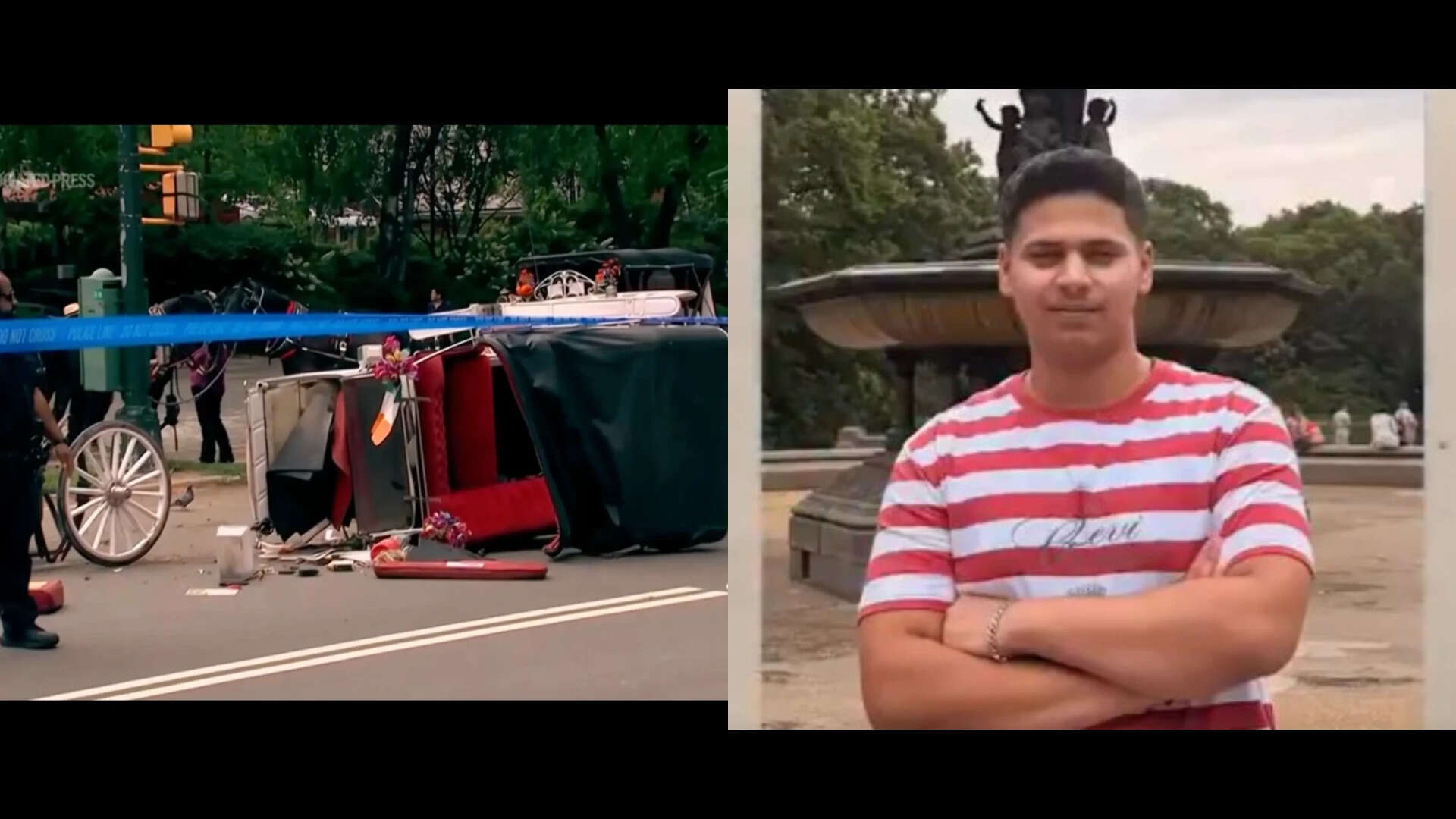
The sound is the first thing that hooks you. Walk down Central Park South on any given afternoon, and amidst the aggressive symphony of yellow cabs, delivery trucks, and sirens, you will hear a rhythmic, hollow thud. Clip-clop. Clip-clop. It is a sound intentionally engineered to evoke another century, a sensory time machine transportive enough to make tourists forget, if only for a moment, that they are standing in the middle of a hyper-dense, twenty-first-century metropolis.
For decades, the horse-drawn carriages of Manhattan have been sold as a living romance. They appear in wintertime movies, engagement photos, and holiday postcards. But romance requires a certain amount of willful blindness. It asks us to ignore the smell of exhaust fumes mixing with manure, the sight of a nine-hundred-pound animal navigating a sea of aggressive rideshare drivers, and the underlying truth that asphalt was never meant for hooves. For an alternative look, read: this related article.
Then, the illusion shattered entirely.
The tragedy did not happen in a vacuum, but when Romanch Mahajan, a vibrant teenager visiting from India, lost his life in an incident connected to this antiquated trade, the romantic veneer washed away instantly. What remained was the cold, stark reality of a public safety crisis that had been brewing for generations. His death was not merely an isolated misfortune. It became a flashpoint, a moment of profound grief that forced the city to look directly at the true cost of its nostalgia. Further insight regarding this has been provided by NPR.
Now, City Hall is shifting under the weight of that loss. New York Mayor Zohran Mamdani is leading a aggressive legislative push to permanently dismantle the horse carriage industry, framing the issue no longer as a debate over tourism or tradition, but as an urgent matter of human and animal survival.
Consider the sheer physics of a modern city street. A standard carriage horse weighs nearly half a ton. It possesses instincts honed over millennia to flee when startled by sudden noises, unpredictable movements, or the erratic behavior of city traffic. When that flight response triggers on a narrow Manhattan cross-street, the carriage becomes a rolling projectile.
The political battle lines were drawn almost immediately after the tragedy. On one side stand the carriage operators, many of whom belong to multi-generational families reliant on the trade for their livelihoods. They argue that the horses are deeply cared for, regularly inspected, and represent an irreplaceable piece of New York’s cultural fabric. To them, the push for a ban feels like an attack on their heritage, an overreach by lawmakers who fail to understand the bond between a driver and their animal.
But Mayor Mamdani’s administration views the situation through a entirely different lens. The argument is no longer about whether the horses are loved; it is about whether a modern city can justify the inherent risk of placing large, flight-prone animals alongside multi-ton motorized vehicles.
The problem is structural. The infrastructure of New York has evolved exponentially since the era when horses were the primary mode of transportation. Cobblestones gave way to smooth, slick asphalt. Quiet streets became crowded corridors packed with electric bikes, silent electric vehicles, and distracted pedestrians. The margins for error have vanished.
When you strip away the political rhetoric, the debate is fundamentally about how a society values safety versus tradition. For years, minor accidents were brushed aside as anomalies. A horse slipping on ice, a carriage clipping a car bumper, a animal spooked by a construction site. These incidents were treated as individual mishaps rather than symptoms of a systemic mismatch.
But the loss of a young life changes the calculus entirely. Grief has a way of clarifying things that politics tends to complicate. It forces us to ask why an industry that serves as a luxury amusement is permitted to operate under conditions that jeopardize public safety.
The proposed legislation does not simply aim to eliminate jobs; the Mamdani administration has signaled a willingness to explore transition programs, such as replacing the horse-drawn models with vintage-style electric carriages. This alternative would preserve the nostalgic aesthetic for tourists while removing the living, unpredictable element from the equation. The drivers could stay on the road, but the horses would be retired to sanctuaries, far away from the exhaust and the concrete.
Predictably, the opposition remains fierce. Industry advocates argue that electric cars lack the magic that draws visitors to Central Park. They claim a ban would devastate the local tourism economy, particularly the hotels and restaurants lining the park perimeter that benefit from the old-world charm.
Yet, the momentum feels different this time. The public mood has shifted. The sight of a horse straining against a heavy load on a ninety-degree July afternoon or shivering in a sudden December blizzard feels less like a historical romance and more like a cruel anachronism to an increasingly conscious public.
Change in New York rarely happens smoothly. It is a city built on friction, where every square inch of pavement is fiercely contested. The carriage industry has survived previous mayoral attempts to ban it, utilizing strong union backing and deep-seated cultural nostalgia to weather the political storms. But those past battles were fought over abstract concepts of animal welfare.
The current push is anchored in human tragedy. It is driven by the realization that the current system failed a family who came to the city seeking a dream, only to leave with an unimaginable nightmare.
The coming months will decide whether the clip-clop of hooves remains a permanent fixture of the Manhattan soundscape or becomes a relic of history. As the city debates ordinances, permits, and economic impacts, the core question remains simple.
We must decide if a postcard image is worth the price of a human life.


