The air in Windsor, Ontario, doesn't always smell like opportunity. Sometimes, it smells like exhaust fumes and the heavy, humid weight of the Great Lakes. For a kid growing up in the Glengarry neighborhood, the horizon isn't a broad expanse of possibility. It is a series of brick walls. You learn early that the world is divided into those who watch the game and those who are desperate enough to play their way out of the shadows.
Dante Daniels was never just watching.
To understand the trajectory of the Winnipeg Blue Bombers’ newest hope, you have to look past the jersey. You have to look at the floor of a cramped apartment where a boy slept because there weren't enough beds to go around. Poverty isn't just a lack of money. It is a constant, low-frequency hum of anxiety that vibrates in your teeth. It tells you that you are small. It tells you that the path is closed.
Daniels chose to run right through the wall.
The Weight of the Invisible Pack
Football is often described through the lens of physical metrics—forty-yard dash times, vertical leaps, and bench press repetitions. But for a player coming from the margins, every sprint is weighted by invisible stones. You aren't just running against a cornerback; you are running against the statistical probability that you will never leave your zip code.
Consider the sheer audacity required to believe you belong in the CFL when your daily reality is a struggle for basic stability. In the Glengarry patches, the "dream" is usually a defense mechanism. It’s a way to numb the sting of a cold kitchen or the sight of a mother working herself into the ground. Most people eventually wake up from it. They take the job at the plant. They settle.
Daniels refused to wake up.
His journey wasn't a straight line. It was a jagged, painful ascent through the junior football ranks, a path often ignored by the glitzy scouting departments of major NCAA programs. Junior football is the sport’s equivalent of a desert crossing. There are no massive NIL deals. There are no private chefs. There is only the dirt, the bruises, and the hope that someone, somewhere, is holding a stopwatch.
The Geometry of the Gridiron
The transition from the street to the stadium is a lesson in radical spatial awareness. On the sidewalk, you learn to look over your shoulder for danger. On the field, that hyper-vigilance becomes an elite trait. You anticipate the break in the route because you’ve spent a lifetime anticipating the break in your luck.
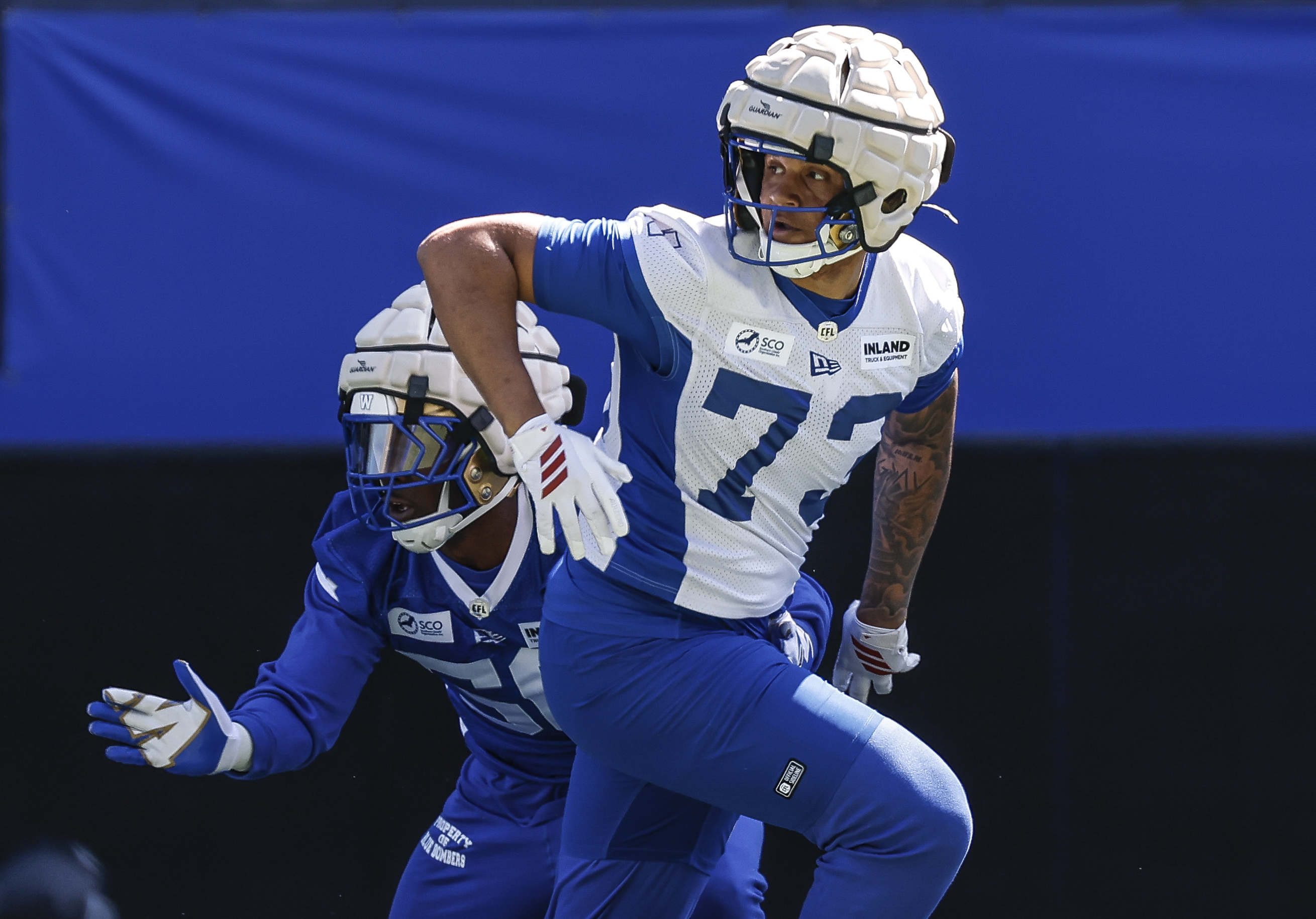
When Daniels moved through the ranks of the Windsor AKO Fratmen and later into the collegiate level, he wasn't just catching passes. He was reclaiming space. Every yard gained was a foot of ground he owned—territory that couldn't be taken away by a landlord or a bill collector.
There is a specific kind of violence in the way Daniels plays. It isn't malice. It’s an urgency that players from comfortable backgrounds struggle to replicate. When a scout looks at a player like that, they don't just see a "rookie." They see a man who understands that the alternative to this game is a return to the silence of the struggle. That makes a human being dangerous on a football field.
The Blue Gold
Winnipeg is a city that understands grit. It is a place defined by its winters and its stubborn refusal to be overlooked. When the Blue Bombers signed Daniels, it wasn't a charity move. The CFL is a business that eats "good stories" for breakfast if they can't produce on third-and-long.
The organization saw a physical specimen, yes. But they also saw a psychological profile that fits the "Blue and Gold" ethos like a surgical glove. The Bombers have built a culture on the backs of players who were told "no" in other places. They specialize in the undervalued and the resilient.
For Daniels, putting on that helmet for the first time wasn't about the fame. It was about the silence. The hum of anxiety finally stopped. In its place was the roar of a crowd that didn't care where he came from, only where he was going with the ball in his hands.
The Anatomy of the Leap
Imagine, for a moment, the specific physics of a jump ball.
The ball is in the air. Two men are tracking it. One of them grew up knowing he’d go to college regardless of whether he caught it. The other—Daniels—knows that the ball is a lifeline. In that split second, the laws of biology take a backseat to the laws of necessity. You jump higher because you have to. You hold on tighter because letting go means falling back into the brick walls of Windsor.
This is the "invisible stake" of professional sports. We talk about contracts and stats, but the real drama is the internal negotiation of a man who has wagered his entire existence on his ability to outrun his past.
Daniels’ presence in the Winnipeg camp isn't just a win for him. It is a disruption of the narrative that says poverty is a terminal condition. It suggests that the scars we carry from childhood aren't just damage; they are the callous that allows us to grip the rope when everyone else’s hands are bleeding.
The Unfinished Route
The stadium lights have a way of bleaching out the details of a man’s history. Under the LED glow, everyone looks like a hero. But as the season unfolds, the true nature of a player is revealed in the fourth quarter, when the lungs are burning and the body wants to quit.
That is when the ghosts of Glengarry become an advantage.
When you have spent years wondering where your next meal is coming from, a two-a-day practice in the Winnipeg heat is a luxury. When you have survived the isolation of being a kid with nothing, a locker room full of brothers is a fortress.
Daniels isn't playing for a ring. He is playing for the version of himself that used to sit on that apartment floor. He is playing to prove that the brick walls were never actually there—they were just obstacles designed to see how badly he wanted to get to the other side.
The journey from the streets of Windsor to the turf of Princess Auto Stadium is a long one, measured not in miles, but in the sheer volume of will required to bridge the gap. Dante Daniels didn't just find a dream. He built a bridge out of his own bones and sweat, and now, he’s inviting the rest of the world to watch him cross it.
The ball is in the air. The crowd is rising. And for the first time in his life, the ground beneath his feet is solid.