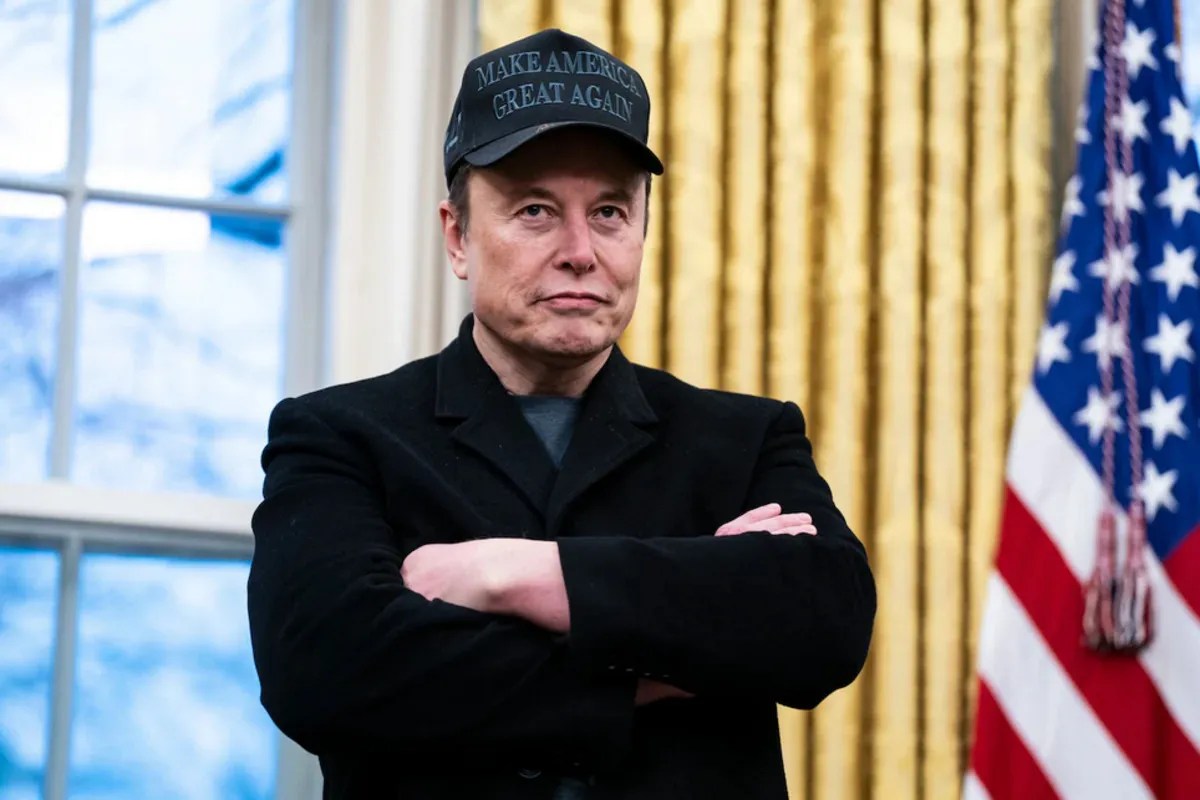
Elon Musk sat in a chair, perhaps like the one you are sitting in now, and felt the world tilting. It wasn't the thrill of a rocket launch or the rush of a stock market surge. It was the primal, terrifying realization that his body was no longer under his control. He described it simply, yet the words carried the weight of a thousand headlines: "I felt like I was dying."
This wasn't a scene from a sci-fi thriller. It was a reaction to a booster shot. When the man who wants to colonize Mars admits to being leveled by a few milliliters of liquid, the world stops to listen. But the conversation that followed wasn't just about Musk. It was about the invisible bridge of trust between the people who make the medicine and the billions who take it.
Trust is a ghost. You don't notice it’s there until it leaves the room. For years, the global medical narrative was a monolith—firm, certain, and unyielding. Then came the cracks. When a figure with a megaphone as large as Musk’s shares a personal brush with mortality, those cracks become canyons.
The Weight of a Single Story
Statistics are a comfort to policymakers, but they are cold comfort to a person shivering under a duvet with a racing heart. We are told that severe adverse reactions are "rare." In the language of data, rare means a decimal point followed by several zeros. In the language of a human life, rare is a 100% reality if it happens to you.
Musk’s revelation tapped into a vein of silent anxiety that had been pulsing beneath the surface of the post-pandemic world. He didn't just cite a study; he offered a visceral image. He spoke of his cousin, a young, healthy man, who allegedly suffered from myocarditis—an inflammation of the heart muscle—following the injection. Suddenly, the debate shifted from spreadsheets to the dinner table.
Consider the mechanics of the heart. It is a tireless pump, a masterpiece of biological engineering that beats about 100,000 times a day. When it falters, the ego of the modern world falters with it. Myocarditis became the lightning rod of this new skepticism. While medical authorities pointed out that the risk of heart issues from the virus itself often outweighed the risk from the vaccine, that nuance frequently got lost in the heat of the digital town square.
The Ghost in the Machine
We live in an era where information travels faster than the speed of thought. A tweet can travel across the globe before a peer-reviewed correction can even put its boots on. This creates a friction between two types of truth: the clinical truth and the lived truth.
Clinical truth is found in the controlled environments of double-blind studies. It is the truth of the aggregate. Lived truth is the sweat on Musk’s brow. It is the story of the neighbor who felt "off" for months. It is the woman who noticed her cycle changed and was told it was just stress. When these two truths collide, the clinical truth often loses its luster.
The problem isn't just the data. It's the delivery.
When the global scientific community spoke, it often spoke with a voice that brooked no dissent. Doubt was equated with danger. Hesitation was labeled as heresy. But human beings are wired to be cautious about what they put into their veins. It is an evolutionary survival mechanism. When that natural caution met a wall of "The Science is Settled," the result wasn't universal compliance—it was a quiet, brewing resentment.
The Science of the Unknown
We must be honest about what we are still learning. The mRNA technology used in the most prominent vaccines was a triumph of speed and ingenuity. It turned our cells into tiny factories, teaching them to recognize a threat before it arrived. It was brilliant. It was also new.
In the rush to save millions, the long-tail effects on the few were sometimes treated as collateral damage in the war against the virus. But we are now in the aftermath. We are in the "long-tail" period. Scientists are looking closer at the spike protein, its persistence in the body, and why some systems react with such violence while others don't notice it at all.
Biology is not a line of code. It is a messy, chaotic, and deeply individual ecosystem. What works for a million people might be a poison for the million-first. Acknowledging this doesn't make one "anti-science." It makes one a realist.
The Architect and the Echo Chamber
Elon Musk is an architect of the future, but he is also an inhabitant of the present. His voice carries because he represents the ultimate "disruptor." When he disrupts the medical narrative, he isn't just sharing a medical history; he is questioning the authority of the institutions that manage our lives.
The debate he sparked isn't really about the vaccine anymore. It’s about who gets to tell us what is true.
In the past, we relied on a few gatekeepers—doctors, evening news anchors, government officials. Today, the gate is gone. We are all standing in the field, shouting at each other. Musk’s "I felt like I was dying" wasn't a medical diagnosis, but it was a powerful piece of testimony in the trial of public opinion.
People are hungry for a middle ground. They are tired of the binary. They want to know that they can support the miracle of modern medicine while also asking why their heart is fluttering. They want to be able to look at the data without being told to ignore their own bodies.
The Invisible Stakes
The stakes are higher than a single booster or a single billionaire’s health. If we lose the ability to have a nuanced conversation about risk, we lose the ability to progress. Science thrives on the "What if?" and the "Why?" If those questions are silenced in the name of a greater good, the good eventually ceases to be great.
Imagine a parent sitting at a kitchen table, looking at a consent form. They aren't thinking about global herd immunity. They are thinking about the small person sleeping in the room down the hall. They are weighing the fear of the disease against the fear of the cure. They deserve a world where they can ask questions without being shamed.
We are currently navigating a collective trauma. The pandemic was a period of global grief, isolation, and fear. The vaccines were the promised exit ramp. For most, they were exactly that. For others, the exit ramp was a collision. Musk’s comments resonated because they gave a name to that collision.
The Silence After the Storm
The noise on social media eventually fades, but the questions remain. The scientific community faces a monumental task: rebuilding a bridge that has been scorched. This won't be done with more slogans or more mandates. it will be done with radical transparency.
It means admitting when we were wrong. It means investigating every "rare" side effect with the same fervor used to develop the initial dose. It means treating the public like adults who can handle the complexity of risk-benefit ratios.
The titan who felt he was dying is back to building rockets and neural links. He survived the cold sweat. But the global fever he ignited is still burning. It is a fever of skepticism, fueled by the feeling that the human element was forgotten in the pursuit of the scientific goal.
We stand at a crossroads of biological wonder and deep-seated suspicion. The only way forward is to listen to the whispers of the individual as clearly as we listen to the roar of the crowd. We must remember that every statistic has a name, a family, and a heart that just wants to keep beating, steady and sure, in the dark.
The needle is small, but the shadow it casts is long. We are all living in that shadow now, waiting to see if the light of honest inquiry will finally break through.