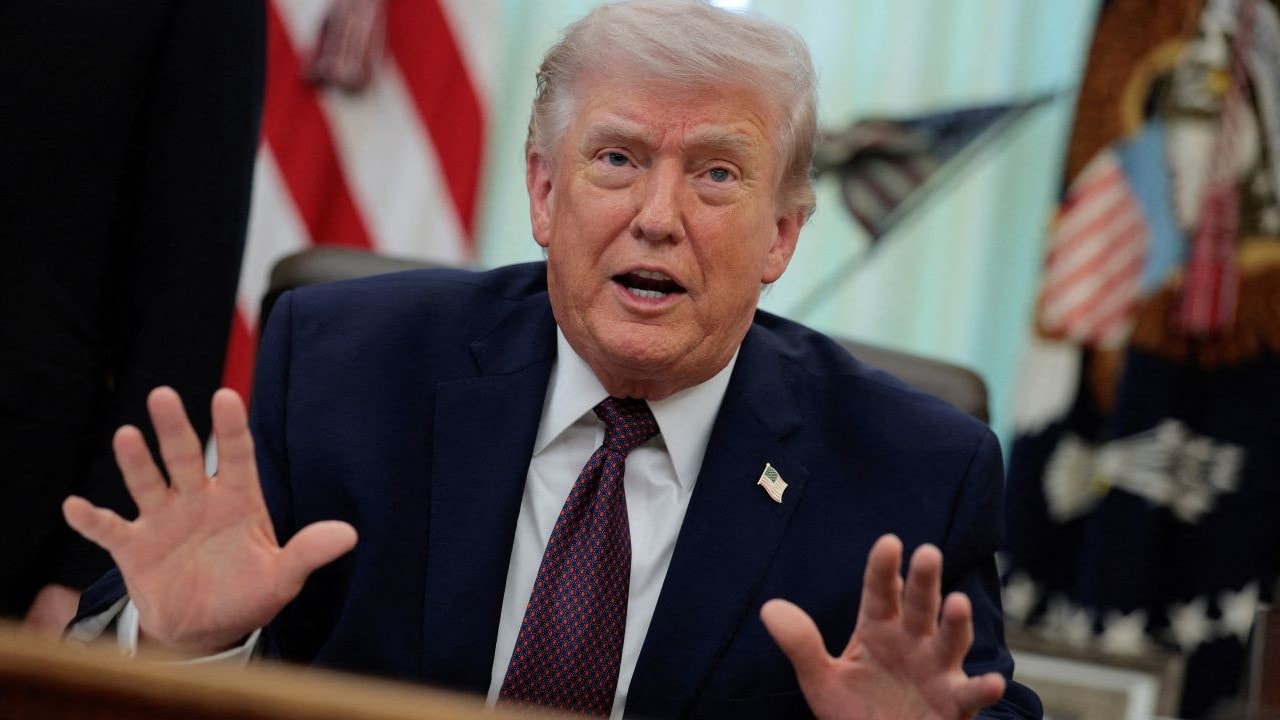
Questions regarding the mental acuity of political leaders often hinge on single, viral moments that may or may not reflect a deeper neurological reality. When Donald Trump allegedly referred to his wife, Melania, as "Melody" during a public appearance, the internet did what it does best: it ignited. This specific instance became the latest flashpoint in a long-running debate about the age and cognitive health of the men seeking the highest office in the United States. However, analyzing these slips requires moving past the partisan shouting matches and looking at the clinical mechanics of speech, memory, and the immense pressure of the campaign trail.
The "Melody" incident, while widely circulated, serves as a case study in how public perception of health is shaped by optics rather than medical diagnosis. To understand whether such a slip is a sign of decline or a common linguistic error, we have to examine the nature of paraphasia—the production of unintended syllables, words, or phrases during the effort to speak. In a high-stakes environment where every word is scrutinized, the line between a simple verbal stumble and a symptom of something more serious becomes blurred by political intent.
The Mechanics of the Verbal Slip
Human speech is an incredibly complex neurological process. It involves the rapid coordination of the Broca’s area for speech production and Wernicke’s area for language comprehension. Even in healthy individuals, the "tip-of-the-tongue" phenomenon or the substitution of similar-sounding names is a documented occurrence known as a phonological slip.
When a public figure misnames a family member, critics immediately point to neurodegenerative conditions like dementia or Alzheimer’s. Medical professionals, however, caution against "armchair diagnosis." A single instance of misnaming—especially one where the substituted name sounds remarkably similar to the correct one—is often insufficient evidence for a clinical diagnosis. Melania and "Melody" share identical starting consonants and similar vowel structures, making them prime candidates for a mechanical speech error rather than a failure of recognition.
The context of these errors matters. Campaigning involves 18-hour days, constant travel across time zones, and the relentless glare of stage lights. Fatigue is a primary driver of linguistic errors. For a candidate in their late 70s, the physiological toll of the trail is immense. Sleep deprivation alone can mimic the symptoms of mild cognitive impairment, affecting word retrieval and processing speed.
The Age Factor in Modern Politics
We are currently witnessing a historical anomaly where both leading contenders for the presidency are well past the traditional age of retirement. This has turned the 2024 and 2026 political cycles into a referendum on gerontology. The public is no longer just voting on policy; they are voting on perceived vitality.
Statistics show that the risk of cognitive decline increases with age, but "age" is not a uniform experience. Some individuals maintain high-level executive function well into their 90s, while others show signs of decline in their 60s. The challenge for the electorate is that they are viewing these candidates through a filtered lens. We see the 90-second clips of a stumble or a gaffe, but we rarely see the hours of briefings, negotiations, and private strategy sessions that would provide a more complete picture of their mental state.
The Transparency Gap
There is a growing demand for independent medical evaluations for presidential candidates. Current physicals provided by White House physicians or personal doctors are often criticized for being overly optimistic or lacking in granular cognitive data. A standard physical might confirm that a candidate's blood pressure is stable, but it rarely includes the results of a Montreal Cognitive Assessment (MoCA) or similar screening tools that would detect early-stage issues.
The lack of a standardized, transparent reporting process allows rumors to fill the vacuum. When a video of a name-slip goes viral, it isn't just a meme; it becomes a data point for a narrative of incapacity. This narrative is then weaponized by opposing campaigns, creating a feedback loop where every blink or pause is interpreted as a "medical emergency."
Stress and the Aging Brain
The cortisol levels produced by a modern political campaign are staggering. Chronic stress has a documented impact on the hippocampus, the part of the brain responsible for memory and learning. In older adults, the brain's ability to bounce back from high-stress events is diminished.
When Donald Trump or any other politician speaks in a "stream of consciousness" style, the risk of verbal tangents increases. This rhetorical style relies on rapid-fire associations rather than a scripted teleprompter. While this can appear more authentic to supporters, it also creates more opportunities for the brain to take a wrong turn. A missed name in this context is often a failure of focus rather than a failure of memory.
Distinguishing Between Gaffes and Pathology
To provide a fair analysis, we must distinguish between a "gaffe"—which is a social or political error—and a "pathological symptom."
- A Gaffe: Forgetting the name of a minor official or misstating a city name while on a multi-city tour.
- A Symptom: Persistent disorientation, the inability to follow complex instructions, or a fundamental change in personality and social decorum.
The "Melody" slip falls firmly into the category of a gaffe unless it is accompanied by a broader pattern of functional impairment. To date, the public evidence remains a collection of anecdotes rather than a consistent clinical profile.
The Role of Media Amplification
Media outlets have realized that "health fears" generate significantly more engagement than "policy debates." This creates a financial incentive to highlight every vocal tremor or missed step. By framing a simple name-slip as a sign that "health fears are soaring," publications tap into the deep-seated anxieties of the public regarding the stability of the government.
This type of reporting often ignores the "healthy survivor" effect. Individuals who reach advanced ages while maintaining high-pressure careers often possess significant cognitive reserve. Their brains have developed compensatory mechanisms to handle the stresses of their environment. By focusing exclusively on the failures, we ignore the high-level functioning required to manage a global political apparatus.
The Path Forward for Public Evaluation
If the American public wants to move beyond the cycle of viral health scares, the focus needs to shift toward objective metrics. This would involve:
- Standardized Cognitive Testing: Implementing mandatory, non-partisan cognitive screenings for all candidates over a certain age.
- Long-form Interaction: Prioritizing unscripted, long-form interviews over 30-second soundbites, allowing voters to see how a candidate processes information in real-time.
- Medical History Disclosure: Providing more comprehensive access to health records that go beyond the "fit for duty" summary.
The reality is that as long as our leaders are in their late 70s and 80s, these incidents will continue. A brain at 78 is not a brain at 38, and the expectations of the public must be tempered by biological reality. However, the jump from a misspoken name to a declaration of total decline is a leap that the current evidence does not support.
The "Melody" moment was a victory for social media algorithms, not for medical science. It highlighted the fragility of public image in the digital age, where a single second of fatigue can be immortalized as a sign of permanent failure. To truly assess the fitness of a leader, we must look past the slip of the tongue and toward the consistency of their judgment over time.
Focusing on the name-slip ignores the much larger, more pressing question of whether any human brain, regardless of age, is built to withstand the relentless, 24-cycle pressure of the modern executive branch. We are testing the limits of human endurance, and the occasional verbal glitch may simply be the sound of the machine under maximum load.