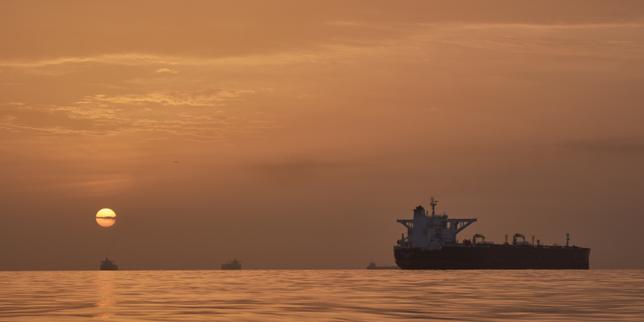
The water is a bruised shade of turquoise, shimmering under a sun so relentless it feels personal. On the deck of a massive oil tanker, a merchant sailor wipes grease from his brow and looks north toward the jagged cliffs of the Musandam Peninsula. He is standing at the center of the world's most precarious heartbeat.
This is the Strait of Hormuz. It is only twenty-one miles wide at its narrowest point. That is less than the distance of a marathon. Yet, through this tiny needle’s eye, twenty percent of the globe’s petroleum passes every single day. When Iran threatens to slide the bolt shut on this gate, they aren’t just playing with regional politics. They are reaching into the pocket of a commuter in Ohio, a factory owner in Shanghai, and a delivery driver in Paris.
The Invisible Tripwire
The news cycle frames this as a "lockdown." Donald Trump calls it "blackout" or "blackmail." But for those watching the charts in Houston or the radar screens in the Persian Gulf, it feels like a slow-motion car crash that never actually impacts. It is a psychological war fought with steel and geography.
Consider the arithmetic of a closed strait. If a single tanker is delayed, the cost of insurance for every other vessel in the fleet skyrockets instantly. We aren’t talking about a few thousand dollars. We are talking about millions in "war risk" premiums that are tacked onto the price of every barrel.
Tehran knows this. They don't need to fire a shot to win a round; they only need to remind the world that they have their hand on the valve. By deploying fast-attack boats or announcing new "drills" in these narrow lanes, they send a shudder through the global markets. It is the ultimate leverage for a nation squeezed by sanctions. It is a way of saying, If we cannot breathe, no one will.
The President and the Price Tag
Donald Trump’s reaction is predictable because his stakes are visible. For an American president, the Strait of Hormuz is essentially a giant thermometer measuring his political health. High gas prices are the silent killer of any administration. When Trump denounces this "blackmail," he is speaking to the suburban voters who see the numbers ticking upward at the pump and feel a sense of impending dread.
But the friction here isn't just about the current headlines. It’s about a decades-old grudge match that has transformed the Gulf into a chessboard.
Think of the Strait as a hallway. Iran owns one wall. Oman owns the other. International law says the ships can pass through, but Iran treats the hallway like their private living room. When they threaten to lock the door, they are testing the resolve of the West. Will the U.S. Navy escort every single ship? Can they?
The logistics are a nightmare. A carrier strike group is a formidable sight, but it is also a massive, slow-moving target in a space this tight. The tension is thick enough to taste. Sailors on these tankers report seeing Iranian drones hovering just overhead, silent observers of a multi-billion dollar cargo. It’s a game of chicken played with ships the size of skyscrapers.
The Ripple Effect on the Kitchen Table
It is easy to get lost in the "geopolitical" talk. We use words like hegemony and sanctions to keep the reality at arm's length. But the reality is far more intimate.
Imagine a small trucking company in the Midwest. They operate on razor-thin margins. When Iran "locks" the Strait, the global price of Brent Crude jumps by five, ten, or fifteen percent in a week. Suddenly, the cost of moving a crate of oranges or a pallet of lumber across the country shifts. That cost is passed to the grocery store. Then it’s passed to you.
This is why the "blackmail" works. It targets the one thing every human on earth shares: the need for affordable energy to keep their world spinning. Iran is gambling that the world’s appetite for cheap oil is greater than its appetite for a prolonged conflict.
The "blackmail" isn't just about ships. It’s about the fear of the unknown. Markets hate uncertainty. By keeping the world guessing about whether the Strait is truly open or effectively closed, Iran maintains a permanent seat at the table, regardless of how many sanctions are piled upon them.
The Ghost of 1979
To understand why this feels so visceral, you have to remember the history. For many in Washington, the memory of the gas lines of the late seventies is a ghost that refuses to be exorcised. They remember the humiliation of a superpower held captive by the flow of oil.
Today, the U.S. is more energy-independent than it was then, thanks to domestic fracking. But oil is a global commodity. Even if the U.S. doesn't buy a single drop from the Gulf, the price is set by the global supply. If the Strait closes, the price goes up everywhere. There is no escaping the gravity of Hormuz.
The Iranian Revolutionary Guard knows this history better than anyone. They operate with a "David vs. Goliath" mentality, using asymmetrical tactics—small mines, fast boats, and rhetoric—to neutralize the massive technological advantage of the American military. It is effective. It is infuriating. And it is constant.
The Quiet Reality of the Crew
While the politicians trade barbs across the Atlantic, the people actually on the water live a different story.
There is a specific kind of silence that falls on a ship's bridge when they enter the Strait. The radio chatter is constant—Iranian coast guards asking for identification, American warships broadcasting warnings, and merchant captains trying to sound as neutral as possible.
The stakes are not abstract for them. They are the ones who would be the first victims of a miscalculation. A single nervous finger on a trigger, a single misunderstood command, and the turquoise water turns black with oil and red with something else.
We often talk about these events as if they are a chess game between two kings. But the board is made of people. It’s made of the thirty-man crew on a Panamanian-flagged vessel who just want to get home. It’s made of the families who will pay more for heating this winter because of a speech given in Tehran.
The Bolt and the Door
The phrase "locking the Strait" is a misnomer. You cannot truly lock a body of water that large. What you can do is make it so expensive and so dangerous to pass through that you effectively kill the trade.
This is the "blackmail" Trump is screaming about. It’s a ransom note written in maritime law. Iran isn't asking for a briefcase full of cash; they are asking for the world to stop strangling their economy. And they are using the world's most vital artery as a tourniquet to get what they want.
The tension never really goes away. It just ebbs and flows like the tide. One day the news is quiet, and the tankers move in a steady, rhythmic line. The next, a headline breaks, a president tweets, and the world holds its breath again.
We live in a world that likes to think it has transcended geography. We have the internet, we have satellites, we have instant communication. But we are still beholden to a narrow strip of water in the Middle East. Our entire modern lifestyle—our plastic, our fuel, our medicines—is tethered to the ability of a ship to pass through a twenty-mile gap without being blown up.
It is a fragile way to live.
The sun begins to set over the Gulf, casting long, golden shadows across the tankers. They look like giants, immovable and powerful. But they are just shells of steel, floating on a sea of political ego and ancient grudges. As long as that door remains half-cocked, the rest of the world will never truly be at rest. We are all, in some way, passengers on those ships, waiting to see if the gate stays open or if the bolt finally slides home.
The sailor on the deck looks at the horizon. He doesn't see a "geopolitical flashpoint." He sees a narrow path he has to walk every day, hoping the people in far-off capitals don't decide today is the day the music stops.