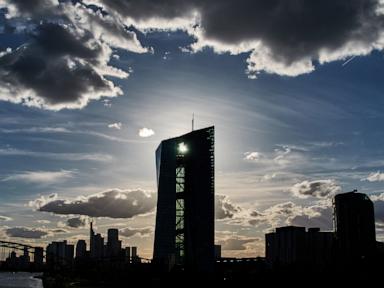
The European Central Bank just hiked interest rates again, and the Federal Reserve is pacing the sidelines, preparing to mimic the move next week. The financial press is applauding. They call it a "necessary pain" to tame the inflation beast. They are wrong.
Central bankers are fighting the last war with an obsolete playbook. By forcing interest rates higher, the establishment believes it is cooling down an overheated economy. The reality is far more grim: they are misdiagnosing the disease, and the medicine is killing the patient.
The Blind Spot in the Monetary Playbook
The prevailing narrative treats inflation as a monolithic monster born entirely of excess demand. The logic goes like this: people have too much money, they are buying too many things, so we must make borrowing expensive to stop them.
This is lazy economics.
The inflation we have battled over the recent cycle was never a demand-side phenomenon. It was driven by structural supply-side shocks: fragmented supply chains, geopolitical conflicts choking energy corridors, and a fundamental shortage of labor in critical sectors.
Raising the cost of capital does absolutely nothing to untangle a shipping port or extract more oil from the ground. In fact, it does the exact opposite. By driving up borrowing costs, central banks are actively discouraging the capital expenditure required to fix the very supply constraints causing the price hikes.
Imagine a logistics company trying to upgrade its fleet to move goods more efficiently and lower costs. Under the current interest rate regime, the cost of financing those new vehicles has doubled. The project gets shelved. The supply bottleneck remains. Prices stay high.
The central bank's solution to high prices is to break the economy until consumption drops to match a broken supply chain, rather than allowing the market to invest its way out of the shortage. It is a scorched-earth strategy masquerading as prudence.
The Myth of the Wage-Price Spiral
For years, monetary policymakers have lived in terror of the wage-price spiral—a theoretical loop where higher wages force companies to raise prices, which in turn forces workers to demand higher wages. I have sat in boardrooms where executives panic over a 4% increase in labor costs while ignoring a 40% spike in raw material expenses due to bad sourcing strategies.
The data does not support the fear. Historically, wages lag behind inflation; they do not drive it. When workers demand higher pay today, they are attempting to claw back purchasing power they have already lost, not bidding up the future price of milk.
By hiking rates to cool the labor market, the ECB and the Fed are intentionally targeting employment to protect corporate margins under the guise of price stability. It is a regressive tax on the working class, executed via monetary policy.
The Cost of Capital Fallacy
Let us look at how businesses actually operate when interest rates skyrocket.
Mainstream economic commentary suggests that higher rates force companies to become leaner, weeding out the "zombie firms" that only survive on cheap debt. While that happens at the extreme margin, the broader impact on healthy mid-sized enterprises is entirely counterproductive.
When the cost of capital rises, corporate hurdles for new projects increase. Companies stop investing in long-term research and development. They stop building new factories. Instead, they pivot to short-term survival metrics. They preserve cash, cut headcount, and raise prices on their existing customers to cover the increased cost of servicing their current debt.
The blunt instrument of interest rate hikes does not lower prices; for many capital-intensive businesses, it forces a price increase just to keep the lights on.
Dismantling the Prevalent Framework
Go to any financial news site and look at the questions people are asking. The framework is entirely broken.
- Does raising interest rates stop inflation? Only if you define "stopping inflation" as inducing a recession deep enough to destroy consumer confidence entirely. It is the equivalent of burning down the house to get rid of a termite infestation.
- Why is the Fed raising rates if inflation is slowing? Because central banks operate on lagging indicators. They are looking in the rearview mirror while driving at full speed. They fear losing credibility more than they fear causing economic stagnation.
- How do high interest rates affect the average consumer? They do not just make your mortgage more expensive; they restrict the growth of the company you work for, capping your career progression and your earning potential while doing nothing to lower your utility bills.
The True Cost of Monetary Dogma
There is an undeniable downside to criticizing this high-rate regime. The alternative requires fiscal discipline that politicians simply do not possess. If central banks stop hiking, governments must step up by using targeted tax policies and strategic investments to break supply monopolies and incentivize domestic production.
But relying on central banks to fix structural economic shifts through raw monetary aggression is cowardice. We have allowed a small group of unelected technocrats to decide the economic trajectory of the Western world using models designed in the 1970s.
The current strategy will eventually bring inflation numbers down to the arbitrary 2% target. But the cost will not be a "soft landing." It will be an era of underinvestment, decaying infrastructure, and a permanently diminished standard of living. The victory will be hollow, achieved only by making the population too poor to buy the things they need.
Stop celebrating the rate hikes. The central banks are not saving the economy; they are starved of ideas and starving the market.