Let's face it. Getting real capital as a woman running a business in Canada is still a major uphill battle. While corporate cheerleading is everywhere, the cold hard numbers show that traditional lenders still look at women-led startups differently.
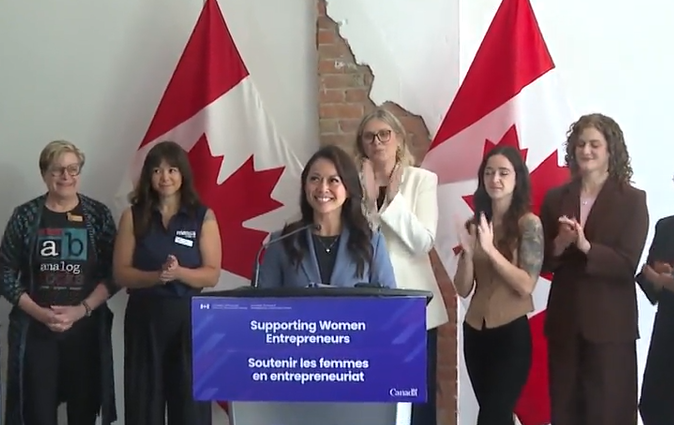
That is exactly why the federal government's fresh cash injection matters. Rechie Valdez, the Minister of Small Business, just announced $173.7 million over the next five years to extend the Women Entrepreneurship Strategy (WES). The announcement happened at a woman-owned bakery in Lethbridge, Alberta, but the ripples are going across the entire country. If you liked this article, you might want to read: this related article.
If you are running a business or trying to launch one, you don't need political talking points. You need to know what this cash actually does, who gets it, and how to position yourself to grab a piece of it.
The Real Breakdown of the 173 Million
The federal government loves big headline numbers, but the money isn't just sitting in one giant vault. It is split into three very distinct buckets. Each serves a different purpose for different stages of business growth. For another perspective on this story, check out the recent coverage from The Motley Fool.
The Microloan Pool
First up is $59 million allocated straight to the Women Entrepreneurship Loan Fund. This is the part that actually impacts your bank account directly if you need immediate capital. This fund allows designated non-profit partners to hand out microloans of up to $50,000.
These aren't grants, meaning you do have to pay them back. However, they are specifically built for startups, sole proprietors, and women who usually get turned away by traditional big banks because of strict credit history checks. So far, over 1,600 of these microloans have landed in entrepreneurs' hands. This new cash keeps that tap flowing.
The Support Network
Next is the biggest piece of the pie: $100 million for the WES Ecosystem Fund. You will never see a direct deposit from this fund into your business account. Instead, this money goes to regional non-profits, business accelerators, and community hubs.
They use it to provide free advisory services, specialized business training, and export matchmaking. If you want to expand your business outside of your home province or jump into international trade, the organizations kept alive by this fund are the ones that train you and connect you to global buyers.
The Data Machine
The final $7 million goes to the Women Entrepreneurship Knowledge Hub. It sounds academic, but it matters because it tracks exactly where the gaps are in Canadian business funding. They run the research that proves to policymakers why women need different credit frameworks, which helps shape future government loans.
The Overlooked Rule for Getting Funded
You cannot just walk into an Innovation Canada office and ask for a check. The biggest mistake entrepreneurs make with the Women Entrepreneurship Strategy is trying to apply to the federal government directly.
The government outsources the actual administration of these loans to regional partner networks. If you want a microloan up to $50,000, you have to apply through specific delivery organizations.
- Women's Enterprise Organizations of Canada (WEOC) handles a massive chunk of national applications.
- Evol manages a heavy footprint of funding inside Quebec.
- The National Aboriginal Capital Corporations Association (NACCA) specifically delivers these microloans to Indigenous women entrepreneurs.
Every single one of these delivery groups has its own spin on the application process. Some will demand a fully fleshed-out 3-year cash flow projection. Others might care more about your immediate business plan or your personal track record in the industry.
How to Prove You Qualify
To get your hands on this targeted funding, you have to meet the baseline definition of a women-led business. In Canada, that standard means your business must be at least 51% owned and controlled by one or more women.
Don't wait until you open the application portal to gather your paperwork. You need your legal ducks in a row first.
If you run a corporation, you will need your articles of incorporation and a clear shareholder agreement showing the exact split of voting shares. If you are operating as a sole proprietorship, your provincial business registration document needs to show your name clearly tied to the entity.
For partnerships, a formal partnership agreement stating that the majority stake and decision-making power rest with women is mandatory. Get these documents digitalized and ready before you even reach out to an organization like WEOC.
Tap Into Mainstream Programs Too
Targeted funding is great, but limiting yourself to women-only funds is a strategic mistake. The clever move is to use these microloans as a foundation while hitting mainstream federal programs at the same time.
Many federal funding initiatives use Gender-Based Analysis Plus (GBA+) during their review process. This means mainstream programs actively look to prioritize diverse and women-owned businesses when scoring applications.
Look closely at programs like CanExport if you are trying to market your products internationally, or the Canada Summer Jobs program to subsidize your hiring costs. Your identity as a woman entrepreneur automatically gives you a competitive edge in those broader scoring pools. You can stack these options together to build a much larger capital cushion.
Your Immediate Steps to Secure Capital
Stop waiting for banks to change their minds or for the economy to magically shift. If you want a piece of this federal support, you need to take action today.
First, update your corporate books. Ensure your share structures or sole proprietorship registrations explicitly document your majority ownership status.
Second, skip the big banks for now and go straight to the source. Visit the online portals for the Women’s Enterprise Organizations of Canada or Nventure depending on your region. Look at their specific intake criteria for the WES microloan program.
Third, build a tight, bulletproof one-page summary of exactly what you will do with $50,000. Will it buy inventory? Will it fund a software transition? Be specific. The delivery organizations want to see that the loan will immediately drive revenue, not just cover old debts. Pick an organization, check their deadline, and get your application into their system.