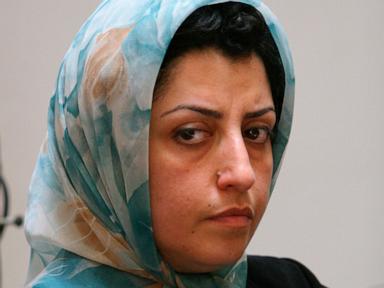
Narges Mohammadi, the 2023 Nobel Peace Prize laureate and a relentless thorn in the side of the Iranian theocracy, has finally been transferred from Evin Prison to a hospital after months of deteriorating health. While the move suggests a concession by the state, the reality is far more clinical and cynical. This is not a humanitarian gesture. It is a strategic medical release forced by the undeniable physical collapse of a woman who has spent the better part of two decades behind bars. Mohammadi’s struggle is no longer just a battle for civil rights; it is a battle for her heartbeat, occurring within a penal system that uses medical deprivation as a standard interrogation tool.
The transfer follows a persistent campaign by her family and international human rights groups who warned that Mohammadi’s cardiovascular health had reached a breaking point. For over a year, she was denied specialized care despite suffering from bone marrow issues and a heart condition that required immediate intervention. In the grim corridors of Evin, medical care is not a right but a bargaining chip.
The Architecture of Medical Torture
In the Iranian penal system, the "health crisis" is rarely an accident. It is a feature of the incarceration. When a high-profile prisoner like Mohammadi falls ill, the state employs a tactic known as medical neglect to break the spirit without leaving the visible marks of a whip or a boot. By refusing medication, canceling specialist appointments, and ignoring acute symptoms, the authorities transform a prison cell into a slow-motion execution chamber.
Mohammadi has undergone multiple surgeries in the past, including a stent placement for a clogged artery. Despite this, she was frequently denied the basic follow-up care essential for someone with her history. This isn't bureaucratic incompetence. It is a calculated assessment of risk. The Iranian judiciary knows that a Nobel laureate dying in a cell creates a global PR nightmare, but a laureate who is perpetually too weak to speak, write, or organize is a problem solved.
The Gendered Price of Dissent
Mohammadi’s current crisis is inseparable from her leadership in the "Woman, Life, Freedom" movement. Following the death of Mahsa Amini in 2022, Mohammadi became the voice of the incarcerated, smuggled letters and recorded messages out of Evin to keep the flame of the protest alive. The state’s response was to tighten the screws. They cut off her phone privileges, separating her from her children for years, and piled on additional sentences for "propaganda against the state."
The physical toll on female political prisoners in Iran is particularly acute. They face unique forms of psychological pressure, often centered on their roles as mothers and daughters. Mohammadi hasn't seen her children in nearly a decade. She hasn't heard their voices in years. This emotional starvation works in tandem with physical deprivation. When the body starts to fail, it is often because the mind has been subjected to a level of stress that the human nervous system was never designed to endure.
Beyond the Hospital Walls
The hospital transfer does not mean Mohammadi is free, nor does it mean she is safe. In the past, Iranian activists have been moved to medical facilities only to be chained to beds, kept under 24-hour surveillance by intelligence agents, and returned to prison the moment their condition stabilizes just enough to prevent immediate death.
This "revolving door" medical treatment serves a specific purpose. It provides the Iranian government with a thin layer of plausible deniability on the international stage. When foreign diplomats raise concerns about Mohammadi’s health, Tehran can point to her hospital records as proof of their "care." It is a performance of humanity designed to mask a policy of exhaustion.
The Nobel Burden
Winning the Nobel Peace Prize was a double-edged sword for Mohammadi. While it provided her with a global shield of visibility, it also made her a high-value trophy for the Islamic Revolutionary Guard Corps (IRGC). To the hardliners in Tehran, Mohammadi represents a direct link between domestic Iranian dissent and Western institutional support. They view her not as a prisoner of conscience, but as a security threat who must be neutralized.
The Nobel committee’s decision to honor her was a validation of the Iranian people's struggle, but it also increased the price she pays daily. Every time a world leader mentions her name, the conditions inside her cell tend to fluctuate based on the current temperature of Iran's foreign relations. She has become a human barometer for the regime's defiance.
The Silence of the International Community
While human rights organizations have been vocal, the diplomatic response to Mohammadi’s deteriorating health has been largely toothless. Western nations, preoccupied with the shifting shadows of Middle Eastern geopolitics and the nuclear file, have often relegated the fate of individual political prisoners to the "concerns" category of their press releases.
Sanctions and strongly worded statements have done little to alter the internal logic of the Iranian judiciary. The reality is that Tehran feels it can act with relative impunity regarding its internal dissidents as long as it maintains its strategic leverage elsewhere. This environment of stalled diplomacy is exactly what allows the state to continue its policy of medical attrition against Mohammadi and dozens of other activists who remain unnamed and unnoticed by the global press.
The Strategy of Survival
Narges Mohammadi knows exactly what is happening to her. She has written about it. She has analyzed the mechanics of her own oppression with the precision of a scientist. Her refusal to stay silent, even when her body is failing, is a deliberate act of defiance. She understands that her health is the final front in her war against the state.
The current hospitalization is a temporary pause. The real test will be whether the international pressure remains high enough to prevent her from being dragged back into a cold cell before she has recovered. The Iranian authorities are waiting for the news cycle to move on. They are waiting for the world to stop looking so they can resume the quiet, methodical process of breaking her.
The struggle for Narges Mohammadi’s life is a microcosm of the struggle for the future of Iran. It is a conflict between a regime that uses the biological limits of the human body as a weapon and a woman who has decided that her principles are more durable than her heart. Every day she remains in a hospital bed is a day the state's plan has been delayed, but it is far from a victory. The machinery of Evin is still running, and it is waiting for her return.
The focus must remain on the terms of her detention, not just the status of her pulse. Anything less than a full, unconditional release is simply a managed decline under the watchful eye of the state.