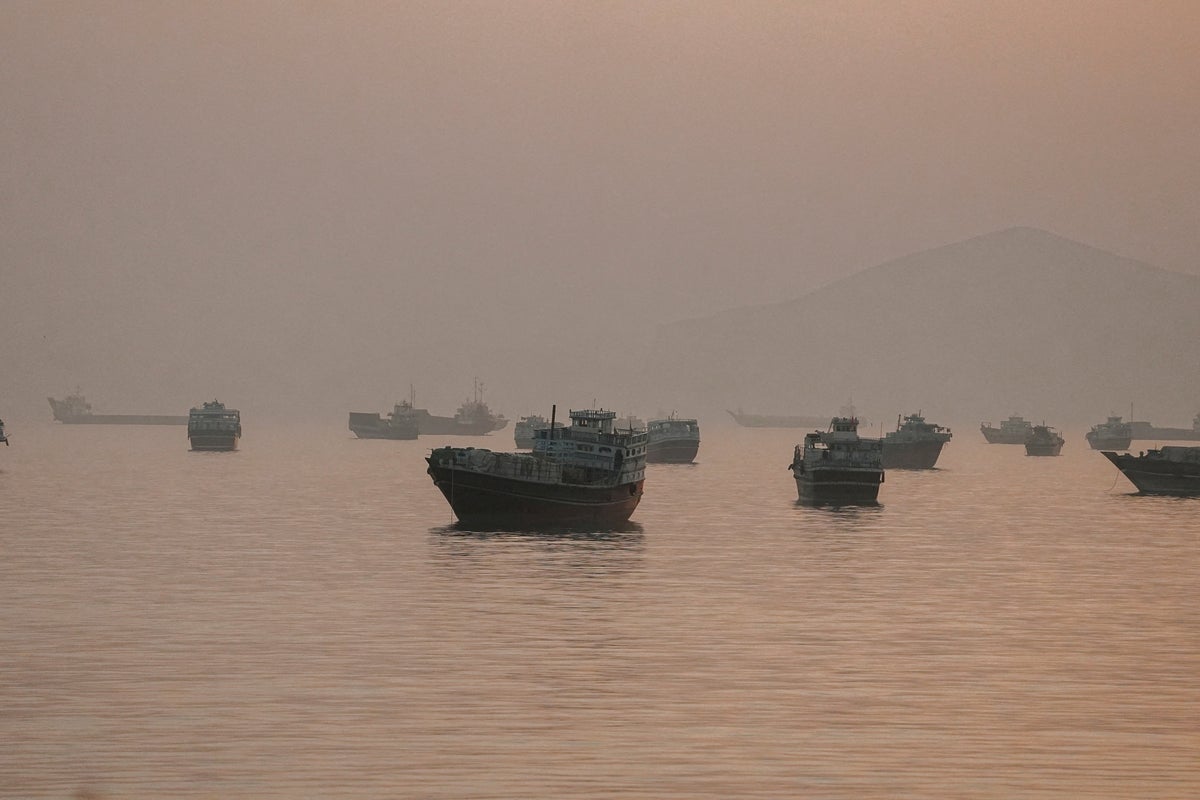
The white-hot peace between Washington and Tehran lasted exactly sixteen days. When the U.S. Treasury Department abruptly canceled General License X, replacing it with a restrictive wind-down order known as General License X1, it signaled the collapse of a fragile 60-day truce designed to halt a shooting war. The official reason provided by the White House was simple. The Islamic Revolutionary Guard Corps or its proxies had just launched projectile and drone strikes against three commercial tankers navigating the crucial bottleneck of the Strait of Hormuz, an act the administration deemed wholly unacceptable.
But the real crisis runs much deeper than a reactionary strike against maritime shipping. The breakdown of this interim memorandum of understanding exposes a fatal flaw in the Western strategy of performance-based sanctions relief. By attempting to use temporary oil export waivers as a financial carrot to police a chaotic waterway, the U.S. ignored a fundamental reality. Tehran never intended to accept international rules of navigation in the strait, view the waterway as open infrastructure, or forfeit its self-proclaimed right to tax and divert global energy traffic.
Now, the global energy sector faces an immediate threat of escalation. Oil prices jumped more than three percent within hours of the announcement, reflecting immediate panic among traders who had previously counted on a steady return of Iranian crude to stabilize global markets.
The Illusion of Performance Based Diplomacy
The memorandum of understanding signed on June 21 was built on a shaky foundation. Under its terms, the U.S. granted Tehran a 60-day window to market its crude oil, petrochemicals, and petroleum products. In return, Iran was expected to maintain a total ceasefire, halt its disputed nuclear development programs, and guarantee unhindered passage through the Strait of Hormuz. The Trump administration explicitly described the arrangement as a trial period. Good behavior would yield financial rewards, while misconduct would bring immediate economic strangulation.
This framework fundamentally misread the internal dynamics of a wounded Iranian regime. Following the high-stakes military campaign that began on February 28, which resulted in the death of Supreme Leader Ayatollah Ali Khamenei, the clerical establishment in Tehran found itself in a state of existential panic. The temporary economic relief was not viewed by Iranian leadership as a bridge to a permanent diplomatic settlement. Instead, it was treated as a brief geopolitical breathing room to consolidate internal control, manage public unrest during a massive period of national mourning, and test the limits of Western resolve.
The transition to General License X1 completely halts any future sales of Iranian crude. While it offers a brief grace period until July 7 for transactions that were already deep in the logistical pipeline, any revenues generated from those lagging shipments will not flow back to Tehran. The funds must be deposited directly into blocked, interest-bearing accounts. This mechanism isolates the cash, ensuring that the Iranian state cannot access its own oil wealth to fund its military operations or shore up its cratering domestic currency.
The Secret Battle Over Waterway Sovereignty
The immediate catalyst for the policy reversal was a coordinated assault on international shipping. Three separate vessels, including the Qatari liquefied natural gas carrier Al Rekayyat and a Saudi Arabian crude tanker, were struck by loitering munitions and projectiles while moving through the southern corridor of the strait. Western intelligence agencies quickly traced the flight paths and telemetry of the drones back to state-backed facilities in southern Iran.
The specific geography of these attacks reveals the hidden commercial dispute that broke the truce. International maritime law relies on established transit corridors that allow commercial vessels to cross through the territorial waters of coastal states under the principle of innocent passage. For decades, the international community has utilized standard routes that weave between Iranian and Omani waters depending on the direction of travel.
Tehran recently attempted to rewrite these rules. During the brief window of the interim agreement, Iranian maritime authorities began demanding that all commercial vessels register directly with Tehran and follow an exclusively Iranian-monitored corridor.
Furthermore, the regime intended to levy steep transit fees on any vessel moving through the northern shipping lanes. Oman and the United States rejected this demand, advising commercial shipping firms to utilize an expanded southern route that hugs the Omani and Emirati coastlines.
The three tankers targeted on Tuesday were executing transit along this exact Omani route. By striking vessels that used the alternative channel, the regime demonstrated that it would rather choke global commerce entirely than permit ships to bypass its regulatory and financial oversight. Iranian state television practically confirmed this motive, broadcasting statements that the Qatari LNG tanker was engaged by defensive elements after systematically ignoring direct maritime warnings from the Iranian navy.
The Failure of Energy Incentives
Western policymakers have long clung to the theory that Iran's dependence on oil revenues gives the international community permanent leverage over its foreign policy decisions. This theory has proven hollow. The June waiver briefly lowered global oil prices as commodity traders anticipated a steady influx of Iranian crude, but it failed to alter the core strategic calculations of the Iranian military apparatus.
For the Revolutionary Guard, control over the Strait of Hormuz is not an economic asset to be bartered for Western goodwill. It is an existential tool of deterrence. One-fifth of the world's daily oil and natural gas consumption transits through this narrow maritime gap.
When the U.S. revoked General License X, it merely forced Iran back into its traditional economic reality. The regime has spent nearly half a century developing sophisticated, highly resilient networks for smuggling oil through ghost fleets, ship-to-ship transfers in international waters, and illicit banking networks centered in East Asia.
The threat of losing legal access to the global banking system does not carry the same weight it once did. Tehran knows that even under the strictest sanctions regime, a baseline volume of its crude will always find a buyer in markets willing to overlook Western regulatory threats.
Immediate Consequences for Global Energy Security
The immediate maritime environment has turned hostile. Shipping data indicates that over one hundred vessels crossed the strait over the weekend, utilizing a patchwork of routes to avoid potential flashpoints. That traffic has now ground to a halt. Marine insurance underwriters are already rewriting risk premiums for the region, which will inevitably drive up the baseline cost of moving cargo through the Middle East.
The position of regional neutral states has also shifted dramatically. Qatar, which typically attempts to maintain a careful diplomatic balance between Washington and Tehran due to its shared ownership of massive offshore gas fields with Iran, issued an unusually fierce condemnation of the latest strikes. The Qatari Foreign Ministry explicitly stated that it holds Iran fully legally responsible for the attack on the Al Rekayyat, calling the strike a direct violation of international maritime law. This public rupture indicates that Tehran's aggressive actions in the waterway are isolating it even from its traditional economic partners in the Gulf.
The U.S. military presence in the region is adjusting to a protracted conflict posture. Pentagon officials have confirmed that recent retaliatory air strikes targeted specific active radar installations, air defense assets, and missile storage sites near the Iranian coastal hubs of Sirik and Bandar Abbas. These military strikes were designed to degrade the regime's ability to track and engage commercial vessels, but they also highlight the reality that the conflict has evolved beyond economic sanctions.
The situation has transformed into an active, low-intensity war of attrition along the world's most critical energy artery. With negotiations officially frozen and the 60-day memorandum of understanding effectively dead, the illusion of a performance-based diplomatic settlement has shattered, leaving both Washington and Tehran trapped in an escalatory cycle with no clear exit strategy.