The arithmetic of survival in Punjab has fundamentally shifted. In the span of a few weeks, the cost of moving essential goods from the wholesale hubs of Karachi and Faisalabad to the retail stalls of Lahore and Rawalpindi has nearly doubled. While official inflation figures often hover in the single digits, the reality at the checkout counter tells a more predatory story. A sharp hike in fuel prices—driven by a volatile cocktail of Middle East tensions and a collapsing subsidy regime—has effectively placed a tax on every calorie consumed in Pakistan’s most populous province.
The Logistics of a Hungry Province
To understand why a liter of milk now commands PKR 230 and a kilogram of mutton has pierced the PKR 2,700 ceiling, one must look at the "last mile" of the Pakistani supply chain. Punjab is the nation’s breadbasket, yet its internal distribution remains slave to high-speed diesel (HSD).
Diesel is the lifeblood of the province’s trucking fleet and its agricultural machinery. When the federal government allowed petroleum prices to jump by as much as PKR 55 per liter in mid-March 2024, it didn't just increase the cost of a commute; it rewired the pricing of every perishable good in the market.
Traders in major wholesale markets, such as Sargodha and Faisalabad, report that freight charges have reached a breaking point. For a truck carrying produce from the coast to the heartland, the fuel bill is no longer a manageable overhead—it is the dominant cost.
The Subsidy Paradox and the War Factor
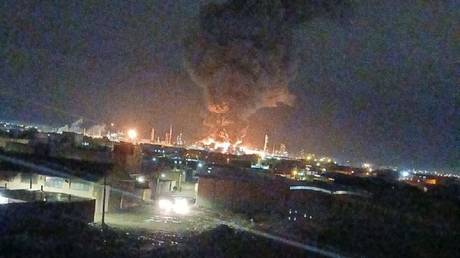
The current crisis is not merely a localized spike; it is a symptom of a global energy market reeling from the conflict in the Middle East and the strategic vulnerability of the Strait of Hormuz. Pakistan, which relies heavily on imported crude, finds itself caught between a geopolitical rock and a fiscal hard place.
Prime Minister Shehbaz Sharif recently claimed to have rejected further price hike recommendations, insisting the government would absorb a PKR 56 billion burden in a single week to shield consumers. However, this "shield" is increasingly porous. The Finance Ministry has been begging provinces to shoulder a PKR 200 billion portion of the subsidy burden, a request that Punjab and Sindh have largely rebuffed. Their counter-argument is cold but economically sound: subsidizing fuel during a global shortage encourages consumption that the national exchequer cannot afford.
The result is a fragmented policy. While the government claims to hold the line on retail prices, the scarcity of subsidized fuel and the rise of "price differential claims" by oil marketing companies create a shadow market. Logistics companies, sensing the instability, hike their rates in anticipation of the next official increase, leading to a "pre-emptive inflation" that hits the vegetable markets of Rawalpindi before the fuel nozzles even change their display.
Breaking Down the Market Basket
The impact on the average household budget is devastating. In the open markets of Punjab, the price list for essentials has become a daily moving target.
| Item | Current Price (PKR) | Impact Level |
|---|---|---|
| Mutton | 2,700 per kg | Extreme |
| Beef | 1,500 per kg | High |
| Chicken | 620 per kg | High |
| Milk | 230 per kg | Critical |
| Ginger | 450–550 per kg | High |
| Tomatoes | 250 per kg | Volatile |
Vegetables like garlic and ginger, often imported or transported over long distances, have seen some of the steepest climbs. Even staples like gram pulse (PKR 390/kg) and red beans (PKR 550/kg) are being priced out of reach for the laboring class.
The Agriculture-Fuel Feedback Loop
Beyond transportation, the agricultural sector in Punjab is facing a secondary shock: the cost of production. Tube wells, tractors, and threshers all demand fuel. As the spring harvest approaches, the energy intensity of farming means that the "food inflation" we see today is likely only the first wave.
Farmers are currently facing a choice between reducing their acreage or passing the cost of expensive diesel directly to the consumer. In a province where the provincial government has recently introduced fuel curbs and work-from-home policies for officials, the message is clear: the energy is running out, and the money is already gone.
The proposed "targeted subsidy" for motorcyclists—a 20-liter monthly cap managed via a mobile app—is a desperate attempt to perform social triage. It does nothing, however, for the truck driver moving twenty tons of wheat or the dairy farmer trying to keep his chillers running on a backup generator.
The Policy Failure of Short-Termism
The veteran analyst sees a familiar pattern here. Pakistan’s energy security is non-existent because it has failed to modernize its refinery sector or diversify its supply routes. The country remains tethered to the spot market and the whims of the Gulf.
While the provincial administration in Punjab monitors transport fares and threatens legal action against overcharging, these are cosmetic fixes for a structural hemorrhage. You cannot legislate away the cost of a gallon of diesel. When the cost of moving food exceeds the value of the food itself, the supply chain doesn't just get more expensive—it breaks.
The current strategy of "austerity funds" and "price differential claims" is a stopgap that will likely culminate in a massive, unavoidable price correction by the next quarter. For the families in Lahore and Multan, the "brutal truth" is that the era of cheap calories, fueled by borrowed money and subsidized oil, has come to a violent end.
Would you like me to analyze the specific impact of the proposed 20-liter fuel quota on Punjab’s urban middle-class mobility?