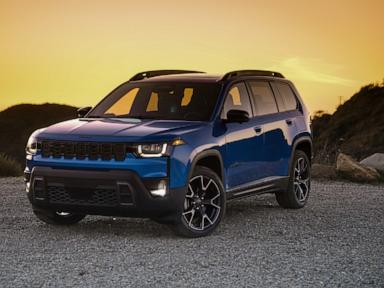
The modern automotive market thrives on an illusion of rugged independence, selling vehicles capable of conquering the wilderness to buyers who will primarily use them to sit in suburban traffic. When choosing between the resurrected Jeep Cherokee and the Subaru Forester Hybrid, consumers face a fundamental tension between brand identity and mechanical reality. The Subaru Forester Hybrid offers superior interior packaging, better real-world visibility, and a lower starting price of $36,180, making it the more rational daily commuter despite a slower infotainment system. For buyers prioritizing absolute fuel efficiency and cabin isolation, the Jeep Cherokee wins by a narrow margin, achieving an EPA-estimated 37 mpg combined via its advanced 1.6-liter turbocharged setup, though it sacrifices utility and commands a higher price tag.
This segment is no longer a niche for eccentric campers. It is a high-stakes corporate battlefield. The sudden transformation of these nameplates reveals a deeper industry truth, which is that traditional off-road heritage is being systematically dismantled to meet federal emissions mandates. If you found value in this article, you should look at: this related article.
The Corporate Math Behind the Electric Shift
Automakers are not building hybrid SUVs because they want to. They are building them because they have to. The survival of legacy platforms depends entirely on corporate average fuel economy compliance.
When Jeep shelved the Cherokee, the brand lost its anchor in the highly lucrative compact crossover segment. Its return signals a desperate need to balance the emissions portfolio of a brand heavily reliant on gas-guzzling Wranglers and Grand Wagoneers. Built on the STLA Large platform, the new Cherokee abandons the thirsty V6 engines of its past for a standardized, complex 1.6-liter four-cylinder engine paired with two electric motors. This system produces a combined 210 horsepower. It is efficient, but it lacks the mechanical simplicity that once defined the brand. For another perspective on this event, see the recent update from The Motley Fool.
Subaru faced a similar existential crisis. For decades, the brand relied on its symmetrical all-wheel-drive system and boxer engines to cultivate a loyal, outdoorsy customer base. But boxer engines are inherently difficult to make efficient. The addition of the e-Boxer hybrid system was a mandatory evolution to keep the Forester viable in a market dominated by strict regulatory penalties.
Efficiency Versus Practical Reality
On paper, the fuel economy figures present a clear victory for the Jeep. The Cherokee claims an EPA-estimated 37 mpg combined, edging out the Forester Hybrid at 35 mpg combined. In the laboratory, the Cherokee wins. On asphalt, the narrative fractures.
+-------------------+--------------------+--------------------+
| Metric            | Jeep Cherokee      | Subaru Forester    |
+-------------------+--------------------+--------------------+
| Base Price        | $36,995            | $36,180            |
| Combined EPA MPG  | 37 mpg             | 35 mpg             |
| 0-60 MPH Time     | 8.7 seconds        | 8.8 seconds        |
| Max Towing        | 3,500 lbs          | Not Recommended    |
+-------------------+--------------------+--------------------+
The Cherokee utilizes a sophisticated mechanical rear-axle disconnect system. To maximize fuel economy, the vehicle operates primarily in front-wheel drive, engaging the rear axle only when sensors detect a loss of traction. This engineering choice delivers the promised efficiency numbers but alters the driving dynamics. Under sudden acceleration, the transition from front-wheel drive to all-wheel drive introduces a subtle hesitation.
Subaru takes the opposite approach. Its hybrid system routes power through a continuously variable transmission that maintains continuous torque to all four wheels. While this results in a slight fuel economy penalty, the real-world driving experience feels more predictable on slick, unpaved surfaces. The Forester may use slightly more fuel, but it delivers the relentless traction its buyers expect.
Ergonomic Failures and Screen Fatigue
Inside the cabin, the glossy marketing brochures give way to daily frustrations. Modern automotive interior design has replaced physical ergonomics with pixel count, and both vehicles suffer from the shift.
Subaru has equipped the Forester with a massive, portrait-oriented touchscreen that controls almost every vital vehicle function. The system is notoriously slow to boot up on cold mornings. Drivers must wait for software to load just to adjust the cabin temperature or turn on the heated seats. The hardware choices are equally puzzling. The available wireless charging pad is constructed from a slick, hard plastic. Take a sharp turn, and your phone slides off the inductive coils, halting the charge.
Jeep counters with a 12.3-inch landscape display powered by the Uconnect 5 software suite. The graphics are sharper, and the system responds faster than Subaru’s sluggish unit. Jeep also designed a rubberized wireless charger that holds a phone firmly in place.
The Cherokee falls short in human interface design. The steering wheel is an awkward, overly thick, octagonal shape that feels unnatural during long highway stints. Furthermore, the Cherokee's lower roofline and thicker pillars create significant blind spots, contrasting sharply with the Forester’s greenhouse-like visibility.
The Illusion of Wilderness Capability
The most significant deception lies in the marketing of these vehicles as rugged trailblazers. Buyers seeking actual off-road machinery will find that both manufacturers have compromised their heritage to favor highway comfort.
The baseline Jeep Cherokee lacks the ground clearance and mechanical low-range transfer cases that made its predecessors legendary. Its suspension tuning is stiff, designed to handle high-speed highway lane changes rather than rocky trails. It clunks over deep urban potholes. Jeep promises a more capable Trailhawk variant, but its absence leaves current buyers with a vehicle that is a Jeep in name only.
The Forester Hybrid remains the superior choice for unpaved logging roads, purely by virtue of its packaging. It retains a high ground clearance and offers specialized electronic terrain modes that optimize the braking system for loose dirt and mud. The long-travel suspension delivers a significantly smoother ride over ruts and broken pavement than the brittle setup found in the Cherokee.
Value Reconsidered
Value is where the corporate strategies diverge most aggressively. Jeep is attempting to reposition itself as a premium brand, pricing the base Cherokee at $36,995. For that price, buyers receive manual cloth seats and a manual tailgate. To match the basic comfort features that consumers expect, buyers must ascend the trim hierarchy to the Laredo or Limited, pushing the transaction price well past $40,000.
Subaru understands its demographic better. The Forester Hybrid starts at $36,180 for the Premium trim, which includes power-adjustable, heated front seats as standard equipment. At the top end of the lineup, a fully optioned Forester remains roughly two thousand dollars cheaper than a comparable Cherokee.
For the commuter who evaluates a vehicle by the cost per square foot of usable interior volume, the Forester is the definitive choice. Its boxy cargo area accommodates bulky gear far better than the stylized, sloping rear hatch of the Cherokee.
The Cherokee is a compliance tool masquerading as an adventure vehicle. It serves a specific corporate purpose for Stellantis, and while its powertrain is quiet and efficient, the vehicle fails to justify its financial premium over the more practical, honest, and usable Forester.