The Ebola virus epidemic has crossed into a fourth province in the northeastern Democratic Republic of Congo, proving that traditional containment strategies are collapsing. This geographical expansion into new territory reveals a deeper crisis of systemic mistrust, porous borders, and the failure of international health interventions to adapt to local realities. While official communiqués focus on case counts and vaccine distribution, the real driver of this expansion is not a lack of medical tools. It is a profound breakdown in communication and community buy-in. To stop the spread, the response must shift from a militarized medical intervention to a localized, trust-first strategy.
The Mirage of Containment
Public health officials often treat containment as a logistical math problem. They count doses, deploy isolation tents, and map contacts. This mechanical approach fails when it meets the complex human geography of the northeastern Congo. The virus moves because people move, and people move because they must survive.
Traders, displaced families, and artisanal miners do not see provincial borders. They see survival routes. When a new case appears in a previously unaffected province, it is not an anomaly. It is the predictable result of a response framework that treats a fluid human population as a static variable on a map.
The current strategy relies heavily on ring vaccination, a method that vaccinates the social circle around an infected individual. It is an excellent tool under ideal conditions. In reality, deep-seated fear drives symptomatic individuals underground. They bypass formal checkpoints, use informal jungle paths, and seek care from traditional healers who are unconnected to the surveillance network. By the time a team identifies a cluster, the virus has already traveled down a motorcycle taxi route into the next major trading hub.
The Weapons of Mistrust
We must look at the history of intervention in the region to understand why communities resist health workers. Decades of conflict have left the population deeply skeptical of outside authorities, whether they wear military uniforms or hazmat suits.
When international teams arrive in expensive SUVs, setting up high-tech field hospitals while basic health clinics lack paracetamol, it breeds suspicion. Rumors spread fast. Some believe the virus was manufactured; others think the treatment centers are processing centers for organs.
These ideas sound radical to an outsider, but they make perfect sense to a population that has experienced abandonment and exploitation for generations.
[Image of Ebola virus transmission cycle]
Health communication has historically been top-down. Armed escorts frequently accompany decontamination teams into villages. This heavy-handed approach transforms a medical emergency into a security operation. It alienates the very people whose cooperation is vital for contact tracing. When a community feels besieged by a medical response, hiding the sick becomes an act of self-defense.
The Regional Economic Engine Driving Transmission
The northeastern provinces are economic lifelines, tied together by informal trade networks that span into neighboring Uganda and South Sudan. Gold, timber, and agricultural goods flow constantly through these corridors.
A single marketplace can draw thousands of people from dozens of villages in a single day. These markets are the perfect amplification environments for a highly infectious pathogen.
[Infected Individual]
       │
       ▼
[Informal Gold Mine / Marketplace] ──► [Motorcycle Taxi Network]
                                             │
      ┌──────────────────────────────────────┴──────────────────────────────────┐
      ▼                                      ▼                                  ▼
[Province A: Local Clinic]            [Province B: Border Crossing]      [Province C: Urban Center]
Standard quarantine measures fail because shutting down a market means starvation for the community. Traders will actively hide symptoms to avoid being barred from entry or placed in an isolation ward. The economic cost of being identified as a contact is too high for a subsistence worker to bear. Without financial safety nets or food security guarantees during isolation, compliance is an economic impossibility.
Shifting to an Embedded Response Model
The intervention must be stripped of its bureaucratic and militarized elements to halt this geographic march. Control must be handed over to local leaders, religious figures, and community networks who already possess the public's trust.
Instead of building massive, centralized treatment centers that resemble fortresses, the response should integrate Ebola triage and care into existing, permanent community health structures. This removes the stigma and terror associated with the "red zones" of specialized isolation units.
Local youth networks must be hired to manage contact tracing and community sensitization. They know the pathways, the family structures, and the cultural nuances that an international expert cannot learn in a three-month deployment.
Testing needs to happen at the point of care with rapid diagnostic tools, eliminating the agonizing days spent waiting for laboratory results from distant cities—days during which families lose hope and sometimes reclaim their loved ones' bodies by force.
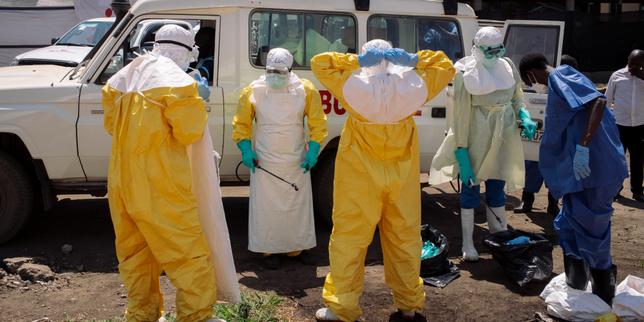
Safe and dignified burials require an overhaul. Forcing families to watch strangers in white suits dump their relatives into plastic body bags violates sacred ancestral customs. This practice ensures that future deaths will occur in secret, far from the reach of medical surveillance.
Burial teams must train local spiritual leaders to conduct rituals safely, maintaining safety protocols while respecting the dignity of the deceased.
The expansion of the virus into a fourth province is a definitive indictment of the status quo. The virus will continue to find new vectors across the Congolese map as long as international agencies prioritize logistics over local partnerships. The containment line is not a geographical border; it is a relationship of trust built at the village level.