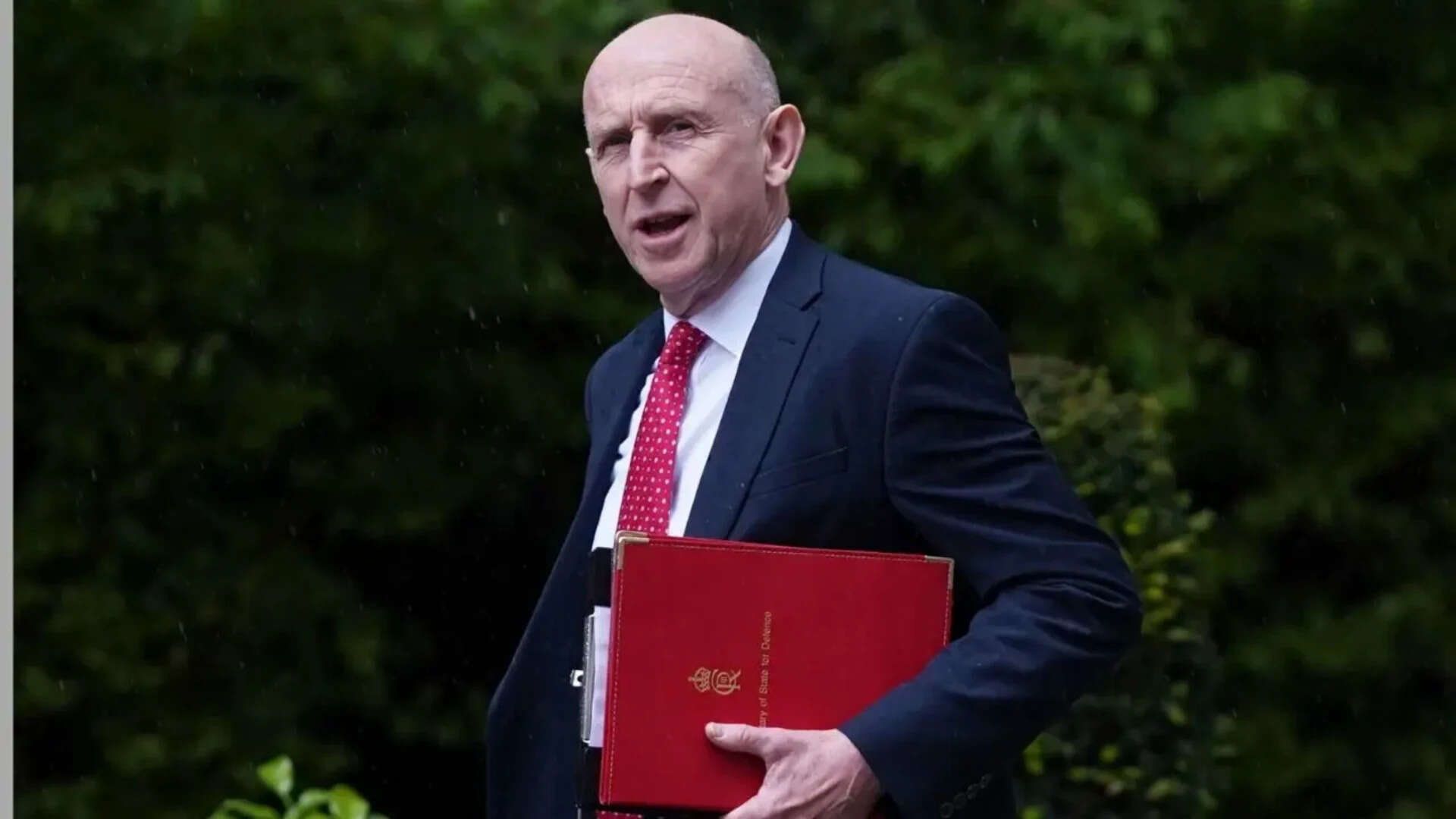
John Healey did not resign as UK Defence Secretary simply because of a disagreement over decimal points. He walked away because the numbers presented to him by Prime Minister Keir Starmer and Chancellor Rachel Reeves represented a quiet capitulation. Healey demanded a commitment to spend 3 percent of GDP on defence by 2030 to meet the escalating threats from Russia and instability in the Middle East. Instead, he was handed a delayed Defence Investment Plan offering a meager 2.68 percent by the end of the decade. The money was structurally backloaded, starved from the immediate years where military readiness is most fragile, and completely detached from the reality of active deployments. This was the breaking point. After months of infighting, Healey became the nineteenth minister to resign since Labour took power in July 2024, striking a devastating blow to a government already drowning in chaos.
To understand why a veteran politician abandons a premier cabinet post, you have to look past the political theater and examine the Treasury's operational playbook. The UK military is currently suffocating under a specific type of bureaucratic starvation known as backloading.
The Anatomy of a Treasury Trap
Rachel Reeves and the Treasury have mastered the art of the illusionary budget increase. When Starmer finally showed Healey the finalized Defence Investment Plan on a Monday afternoon, the financial settlement contained a classic Whitehall poison pill. The Treasury agreed to raise the budget from the current 2.6 percent to 2.68 percent. That alone is a rounding error in the context of global warfare. But the truly destructive element was the timeline.
Backloading means the Treasury promises the bulk of the new funding in the final years of a spending period. For the Ministry of Defence, this is catastrophic. Equipment procurement, recruitment, and operational readiness require massive upfront capital. You cannot fight a war in 2026 with a pledge of funding arriving in 2029. Healey recognized that the pressure of current operations and the imperative to speed up fighting readiness fell entirely within the first two years of the plan.
By refusing to frontload the cash, Reeves forced Healey into an impossible corner. He would have to immediately cut current capabilities to balance the books, knowing full well that the promised future cash might vanish in the next spending review. It is a shell game. The Treasury gets to announce a future increase to placate the press, while the Ministry of Defence is left to manage an immediate, tangible decline in military capability.
Healey refused to play the game. In his resignation letter, he explicitly stated that the settlement would force him to make decisions reducing the readiness of British forces and increasing the risk to personnel on active operations. He chose to detonate his career rather than sign a document that he believed made the country demonstrably less safe.
A Government Consumed by Attrition
The departure of the Defence Secretary is not an isolated incident. It is a symptom of a much deeper rot within Starmer’s administration. Labour has been in power for under two years. In that short span, nineteen ministers have resigned. Six have walked out in the last month alone.
This is an astonishing rate of attrition. It points to a profound failure of central authority in Downing Street.
Starmer's initial pitch to the electorate was built on stability and managerial competence. He promised an end to the chaotic revolving door that characterized the previous Conservative governments. Instead, he has presided over an administration paralyzed by internal warfare. The Prime Minister is now widely viewed as a caretaker, a leader actively bleeding political capital while internal rivals circle.
Andy Burnham is waiting in the wings. Following a crushing set of local elections that obliterated Labour's grassroots support, Burnham is openly positioning himself for a leadership challenge. Every resignation chips away at the remaining pillars of Starmer's credibility. Losing Wes Streeting as Health Minister in May was a severe wound. Losing Healey, a close ally and the public face of Labour's commitment to national security, might be the fatal blow.
The Geopolitical Cost of Empty Promises
While the political soap opera plays out in Westminster, the strategic reality facing the UK Armed Forces is grim. Britain has spent the last two years talking loudly on the global stage.
The government committed the military to a heavily expanded role in European security. British forces are currently leading NATO’s Arctic Sentry operation in the High North, directly countering increased Russian naval and submarine activity. In the Middle East, the UK is co-leading a multinational security mission in the Strait of Hormuz. Following the Paris Agreement on Ukraine, Britain is also committed to a significant military deployment in the event of a ceasefire.
These operations require ships, aircraft, munitions, and personnel. They require deep logistical supply chains. None of these things can be bought with a projected 0.08 percent GDP increase spread over four years.
You cannot deter Russian aggression with a press release. Military leaders have consistently warned that the delay in publishing the Defence Investment Plan was actively hampering their ability to negotiate contracts with defense industry executives. Supply lines for artillery shells and advanced munitions are already stretched globally. When the UK Ministry of Defence cannot commit to long-term contracts because the Treasury is holding back funds, Britain falls to the back of the queue.
The 2.68 percent figure is effectively a real-terms cut when adjusted for defense-specific inflation. The cost of raw materials for shipbuilding, the price of aviation fuel, and the salaries required to retain highly skilled cyber specialists are rising much faster than the general consumer price index. A 0.08 percent bump over four years will not even cover the increased cost of keeping the current, aging fleet of Royal Navy frigates at sea.
Starmer’s Rhetoric Collides with Reality
The profound irony of Healey’s exit is that Keir Starmer spent months warning the British public about the precise threats his government is now refusing to fund.
Just last week, Starmer publicly highlighted intelligence suggesting Russia could attack a NATO country as early as 2030. At the Munich Security Conference, he delivered a heavily publicized speech arguing that Europe had entered a more dangerous era, demanding a massive reinvestment in deterrence.
Healey threw these exact words back in Starmer’s face. Addressing the Prime Minister directly in his resignation letter, he wrote that Starmer knew exactly what defence needed because he had made the argument for it himself. The gap between Starmer’s hawkish international rhetoric and his domestic fiscal timidity has become unsustainable.
Starmer reportedly put heavy pressure on Chancellor Rachel Reeves to agree to an additional £15 billion for the Ministry of Defence. Defence officials had clearly stated they needed £28 billion over the next four years just to meet existing commitments from the strategic defence review. Healey requested £18 billion as a compromise. Reeves initially refused to sign off on anything above £12 billion.
This haggling over billions reveals a fundamental disconnect in Downing Street. The Treasury views defense spending purely as a liability on a spreadsheet, competing directly with welfare, health, and domestic capital projects. They demanded other departments cut their capital budgets by 1 percent to pay for the military increase, intentionally sparking inter-departmental resentment against the Ministry of Defence.
In his exit, Healey recognized the impossible position this created. He noted the strain placed on his cabinet colleagues, effectively acknowledging the toxicity of the budget process. But he held the line on his core responsibility.
The immediate aftermath leaves the British military drifting. The Defence Investment Plan, originally scheduled for publication today, is indefinitely delayed. The Armed Forces are left waiting for a new Secretary to be appointed, likely Dan Jarvis or Al Carns, who will immediately face the exact same hostile Treasury and the exact same impossible math. Carns has already publicly stated that the current funding plan is not fit for purpose and must be reopened.
If Starmer thought forcing Healey out would quietly resolve the budget dispute, he miscalculated entirely. The resignation has taken a private, bureaucratic struggle and detonated it in the public square.
British troops remain deployed across the globe. They are operating in highly volatile environments, flying aging aircraft and sailing under-crewed ships. Their former civilian leader just publicly declared that the current government is actively forcing decisions that increase the risk to their lives. There is no political spin capable of burying that assessment.
Starmer's Defence Secretary Resigns: Rory and Alastair React
This podcast episode breaks down the civil and political unrest surrounding Starmer's administration and Healey's resignation.