Om Malik, the pioneering tech journalist, founder of Gigaom, and venture capitalist, died on June 24, 2026, at Stanford Hospital at the age of 59 following a long journey with heart illness. His passing marks the definitive end of an era when tech journalism was defined by deep understanding of infrastructure rather than passive dictation of corporate public relations. Malik did not merely document the rise of modern Silicon Valley; his analytical approach, focused on broadband and physical architecture, forced the industry to look at itself through a human lens.
The current landscape of technology writing has largely devolved into a mirror for corporate hype machines, making Malik’s departure a stark reminder of what has been lost. He was a rare operator who successfully crossed the adversarial line from independent journalist to early-stage venture investor without losing his capacity for sharp skepticism. For a different perspective, consider: this related article.
From Telecom Copper to the Soul of the Valley
Malik arrived in New York in 1993 from New Delhi with a chemistry degree and an insatiable curiosity about how things worked underneath the surface. Before the dot-com bubble burst, he was already tracking the massive financial maneuvers of the telecommunications sector. His early book, Broadbandits, remains a definitive autopsy of the 750 billion dollar telecom heist, proving his unique ability to see through structural illusions.
When he moved to San Francisco in 2000 to write for Business 2.0, the tech industry was cratering. It was precisely during this wreckage that Malik recognized a fundamental shift. The future would not be built on wild valuations, but on the massive build-out of broadband infrastructure. Further coverage on the subject has been provided by Wired.
He started Gigaom as a personal blog in 2001. It was an era when blogging was dismissed by traditional newsrooms as an amateur pursuit. Malik changed that perception entirely by applying rigorous reporting standards to the fast-moving web. He looked at the underlying pipes. While others marveled at software interfaces, Malik wrote about data centers, fiber-optic cables, and the structural foundations that would eventually allow cloud computing and smartphones to exist.
The Bridge Between Adversary and Investor
The ultimate test of a tech journalist is whether they can survive the proximity to immense wealth without being corrupted by it. Malik did something more complex. In 2006, he pitch-decked his own media empire and became the first founder funded by True Ventures. He eventually joined the firm as a partner, spending nearly two decades investing in the next generation of infrastructure.
This transition from watchdog to participant is usually where intellectual honesty goes to die. Investors are structurally incentivized to pump valuations and ignore systemic flaws. Yet Malik maintained a unique dual identity. He stayed a writer at his core. His personal blog and his recent newsletter, Crazy Stupid Tech, remained required reading because he refused to swallow the institutional consensus whole.
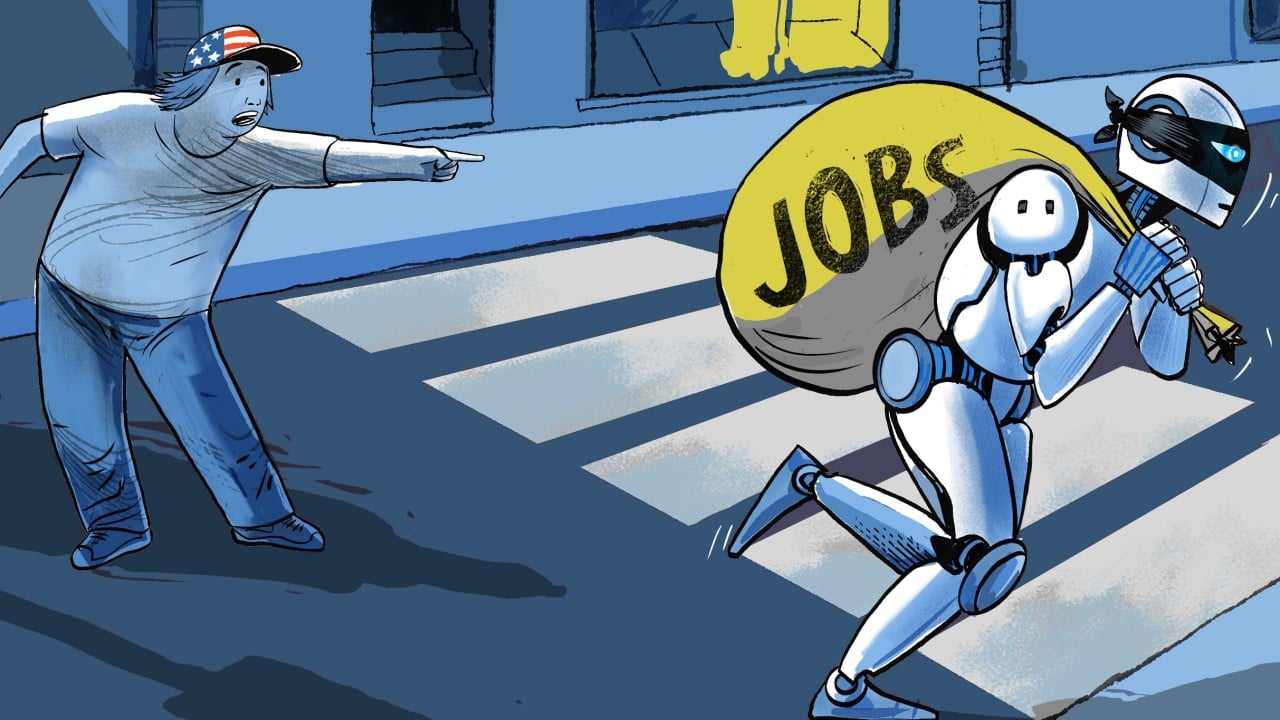
Just weeks before his passing, Malik took a characteristically sharp swipe at the current artificial intelligence frenzy. He pointed out that the current market madness is fundamentally about math that simply does not make sense. He acknowledged that AI is inevitable, but warned that the accompanying financial insanity is equally guaranteed. He possessed the confidence to tell his peers that their spreadsheets were delusional.
The Collapse of Human Centered Reporting
The tragedy of Malik's passing is compounded by the current state of tech media. Today, major publications routinely trade critical adversarial reporting for early access to product launches. Journalists have become extension cords for corporate marketing departments, rewriting press releases disguised as analysis.
Malik taught a generation of reporters to look at the people behind the platforms. He insisted that technology should serve humanity, not the other way around. He understood that a database configuration or an algorithmic shift had real-world consequences for ordinary citizens.
His methodology was deceptively simple but incredibly difficult to execute in a clicks-driven media environment. He planned his days on plain paper, limit-testing his screen time to protect his ability to think deeply. He spent hours reading and researching rather than reacting to the relentless noise of social media feeds. This deliberate pacing allowed him to see around corners when others were blinded by the immediate news cycle.
The Math and the Myth
Silicon Valley likes to view itself as a meritocracy driven by pure innovation. Malik knew it was a complex ecosystem driven by infrastructure, capital, and human vanity. He was deeply aware of the physical limitations of tech. His interest in fine, independent mechanical watches was not a random hobby; it was an extension of his appreciation for tangible, meticulous engineering.
His life was not without structural failures. Gigaom collapsed under the weight of its creditors in 2015 after Malik had stepped away from daily operations. It was a brutal lesson in the economics of digital media, a reminder that high-quality journalism is exceptionally difficult to monetize sustainably. Malik did not hide from this failure. He publicly noted that business is not a movie, and not everyone gets a storybook ending.
That grounded realism made his insights valuable to the founders he advised at True Ventures. He understood the terrifying fragility of building a company from nothing. He knew that optimism without operational discipline is just a hallucination.
The Silent Monopolies
The tech sector Malik leaves behind is vastly different from the one he began chronicling in 2001. The open web he championed has been balkanized into a handful of massive, inescapable platforms. The infrastructure he monitored is now controlled by a corporate oligarchy with unprecedented geopolitical power.
Without voices like Malik’s to challenge the underlying assumptions of these monopolies, the industry risks choking on its own unchecked optimism. The current obsession with generative automation threatens to replace the very human creativity that Malik spent his life celebrating through his writing and his landscape photography.
He managed his failing health with the same quiet determination he applied to his work, surviving a major heart attack at 41 and continuing to produce incisive commentary for nearly two decades after. He ran out of time before the industry could resolve its current existential crises, leaving a massive void in the intellectual fabric of the Bay Area.
The ultimate tribute to Om Malik is not to mythologize him as a flawless oracle. It is to replicate his stubborn insistence on looking at the infrastructure, questioning the valuation math, and demanding that technology remain accountable to the human beings who use it. The math madness continues, but the room just lost its sharpest critic.