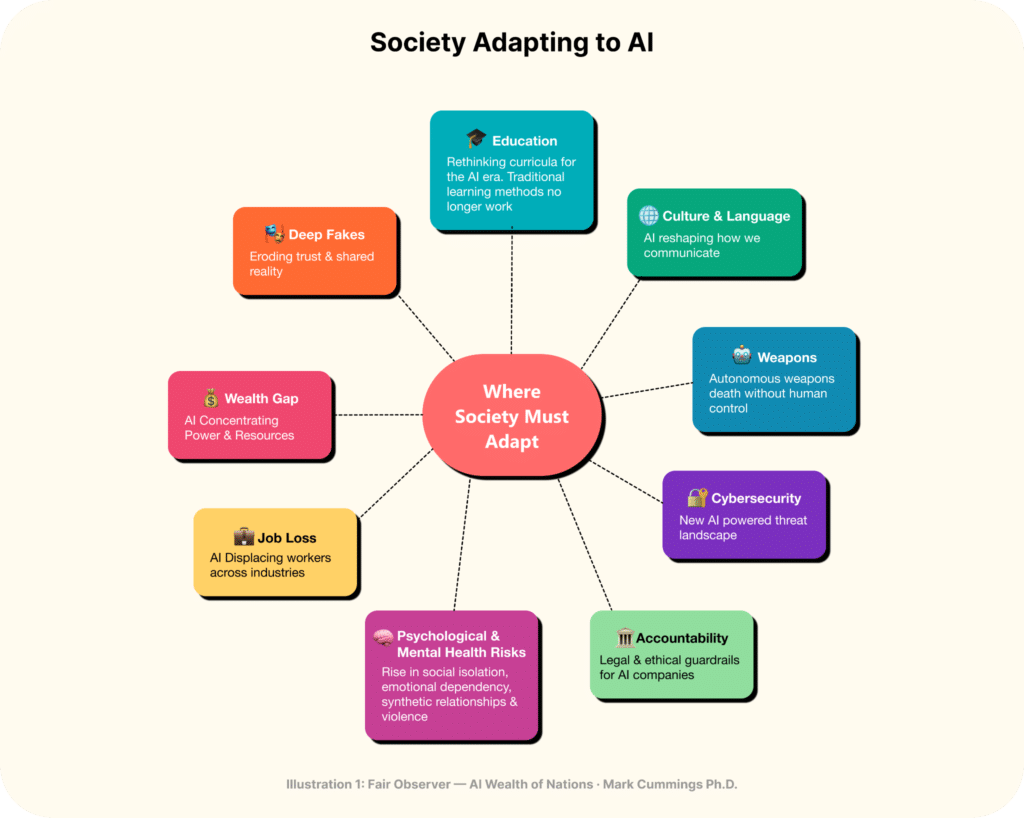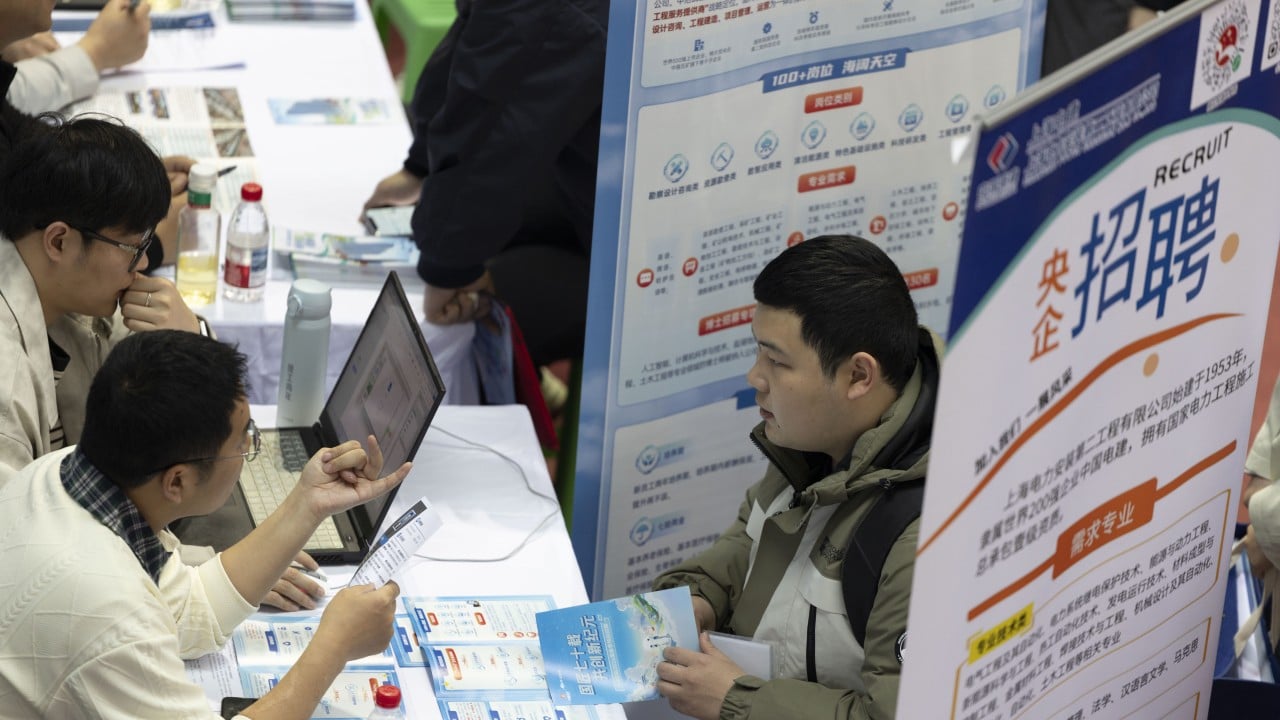
A quiet panic is sweeping through the ranks of China’s fresh university graduates. A recent report from Zhaopin, one of the country's largest recruitment portals, sent shockwaves through the education sector by revealing that 40% of all graduate job openings now explicitly require proficiency in artificial intelligence.
On the surface, this looks like a rapid tech transition. The reality is far more punishing. This sudden surge in AI requirements is not driven by a sudden spike in high-tech innovation, but rather by a desperate corporate push for survival, extreme cost-cutting, and a massive supply-and-demand mismatch in the world's second-largest economy.
Chinese companies are using AI filtering to compress entry-level salaries and replace junior workers before they are even hired. For the record-breaking 12.22 million students graduating from Chinese universities this year, the job hunt has transformed from a test of academic merit into an algorithmic arms race.
The Myth of the High Tech Upskilling
Corporate HR departments love a clean narrative. The public messaging suggests that Chinese industries are modernizing at breakneck speed, requiring a new breed of tech-savvy workers to drive productivity.
That narrative is largely fiction. When a local manufacturing firm or a mid-sized marketing agency in Shenzhen lists "AI literacy" as a prerequisite for a basic administrative or copywriter role, they are not looking for machine learning engineers. They are looking for hyper-efficiency on a discount.
The mechanism is simple. Instead of hiring three junior associates to handle market research, content drafting, and data entry, firms now expect a single graduate to manage all three tasks by using generative AI tools. It is a forced consolidation of labor.
- The Content Factory Illusion: Marketing agencies now use LLMs to churn out thousands of localized ad scripts daily. A junior hire is expected to prompt the machine, edit the output, and hit publish at a volume that would have required a whole team five years ago.
- The Coding Squeeze: Entry-level software engineering roles are evaporating. Junior developers are no longer hired to write basic boilerplate code; senior engineers use AI copilots for that. The remaining junior roles require immediate mastery of AI-assisted development tools just to keep up with impossible daily code-commit quotas.
This shifts the burden of training entirely onto the student. In the past, companies expected to spend the first six months mentoring a fresh graduate. Today, that grace period is gone. If a applicant cannot immediately demonstrate how they use automated workflows to do the work of two people, their resume is discarded by the automated applicant tracking systems before a human ever sees it.
Behind the Zhaopin Data
To understand why four out of ten graduate jobs have suddenly pivoted to AI, you have to look at the macroeconomic pressure building inside China's corporate sector. Domestic consumption remains sluggish, the real estate sector's troubles continue to ripple through the economy, and venture capital funding for tech startups has cooled significantly.
Firms cannot easily grow their revenues, so they must slash their operating costs.
+-------------------------------------------------------------+
|               The Corporate Pressure Loop                   |
+-------------------------------------------------------------+
|  Sluggish Revenue Growth -> Need to Drastically Cut Costs   |
|                             |                               |
|                             v                               |
|  Consolidate Roles (1 Worker doing the job of 3 via AI)     |
|                             |                               |
|                             v                               |
|  Add Mandatory "AI Proficiency" Filters to All Job Listings|
+-------------------------------------------------------------+
This economic reality has fundamentally altered the hiring process. The requirement for AI skills functions as a corporate shield. It allows companies to demand higher output while offering the same, or lower, starting wages. According to regional labor data, entry-level salaries in major hubs like Beijing and Shanghai have plateaued, even as the expected daily output for those same roles has doubled.
Furthermore, the data hides a structural bias. The jobs requiring these skills are heavily concentrated in tier-one cities and specific sectors like e-commerce, digital marketing, and software services. Yet, universities in third- and fourth-tier cities—which graduate the vast majority of China’s students—are completely unequipped to teach these modern workflows. The result is a widening structural divide between elite urban graduates and everyone else.
The Academic Disconnect
China's higher education system moves at a glacial pace compared to the private sector. While corporate hiring managers are demanding mastery of the latest localized LLMs and automated prompt engineering frameworks, university curricula are often stuck in the past.
Professor Zhou, a computer science faculty member at a prominent university in Wuhan who spoke on the condition of anonymity, summarized the systemic failure clearly. "Our textbooks take three to five years to update, approve, and print," Zhou noted. "By the time a student reads about a technology in a lecture hall, the industry has already abandoned it for a newer version. We are training students for a market that existed in 2022, not the market of today."
This disconnect leaves students stranded. To survive, many turn to the unregulated grey market of private bootcamps.
The Rise of Paid Exploitation
A predatory industry of "AI employment acceleration" camps has exploded across Chinese social media platforms like Xiaohongshu and WeChat. These private entities charge anxious students thousands of yuan for short, intensive courses promising to teach them how to automate administrative tasks, generate commercial graphics, and pass corporate AI screening tests.
Many of these courses are superficial scams. They teach basic prompt templates that become obsolete within months, exploiting the desperation of youth facing an bleak job market. It is an expensive gamble with very low returns.
How Global Tech Competition Shapes the Local Cubicle
This is not happening in a vacuum. The fierce domestic mandate for AI integration is tied to the broader geopolitical tech race. With external restrictions on high-end hardware imports, Chinese tech giants like Baidu, Tencent, and Alibaba have pivoted aggressively toward building enterprise-level applications and localized foundation models.
These tech giants need an ecosystem of users to justify their massive infrastructure investments. They have aggressively subsidized their corporate AI tools, making it incredibly cheap for small and medium-sized businesses across China to integrate automation into their daily office routines.
When the cost of deploying an enterprise AI seat drops below the cost of a daily cup of coffee, the financial math for a business owner changes completely. A human worker becomes a liability unless they can amplify that cheap software.
The White Collar Factory Floor
The result is a new kind of white-collar factory floor. Fresh graduates who manage to secure these AI-integrated roles describe an exhausting, highly monitored work environment. Software tracks their prompt efficiency, the speed at which they review automated outputs, and their overall daily volume.
The traditional "996" work culture (9 a.m. to 9 p.m., 6 days a week) has not been alleviated by automation. It has been supercharged. Because the tools allow for faster production, management simply increases the quotas. A junior graphic designer who used to create three marketing banners a day is now expected to generate, refine, and present thirty alternatives using mid-market image generators.
This reality destroys the illusion that AI would liberate office workers from mundane tasks. It has simply raised the baseline expectation of human endurance.
The Strategy for Survival
The current corporate landscape is brutal, but it is not entirely inescapable. For graduates trying to navigate this systemic shift, relying on standard university career fairs is a recipe for unemployment. Standing out requires a complete rejection of the generic "AI literate" label.
Specialize Beyond the Prompt
Every applicant can write a basic prompt. That skill no longer carries a premium. The graduates winning competitive roles are those who combine deep, industry-specific domain knowledge with structural automation.
If you are entering the logistics sector, do not just say you know how to use an LLM. You must demonstrate how you built a custom script to parse hundreds of disorganized shipping manifests and feed them into a local database. If you are entering corporate finance, show how you used open-source models to automate the initial sentiment analysis of quarterly earnings reports from regional competitors.
The value is not in using the tool; it is in building the workflow that eliminates human error for your specific manager.
Exploit the Weakness of the Algorithm
Corporate HR departments rely heavily on automated keywords to screen the mountain of resumes they receive daily. To beat this system, applicants must study the technical stacks of their target companies.
Find out which specific enterprise AI platforms the company uses. Mention those exact systems, along with your verified output metrics, in the upper third of your resume. If a company uses a specific internal system for code generation, your portfolio should explicitly highlight your ability to audit and debug code generated by that exact model architecture.
The Looming Social Friction
The broader economic danger of this hiring shift is a permanent hollowing out of entry-level white-collar employment. Historically, junior roles served as an essential training ground where young professionals learned the nuance, politics, and unwritten rules of their industries.
By automating those foundational roles away, or by demanding that a junior worker immediately perform at a mid-level capacity, companies are breaking the natural pipeline of talent development. Five years from now, when firms need experienced managers and senior strategists, they will find a massive talent deficit. They will discover that a generation of workers spent their formative years merely cleaning up machine-generated output, never learning how to think critically from the ground up.
This structural gap cannot be easily fixed by an algorithm. It represents a fundamental risk to long-term corporate innovation, threatening the very productivity gains that companies are chasing today.
The 40% threshold reported by Zhaopin is not a temporary trend or a superficial statistical blip. It is a structural transformation of the Chinese white-collar economy. It marks the definitive end of the traditional entry-level job, replacing it with a hyper-monitored, high-output paradigm where human capital is valued solely by its ability to manage cheap automation. Graduates who fail to adapt to this systemic pressure will find themselves locked out of the modern workforce permanently.