Kazakhstan is attempting to resurrect its legendary Caspian Sea caviar industry by shifting from wild harvesting to advanced aquaculture, but the effort faces steep infrastructure deficits, severe environmental degradation of the Caspian basin, and dominant market competition from China. While state-backed initiatives and European investments aim to restore the country's historic status as a luxury delicacy powerhouse, the biological reality of sturgeon maturity and the altered geopolitics of luxury food production mean this revival is an uphill battle rather than a guaranteed success. Kazakhstan cannot simply reclaim its crown; it must build an entirely new industry from scratch on the shores of a shrinking sea.
The Illusion of the Caspian Brand
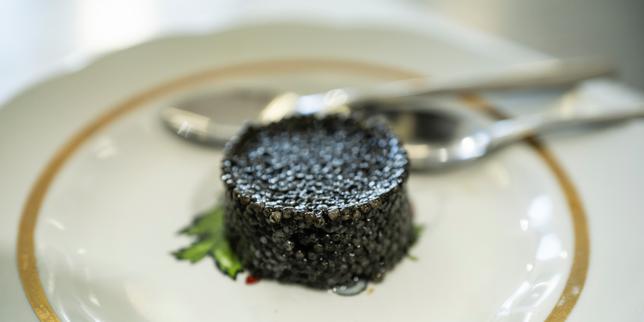
For over a century, the Caspian Sea was synonymous with black gold. Beluga, Ossetra, and Sevruga sturgeon navigated its brackish waters, yielding a product that commanded thousands of dollars per kilogram on the tables of European aristocracy. That era ended with the collapse of the Soviet Union. The subsequent regulatory vacuum triggered an unprecedented free-for-all of poaching and habitat destruction that decimated wild sturgeon populations by more than 90 percent. For a different view, consider: this related article.
By the time the Convention on International Trade in Endangered Species (CITES) effectively banned the export of wild Caspian caviar, the damage was absolute.
The current narrative pushed by regional authorities in western Kazakhstan suggests that the nation is poised to naturally step back into its historical role. This is a profound miscalculation. The global market did not wait for the Caspian littoral states to clean up their environmental act. Instead, the center of gravity for caviar production shifted drastically to the East. Related reporting on this matter has been provided by Reuters Business.
The Chinese Monopoly and the Price Compression Trap
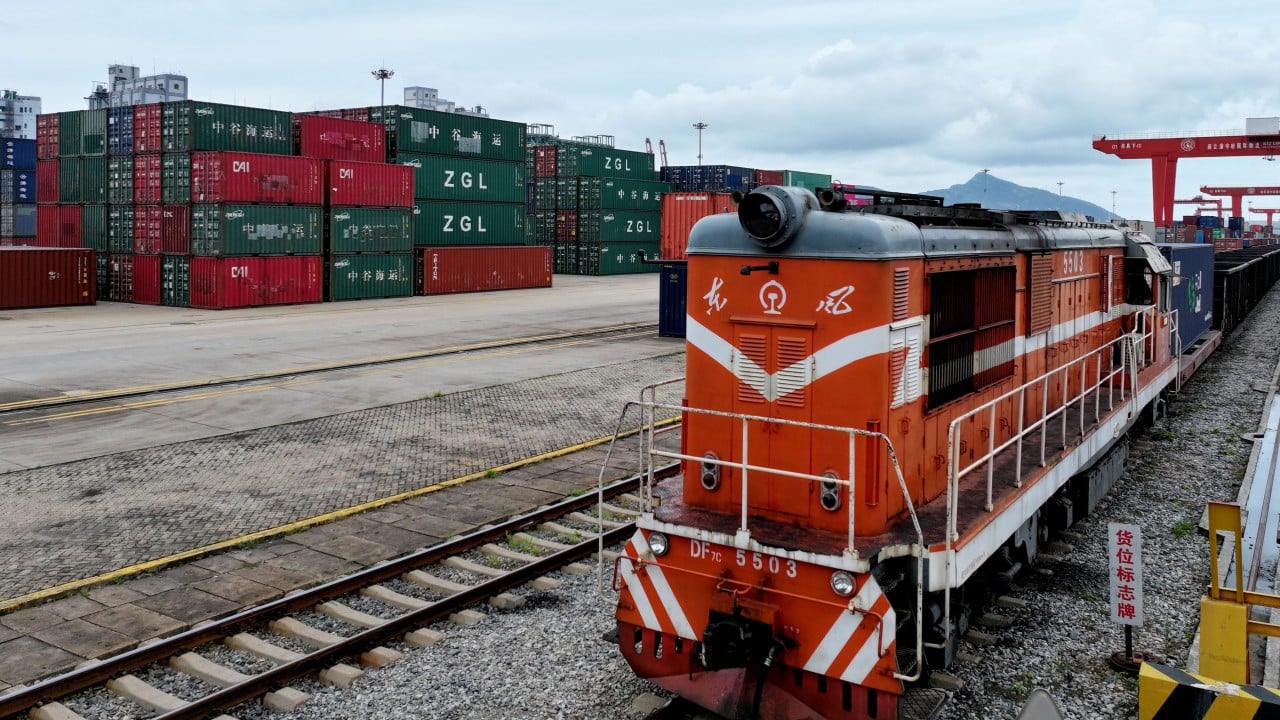
Any attempt by Kazakhstan to scale up commercial caviar production enters a market utterly dominated by the People's Republic of China. Over the last two decades, Chinese producers, particularly industrial giants operating out of Zhejiang province, perfected the art of mass-scale sturgeon aquaculture. By utilizing massive reservoir systems and highly optimized feed formulas, they turned a scarce luxury item into a predictable, high-yield commodity.
China now controls a massive share of the global export market. This industrialization has fundamentally rewritten the economics of the business, forcing prices down and stripping the product of some of its traditional mystique.
For a Kazakh startup or a state-backed venture, competing on price is a losing proposition. The capital expenditure required to establish a biosecure, ecologically sound facility in Kazakhstan's harsh climate far outstrips the operational costs of established Chinese operations.
To understand the scale of the challenge, look at the underlying mathematics of sturgeon farming:
| Sturgeon Species | Average Years to First Harvest | Percentage of Body Weight in Roe | Market Position |
|---|---|---|---|
| Siberian Sturgeon | 6 – 8 years | 10% – 12% | Entry-level commercial |
| Russian Sturgeon (Ossetra) | 10 – 14 years | 12% – 15% | Premium traditional |
| Beluga | 15 – 20 years | 15% – 18% | Ultra-luxury high-end |
A business cannot simply accelerate this biological timeline. A massive capital outlay made today yields zero commercial roe for the better part of a decade. During that multi-year waiting period, investors must fund continuous water filtration, premium feed, veterinary care, and security without a single dollar of incoming product revenue.
The High Cost of the Technological Fix
Faced with a degraded natural environment, Kazakhstan’s newest operations are turning to technology to bypass the limitations of a changing Caspian Sea. In the Mangystau region, projects like the Red Pearl fish farm—backed by an $11.2 million investment in partnership with Swiss investors—are deploying a hybrid operational model.
The strategy relies on Recirculating Aquaculture Systems (RAS) for the highly sensitive early phases of production.
[RAS Egg Incubation & Fry Rearing]
              │
              ▼ (Controlled Biosecurity)
[Open-Air Sea Pools & Coastal Net Pens]
              │
              ▼ (Natural Finishes)
[Harvest & Slaughter Processing]
These closed-loop systems mechanically and biologically filter water, allowing for total control over temperature, oxygen levels, and purity. It protects the fragile fry from the pollution and pathogens present in the open sea.
However, RAS technology is notoriously energy-intensive. Maintaining constant water circulation and precise thermal regulation in a region known for extreme seasonal temperature swings requires a flawless, uninterrupted power supply. A single pump failure or a prolonged blackout can wipe out an entire generation of fish in a matter of hours, erasing years of investment.
To bridge the gap between industrial efficiency and the premium branding of "Caspian caviar," these new facilities transfer older fish to open-air coastal pools and net pens. The theory is that exposing the sturgeon to actual Caspian water during their final years improves the flavor profile of the roe, removing the muddy undertones sometimes associated with purely tank-raised fish.
Yet this hybrid approach exposes the investment to the very environmental volatility it sought to avoid. The Caspian Sea is shrinking at an alarming rate due to climate shifts and the heavy damming of the Volga and Ural rivers. As the water level recedes, coastal aquaculture infrastructure must be constantly moved or redesigned. Furthermore, rising water temperatures lower dissolved oxygen levels, increasing stress on the sturgeon and leaving them vulnerable to disease.
The Branding Battle Against Fraud and Scepticism
Even if Kazakh producers successfully navigate the biological and technical hurdles, they face a deeply skeptical international market. The luxury sector moves slowly and relies on established trust. European and American buyers have spent fifteen years sourcing their premium roe from highly transparent, meticulously certified farms in Italy, France, and Uruguay.
Kazakhstan must also contend with the historical ghost of its post-Soviet reputation, which was plagued by institutional corruption and illicit poaching networks. Convincing a high-end distributor in Paris or New York that a tin of caviar labeled "Product of Kazakhstan" is fully legal, sustainably farmed, and CITES-compliant requires more than just a slick marketing campaign. It demands absolute, ironclad traceability from the egg to the final consumer.
Many modern operations are investing heavily in genetic passporting for their breeding stock to definitively prove that their fish are not sourced from the wild or mixed with inferior hybrids. This level of verification adds another layer of administrative and scientific cost to an already expensive operation.
The Strategic Shift to Niche Survival
The survival of Kazakhstan's caviar industry depends entirely on its willingness to reject the old volume-driven model. The country cannot compete with China's industrial output, nor should it try. The path forward lies in capturing the ultra-luxury tier through hyper-authentic, unpasteurized, small-batch traditional processing.
By prioritizing the slow cultivation of pure Russian sturgeon and Beluga over fast-maturing hybrids, Kazakh producers can target the specific demographics that still value geographic heritage. The label must read less like a commodity specification and more like a fine wine appellation, explicitly tying the mineral profile of the managed Caspian water to the complex flavor of the roe.
This approach requires long-term capital that understands the structural realities of central Asian logistics and global luxury markets. It means acknowledging that the mythical wild fishery is dead, and that its replacement is a highly technical, capital-intensive branch of bio-engineering. Kazakhstan's return to the caviar trade is not a romantic restoration of the past, but a cold, calculated exercise in modern industrial survival.