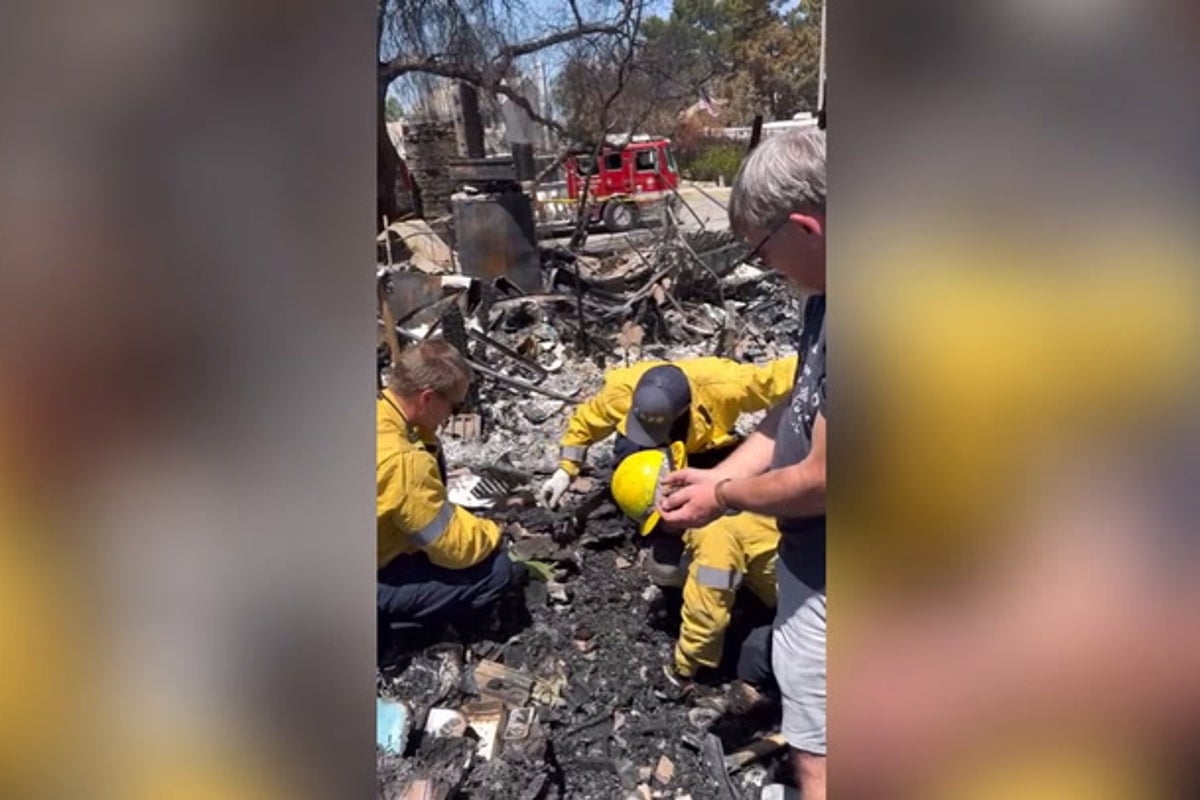
When a residential structure burns, the temperature inside regularly surpasses 1,500 degrees Fahrenheit. Wood framing collapses, drywall disintegrates into ash, and the sentimental markers of a life spent building a home vanish in minutes. Yet, amid the blackened ruins of these total-loss incidents, a recurring phenomenon puzzles observers. Firefighters emerge from the smoking debris carrying a single, pristine wedding ring. It reads like a miracle. Local news broadcasts routinely frame these recoveries as triumphs of luck or divine intervention, focusing entirely on the emotional relief of the displaced homeowners.
The reality is not a miracle. It is the predictable result of structural physics, metallurgy, and tactical salvage operations.
Understanding why certain fragile mementos survive structural infernos requires looking past the human-interest narrative. To truly grasp how anything escapes a 1,500-degree crucible, we must examine the intersection of thermal dynamics and modern firefighting tactics. Salvage is not an afterthought triggered by a homeowner’s tears. It is a calculated, dangerous phase of overhaul that relies heavily on material science.
The Metallurgical Threshold of Human Memory
The survival of jewelry in a house fire depends entirely on the Periodic Table. Most people view a wedding band as a symbol of endurance, but a material scientist views it as a highly resilient combination of noble metals.
Consider the thermal realities of a standard residential fire. A room reaches flashover—the point where everything combustible ignites simultaneously—at roughly 1,100 degrees Fahrenheit. Fully developed structure fires peak between 1,500 and 1,800 degrees Fahrenheit.
Now look at the melting points of the metals we wear on our fingers.
- Platinum: 3,215°F
- Pure Gold: 1,948°F
- 14-Karat Yellow Gold: 1,550°F to 1,650°F
- Sterling Silver: 1,640°F
Platinum jewelry is practically impervious to the heat of a standard house fire. Even lower-purity gold alloys possess a thermal threshold that hovers just at or above the peak temperatures of a residential blaze. Unless the fire is fueled by accelerants like gasoline or propane, which push temperatures beyond 2,000 degrees Fahrenheit, precious metals will not melt. They might discolor. They will likely be coated in thick, corrosive soot. But the structural integrity of the band remains intact.
Gemstones tell a more complicated story. Diamonds are pure carbon. While they can withstand immense pressure deep within the earth, they can actually burn in an open-air fire, turning to vapor at around 1,560 degrees Fahrenheit if exposed directly to oxygen. However, because diamonds are usually tightly secured in heavy metal prongs, the metal often acts as a heat sink, shielding the stone from the precise combination of oxygen and sustained heat required for combustion.
The Micro-Climates of a Collapsing House
Fire does not burn uniformly. It behaves like a fluid, seeking paths of least resistance, feeding on oxygen currents, and leaving behind distinct thermal zones. This erratic behavior creates micro-climates within a burning building.
When a fire tears through a bedroom, the highest temperatures are concentrated near the ceiling. This is due to thermal layering, where the hottest gases rise and trap extreme heat at the top of the room. At floor level, temperatures can be hundreds of degrees cooler.
If a wedding ring sits on top of a wooden dresser, it occupies a high-risk thermal zone. As the dresser burns, it loses structural integrity and collapses downward. The ring falls to the floor. By dropping into the lower thermal layer, the jewelry enters an environment where the temperature may never reach the melting point of gold or platinum.
Furthermore, the debris itself becomes a protective shield.
When drywall, ceiling plaster, and charred insulation fall on top of a dropped item, they form a makeshift thermal blanket. Drywall is composed of gypsum, a mineral that contains chemically bound water. When exposed to fire, gypsum undergoes a process called calcination, releasing water vapor that actively cools the immediate area. This sacrificial degradation of building materials inadvertently preserves the small objects buried beneath the rubble.
The Tactical Mechanics of Firefighter Salvage
The recovery of personal property is rarely accidental. It is driven by a specific fireground operation known as salvage and overhaul.
Training for Asset Protection
Fire departments do not just train to throw water on flames. They train to preserve property. During the initial attack, crews prioritize life safety and fire suppression. But as soon as the main body of fire is knocked down, the focus shifts to salvage.
The Search Grid in the Smoke
When a homeowner informs a captain that a irreplaceable item is missing, the response is systematic. Firefighters do not aimlessly sift through ash. They use thermal imaging cameras to identify hotspots that could still destroy property, and then they deploy a modified search grid in the area most likely to contain the item.
This process is grueling and hazardous. Structure fires weaken floor joists and load-bearing walls. Firefighters conducting salvage operations are often working inside a building that is structurally compromised, navigating standing water, toxic smoke, and the constant threat of secondary collapse.
They use specialized tools like pike poles and rubbish hooks to meticulously peel back layers of charred drywall and insulation. They watch for the specific glint of metal or the distinct shape of a jewelry box that might have been charred on the outside but remained insulated on the inside.
The Overlooked Financial Realities of Fire Recovery
While the emotional value of a recovered ring is undeniable, the logistical and financial implications are equally significant. The recovery of specific high-value items alters the trajectory of insurance claims.
Most homeowners insurance policies carry strict caps on unscheduled jewelry. A standard policy might only cover up to $1,500 for all jewelry lost in a fire unless the items were specifically appraised and scheduled beforehand. For an uninsured or underinsured homeowner, finding the physical ring is often the only way to avoid a massive financial loss.
+------------------+---------------------+-----------------------+
| Metal Type       | Melting Point (°F)  | Survival Probability  |
+------------------+---------------------+-----------------------+
| Platinum         | 3,215°F             | Extremely High        |
| 24K Gold         | 1,948°F             | High                  |
| 14K Gold         | 1,550°F             | Moderate to High      |
| Sterling Silver  | 1,640°F             | Moderate              |
| Pewter/Lead      | 340°F - 620°F       | Zero                  |
+------------------+---------------------+-----------------------+
Moreover, a recovered ring serves as a tangible anchor point for families facing the overwhelming task of rebuilding. The psychological impact of losing everything is profound. Having one piece of the past surviving intact provides a sense of continuity that money cannot buy.
The Flaws in the Luck Narrative
Media coverage of these events almost exclusively credits luck. This focus does a disservice to the public. It obscures the practical steps homeowners can take to protect their valuables before a disaster strikes.
Relying on the physics of a collapsing house to save your valuables is a terrible strategy. A ring might survive the heat, but it can easily be washed down a floor drain by thousands of gallons of fire suppression water, or buried under tons of structural debris that gets hauled away to a landfill during cleanup.
True protection requires intent.
"A document box rated for fire resistance is only as good as its deployment. If it sits in an attic, it will fall through three floors during a fire, breaking open upon impact."
Standard fire-resistant safes are rated based on time and temperature. A class 350 rated safe keeps its internal temperature below 350 degrees Fahrenheit for a specified duration, usually one to two hours, when exposed to external temperatures of up to 1,700 degrees Fahrenheit. This is sufficient to protect paper documents and gold jewelry.
However, digital media like USB drives and hard drives degrade at much lower temperatures. They require a class 125 rated safe to survive.
The Unspoken Cost of Preservation
There is a dark side to salvage operations that receives little attention. Every minute firefighters spend searching through a ruined home for personal effects is a minute they spend exposed to carcinogens.
Modern residential fires burn hotter and faster than those of fifty years ago. This acceleration is caused by the prevalence of synthetic materials in contemporary furniture. Polyurethane foam, engineered wood, and plastics release a toxic cocktail of hydrogen cyanide, carbon monoxide, and volatile organic compounds when burned.
The soot that coats a recovered wedding ring is not simple wood ash. It is a highly toxic, carcinogenic residue.
When crews stay inside a compromised structure to dig through this toxic soup for sentimental items, they are trading their long-term health for a stranger's memories. Fire departments are increasingly balancing this risk against the value of the property they are trying to save. Some modern protocols strictly limit salvage operations to situations where the structural integrity of the building is completely certain and the items can be retrieved quickly.
The survival of a wedding ring in a burned home is a striking testament to metallurgy and the bravery of fire crews. It is a tangible reminder that even the most destructive forces obey the laws of physics. But it should serve as a warning rather than a feel-good story. Relying on chance in a burning building is a gamble against thermodynamics, a game where the house almost always wins.