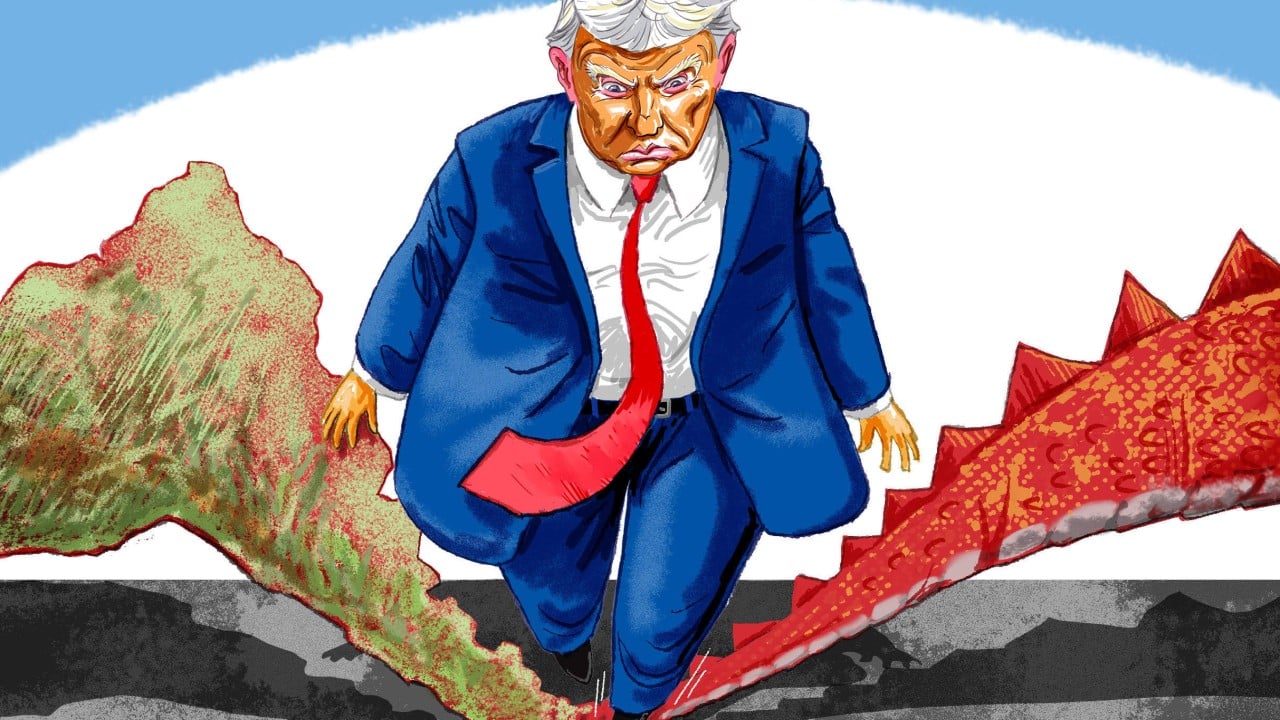
For a decade, Beijing viewed Latin America as its undisputed economic fallback, a treasure trove of soy, copper, and deep-water ports insulated from American interference. That assumption has shattered. The second Trump administration has deployed an aggressive, transactional strategy known across Washington as the Donroe Doctrine to systematically break China's grip on the Western Hemisphere. By combining weaponized tariffs with raw geopolitical coercion, the White House has proved that Beijing's multi-billion-dollar investments cannot shield its regional partners from American pressure. Latin American capitals are discovering that hedging between two superpowers is no longer an option.
The shift is structural, permanent, and blindingly fast. While previous American administrations relied on polite diplomatic scolding regarding Chinese infrastructure loans, the current approach treats the issue as an existential border security crisis. The results speak for themselves. Across the region, major Chinese logistics hubs, state-backed trade agreements, and political alliances are buckling under direct pressure from Washington.
Dismantling the Autocratic Anchors
The January 2026 arrest and extradition of Nicolas Maduro shocked regional diplomats. For years, Venezuela served as China's primary geopolitical beachhead in South America, sustained by massive oil-backed loans from Beijing. The sudden removal of Maduro didn't just upend Caracas. It signaled to every leader in the region that the United States was entirely willing to use hard power to reclaim its historic sphere of influence.
Beijing's response was notably quiet. While Chinese diplomats issued standard statements about state sovereignty, they failed to offer any material resistance to the American move. The message to the rest of the continent was unmistakable. When the pressure intensifies, China will prioritize its internal economic stability over the defense of its distant clients. The subsequent reopening of Venezuelan oil to Western markets marked a catastrophic retreat for China's energy security strategy in the region.
This exposes the fundamental flaw in China's Latin American calculus. A superpower that refuses to project military power in the Western Hemisphere cannot guarantee the security of its supply lines when Washington decides to disrupt them. Beijing can write checks, but it cannot enforce contracts when the U.S. Navy and federal prosecutors decide to intervene.
The Panama Port Purge
Nowhere is the vulnerability of Chinese investments more evident than at the banks of the Panama Canal. The waterway handles roughly forty percent of all container traffic moving to and from the United States. For nearly three decades, Hong Kong-based CK Hutchison Holdings operated the vital ports of Balboa and Cristobal at both ends of the canal. To Beijing, these facilities were vital links in its global maritime supply chains.
That presence evaporated in a matter of months. Following sustained pressure from Washington, a Panamanian court voided the company's port agreements, replacing them with Western-led operators. China attempted to hit back by slowing customs inspections on Panamanian goods and urging state-owned shipping lines to reroute cargo. But the economic reality is stubborn. Panama's economy relies on its proximity to American consumer demand, and no amount of infrastructure lending can offset the loss of that access.
The Panamanian government has since implemented an eighteen-month transition plan, handing temporary control of the ports to European terminal operators before a new international public tender. The lesson for the region is clear. Commercial contracts with Chinese entities are no longer sacrosanct if they threaten the security architecture of the United States.
The Tariff Trap and the Limits of Brazil Defiance
Brazilian President Luiz Inácio Lula da Silva recently tried to put a brave face on this shifting reality. After Washington proposed a twenty-five percent tariff on Brazilian goods alongside additional penalties tied to labor enforcement, Lula defiantly declared that Brazil would simply sell its beef elsewhere. He thanked Beijing for expanding market access for Brazilian cattle.
But a closer look at the data reveals the trap. While Beijing opened its doors wider, it simultaneously applied a brutal fifty-five percent surtax on imports exceeding an annual quota. China is facing its own intense domestic slowdown, exacerbated by the newly established managed trade rules negotiated during the May 2026 Trump-Xi summit in Beijing. It cannot absorb Latin America's excess commodities without protecting its own subsidized domestic sectors. Lula's defiance ignores a harsh truth. China is a mercantilist power, not a charitable alternative to the American market.
Brazilian Beef Exports to China (2025-2026)
+------------------------+--------------------------+
| Quota Limit            | 1.1 Million Tonnes/Year  |
+------------------------+--------------------------+
| Base Tariff Rate       | 12%                      |
+------------------------+--------------------------+
| Surtax Above Quota     | 55%                      |
+------------------------+--------------------------+
The economic dependency runs too deep for easy diversification. When the Kiel Institute and the New York Federal Reserve analyzed the 2025 tariff rounds, they found that foreign exporters could rarely afford to abandon the American consumer. Brazil may bluster, but its corporate agricultural sector cannot survive a sustained trade war with Washington while relying on a volatile, heavily protected Chinese market.
The Weaponization of Reciprocal Trade
Washington's strategy is not purely punitive. The administration has rolled out a series of Agreements on Reciprocal Trade, or ARTs, with key regional actors including Argentina, El Salvador, Ecuador, and Guatemala. These pacts offer selective tariff relief and market access, but they come with explicit, ironclad conditions designed to push these nations away from Chinese supply chains.
Argentina's Javier Milei has embraced this framework wholeheartedly. Despite inheriting a country deeply dependent on Chinese currency swaps to prevent a total economic collapse, Milei has pivoted aggressively toward Washington. The new trade agreements force signatories to implement strict security reviews on foreign infrastructure investments, effectively locking Chinese telecom giants and port operators out of key state tenders. It is an economic carrot backed by a massive regulatory stick.
The illusion that Latin America could effortlessly collect Chinese cash while enjoying American security is dead. Nations can no longer straddle the fence when Washington is actively tearing the fence down. For capitals from Bogotá to Brasília, the coming months will demand painful choices. They must either integrate into the new, strictly policed American trade orbit or face economic isolation from the world's largest consumer market.


