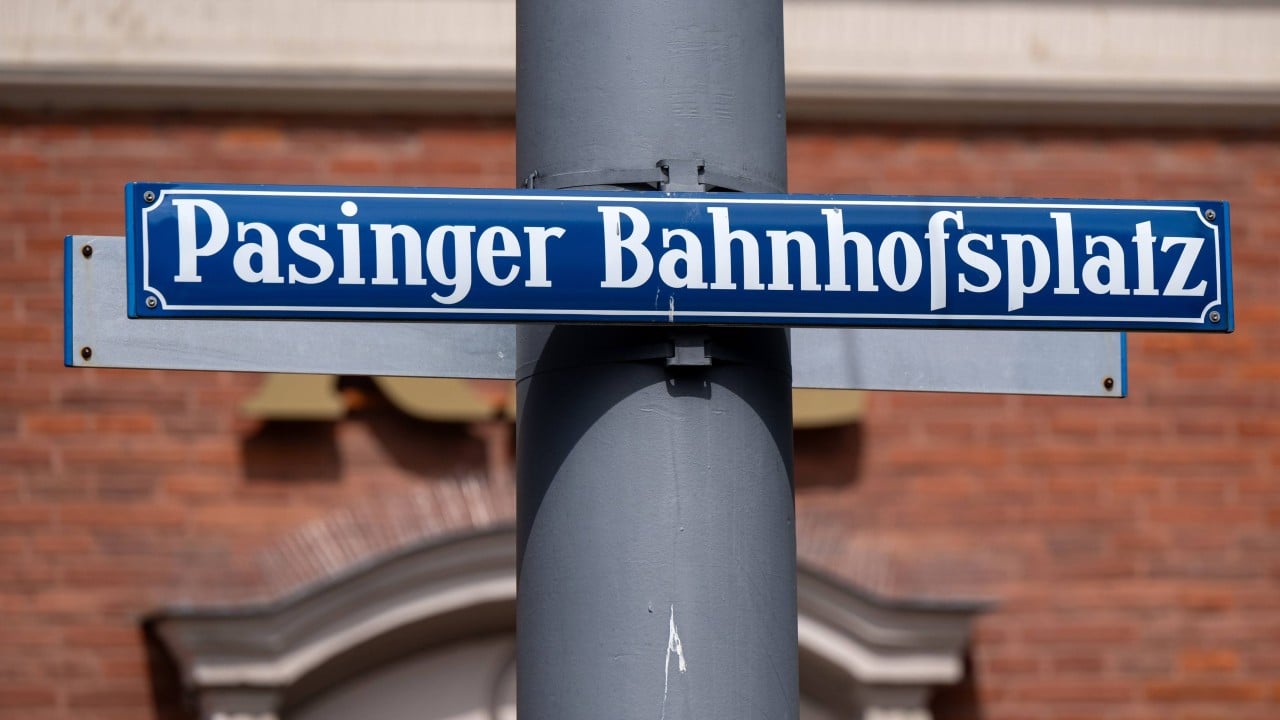
A standard commute at the Berlin-Gesundbrunnen station recently devolved into a scene of primal aggression that exposes the frayed nerves of the German transport system. When a 37-year-old woman found herself blocked by closing train doors, she didn't wait for the next departure. She didn't appeal to the conductor. Instead, she sank her teeth into the arm of a Deutsche Bahn security staff member who attempted to keep her from forcing her way onto the carriage. This wasn't an isolated flare-up of temper. It is a symptom of a national infrastructure pushed to its breaking point.
The incident highlights a deteriorating relationship between the German public and the people tasked with keeping them moving. In the past, the German railway system, or Deutsche Bahn (DB), stood as a global symbol of punctuality and cold, efficient order. That reputation has evaporated. What remains is a volatile environment where delays are the norm, and the staff—often the only visible face of a failing system—become the targets of physical violence.
The Anatomy of the Bite
The physical assault occurred when the woman tried to bypass the safety mechanisms of a departing train. In the high-stakes environment of a busy interchange, the closing chime is a hard limit. Security personnel are trained to prevent passengers from sticking limbs or bags into the gap, a practice that frequently leads to mechanical failure or, worse, personal injury. When the guard intervened, the passenger responded with animalistic force.
This level of escalation suggests a total loss of the "social contract" that usually governs public spaces. Most people accept a missed train as a personal inconvenience. However, for a growing segment of the population, the daily friction of travel has stripped away that restraint.
Police eventually detained the woman, who now faces charges of dangerous bodily harm and interference with rail operations. The security guard required medical treatment. While the headlines focus on the absurdity of the bite itself, the deeper story lies in the frequency of these encounters. Security staff on the German rail network reported thousands of incidents of verbal and physical abuse over the last calendar year. They are essentially working in a pressure cooker.
A System Under Siege
To understand why a woman would resort to biting a stranger over a missed door, you have to look at the state of the tracks. Germany is currently grappling with an infrastructure deficit that runs into the billions. Decades of underinvestment have left the network with brittle switches, crumbling bridges, and a signaling system that belongs in a museum.
When the system fails, the passenger experience becomes a gauntlet of uncertainty. A ten-minute delay turns into an hour. An hour turns into a cancellation. For a commuter trying to reach a job or a parent trying to collect a child from daycare, these aren't just statistics. They are crises.
The Cost of Chronic Delays
The psychological impact of chronic unreliability cannot be overstated. High-end journalism often misses the "rage factor" that builds up over months of failed commutes. When a passenger sees those doors closing, they aren't just seeing a train leaving; they are seeing the final straw in a day already defined by logistical failure.
- Financial Strain: Missed connections lead to docked pay or expensive alternative transport.
- Time Poverty: Hours lost to the platform are hours taken from sleep, family, or rest.
- Environmental Stress: Overcrowded platforms and hot, stagnant air in stopped carriages increase cortisol levels.
When you pack stressed, exhausted people into a failing system, violence becomes a predictable outcome. The biting incident at Gesundbrunnen is merely the most visceral expression of this reality.
The Frontline Casualties
The people bearing the brunt of this frustration are not the executives in the Frankfurt boardrooms who manage the budgets. They are the conductors, the cleaners, and the security guards. These workers are expected to enforce rules in a system that the public no longer respects.
The security guard in this case was doing his job. He was ensuring that a train could depart safely and on time—or as close to "on time" as the current schedule allows. For his trouble, he was physically assaulted. This creates a secondary crisis: a labor shortage. Why would anyone sign up for a low-wage security role when the job description includes being spat on or bitten?
DB has attempted to counter this by deploying body cams and increasing the presence of federal police (Bundespolizei) at major hubs. But surveillance is a reactive measure. It does nothing to soothe the underlying resentment of the passenger base. It merely documents the decline.
The Myth of German Efficiency
The international perception of Germany often lags behind the reality on the ground. For decades, the "Deutschland-Takt"—a synchronized timetable designed to make transfers seamless—was the gold standard. Today, it is a punchline.
Recent data suggests that long-distance punctuality has dipped below 60% during peak periods. In any other industry, a 40% failure rate would result in a total collapse of the business model. In the rail sector, it results in "temporary" measures that become permanent features of the landscape.
Comparing the Neighbors
While Germany struggles, its neighbors offer a painful contrast. Switzerland manages a near-perfect synchronization of its rail and bus networks. The Netherlands has invested heavily in digital signaling that allows for higher frequency and fewer "human error" delays. Germany, meanwhile, remains bogged down by bureaucracy and a refusal to prioritize rail over the automotive lobby.
The woman who bit the guard is responsible for her actions, but the environment that produced her desperation is a policy choice. We are seeing the result of "managed decline," where the goal is no longer excellence, but merely the avoidance of total catastrophe.
The Escalation Ladder
Security experts identify a clear ladder of escalation in public transport violence. It starts with "passive resistance"—ignoring instructions or sitting in the wrong carriage. It moves to verbal abuse, often directed at the train's conductor. Then comes the physical stage: shoving, spitting, and in extreme cases, biting.
The bite is a specific type of assault. It is intimate, high-risk for infection, and deeply degrading. It signals a shift from "citizen in a dispute" to "predator in a cage." When the doors of a modern train become the bars of a cage, the behavior of the people inside changes.
Looking Beyond the Headlines
If we treat this as a "crazy person" story, we miss the point. To fix the violence, you have to fix the transit. You cannot police your way out of a broken infrastructure. More guards will not make the trains run on time, and they will not reduce the ambient stress of the millions of people who rely on these tracks every day.
The government has promised a "General Sanierung" (general renovation) of the busiest corridors. This will involve closing entire sections of the track for months at a time to replace every component. It is a desperate, last-ditch effort to save the network. In the short term, however, this will only increase the pain for commuters. It means more buses, more delays, and more opportunities for conflict.
The incident in Berlin is a warning. It is a snapshot of a society where the basic utilities of life have become sources of trauma rather than convenience. When the infrastructure of a first-world nation begins to resemble that of a failing state, the behavior of its citizens follows suit.
Investors and policy analysts need to watch these "small" stories of local violence closely. They are the leading indicators of systemic instability. A bite on a platform is a scream for a system that actually works.
The immediate solution involves more than just handcuffs and court dates. It requires a radical transparency from rail operators about why the system is failing and a realistic timeline for its recovery. Until the "closed door" stops being a symbol of a lost day, the people standing on the platform will continue to see the staff not as helpers, but as obstacles to be removed by any means necessary.
Violence in the transit hub is the final price of the deferred maintenance of the national soul. If the authorities cannot guarantee a predictable commute, they cannot guarantee a peaceful one. The teeth are out, and they won't be retracted until the trains start moving again.