The tarmac at Incheon International Airport does not care about geopolitics. It reflects the same grey April sky whether the plane landing on it carries vacationers from Bangkok or a delegation from Pyongyang. But when the wheels of the Air Koryo flight touched down, the screech of rubber felt heavier.
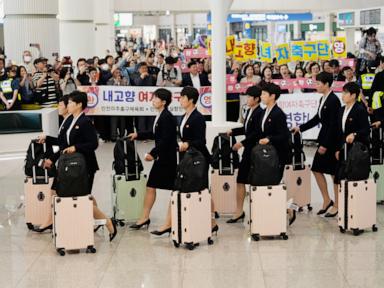
On the tarmac stood a group of young women. They wore matching tracksuits, their hair pinned back with uniform precision. To the casual observer, they were just another sports team arriving for another regional tournament. To anyone who understands the Korean Peninsula, they were ghosts stepping through a mirror.
We talk about the Demilitarized Zone as a line on a map. We talk about it in terms of artillery ranges, missile tests, and diplomatic stalemates. But the truest measure of the division between North and South Korea is not found in the concrete bunkers of Panmunjom. It is found in the silence between two groups of people who speak the exact same language but no longer know how to talk to each other.
For the next two weeks, that silence will be filled by the sound of cleats hitting a synthetic turf pitch.
The Weight of the Jersey
To play sports at the highest level requires an immense amount of pressure. Every athlete carries the expectations of their coach, their family, and their fans. But the women stepping off that plane carry something entirely different. They carry the survival of an ideology.
Consider the life of an elite athlete in North Korea. In the West, sports are a meritocracy wrapped in a commercial enterprise. If you win, you get a shoe deal. If you lose, you get traded. In Pyongyang, sports are an extension of statecraft. A victory is not a personal achievement; it is validation of the regime’s supremacy. A loss is not just a bad day at the office; it is a failure of loyalty.
The players walked through the terminal in a tight formation, flanked by officials whose eyes scanned the crowd with practiced vigilance. South Korean reporters pressed against the barricades, cameras clicking like a volley of small arms fire.
"How are you feeling?" one reporter shouted.
"Are you confident about the tournament?" asked another.
No one answered. The players kept their eyes fixed ahead, faces carved from stone. But if you looked closely at their hands, you could see the knuckles whitening against the straps of their duffel bags. That is where the reality lives. Not in the official statements issued by the sports ministries, but in the white-knuckle grip of a twenty-year-old midfielder who knows that every touch of the ball she makes over the next ten days will be analyzed by men who do not care about the beautiful game.
A Tale of Two Pitches
The tournament itself is a standard regional affair, the kind of event that usually populates the late-night slots on sports networks. But the presence of the North Korean team transforms it into something volatile and fascinating.
South Korea’s women’s team enjoys the fruits of a modern, well-funded athletic infrastructure. They train in state-of-the-art facilities, utilize sports science that tracks their heart rates to the millisecond, and play in front of crowds that view them as heroes. They are part of the global soccer community. They have Instagram accounts, sponsorships, and agency representation.
Across the center circle will stand women who train on pitches where the grass is sometimes patched with weeds, using equipment that has been mended by hand. Their data is not logged in an app; it is recorded in the notebooks of cadres. They do not have branding deals. Their reward for victory is the continuation of their privilege—a rare commodity in Pyongyang—and perhaps a commendation that will protect their families for another generation.
Yet, when the whistle blows, the gap closes.
The North Korean women's team has historically been a powerhouse in Asian soccer. They do not win through technological superiority or advanced sports science. They win through a ferocious, suffocating discipline that can break wealthier teams. It is a style of play born of necessity. When you cannot out-spend your opponent, you must out-endure them. You must run until your lungs burn, because the alternative is unthinkable.
The Language of the Penalty Box
There is a strange phenomenon that happens when North and South Korean athletes meet. In the first few minutes of a match, the tension is palpable. The tackles are a little too hard. The glares last a little too long. It is the friction of two worlds colliding.
But as the minutes tick away, the geopolitical context begins to erode under the sheer physical exhaustion of the game. A hamstring doesn't care about the 38th parallel. When a North Korean player goes down with a cramp, a South Korean defender will often reach out a hand to help her up. It is an instinctive reaction, born of a shared understanding of pain that supersedes state doctrine.
In those moments, the handlers in the VIP boxes look away.
The tragedy of the Korean division is that it has lasted so long that even the language has begun to drift apart. South Koreans use a heavy amount of English loanwords in their daily speech, especially in sports. They say pass, corner kick, and goal. In the North, the state has actively purged these foreign influences, creating a linguistic time capsule. They use pure Korean terms for the same actions.
During a match, you can hear this linguistic chasm play out in real time. A South Korean keeper will yell for her defense to "line up," while the North Korean forward will shout instructions in a dialect that sounds like it belongs to a different century. They are strangers using different words to describe the exact same square of grass.
The Invisible Spectators
The stadium will be filled with South Korean fans. Some will come out of a sense of sporting curiosity. Others will come carrying signs calling for reunification, their voices thick with a nostalgia for a country they have never actually seen united.
But the most important spectators are the ones who aren't there.
Back in Pyongyang, the matches will likely not be broadcast live. The state media cannot risk showing a defeat in real time. Instead, the tapes will be edited, vetted, and held until the outcome is certain. If the team wins, the footage will be broadcast to a population hungry for a glimpse of the outside world, framed as a triumph of the system. If they lose, the tournament will simply cease to exist in the public consciousness.
The players know this. They know that their families are sitting in apartments where the electricity fluctuates, waiting for news that will determine the mood of the neighborhood for weeks to come. Every sprint down the flank is infused with that knowledge.
The Final Whistle
When the tournament ends, the South Korean players will go back to their clubs, their apartments, and their lives. They will post photos of the tournament on social media, complain about their minor injuries, and begin preparing for the next season.
The North Korean team will board another Air Koryo flight. They will pass back through the security checkpoints, away from the flashing cameras and the journalists asking questions they were never allowed to answer. They will return to a world that remains locked behind a wall of secrecy and deprivation.
We look for grand narratives in these sporting encounters. We want them to be a catalyst for peace, a breaking of the ice, a diplomatic breakthrough. We want the soccer ball to do what decades of politicians have failed to accomplish.
But sports rarely work that way. A tournament is not a peace treaty. It is merely a temporary suspension of reality.
The true significance of their arrival in the South is found in the fleeting moments that won't make the evening news. It is found in the split second when two players from opposite sides of the wire chase a loose ball into the corner, their shoulders bumping, their breath mingling in the cold evening air, both of them running toward the exact same line, driven by the exact same human desire to simply reach the ball first.