The Dust and the Padlock
The padlock was brass, heavy, and glinting in the harsh midday sun at Mpondwe. For years, this patch of dirt between Uganda and the Democratic Republic of Congo was not a border so much as an artery. It was a place of noise. Engines groaned, gears ground, and hundreds of voices bartered in a chaotic symphony of Swahili, Luganda, and French. Tomatoes, plastic tubs, timber, and textiles changed hands in a blur of survival and ambition.
Then, the padlock snapped shut.
Silence followed. It was the heavy, unnatural silence that accompanies a sudden medical emergency.
When governments draw lines on maps, they see vectors of disease and geopolitical barriers. They see data points. But when the Ugandan government clamped the border shut to stop the terrifying march of an Ebola outbreak from the DRC, they did not just stop a virus. They stopped a heartbeat.
Behind that closed gate stood thousands of people who do not have the luxury of working from home or waiting out a quarantine with a cushioned bank account. For them, a closed border is not an inconvenience. It is bankruptcy. It is hunger.
Consider a man like Amisi. He is a hypothetical composite of the dozens of traders who watch their life savings rot in the back of a stationary flatbed truck, but his reality is mirrored in every square inch of this red-dirt outpost. Amisi had wagered everything he owned on a single shipment of fresh fish from Lake Albert, destined for the hungry markets of Kasindi. If the truck crossed by Tuesday, he would double his money, pay his children’s school fees, and buy medicine for his aging mother.
By Wednesday, the truck was still sitting in the dust. The heat was relentless. The smell of decaying fish began to seep through the tarp—the sickening scent of a family's future evaporating in the African sun.
The Ledger of Fear
Public health officials face an impossible calculus. Ebola is a horrific antagonist. It liquefies tissue, spreads through microscopic contact, and carries a mortality rate that makes even the most hardened doctors shudder. When cases began ticking upward across the Congolese border, the decision to close the checkpoint seemed logical, even heroic, in the air-conditioned offices of Kampala. Prevent the spread. Protect the population. Contain the threat.
But logic looks very different when you are standing in the mud.
The economic shockwave of a border closure does not move at the speed of a virus; it moves at the speed of panic. Cross-border trade between Uganda and the DRC is not a corporate enterprise managed by spreadsheets and wire transfers. It is an informal, hyper-local ecosystem. It relies on cash, handshakes, and daily velocity.
- Perishable Ruin: Tons of agricultural produce—cabbages, tomatoes, cassava—rot within forty-eight hours of a standstill.
- Credit Collapse: Micro-finance loans taken out by small-scale market women default instantly when the day's inventory cannot be sold.
- The Squeeze on Essentials: On the Congolese side, isolated towns rely on Uganda for fuel, soap, and basic medicine. When the supply line snaps, prices skyrocket, turning a health crisis into a starvation crisis.
The economic losses are calculated in millions of dollars globally, but the true cost is measured in broken contracts and empty plates. It is a slow-motion disaster that receives no international aid because no bombs are falling and no hospitals are overflowing with the broke. They are just quiet.
We often view these events through the sanitised lens of international news tickers. "Trade disrupted amid health concerns." It sounds clinical. It sounds necessary. We comfort ourselves with the idea that the measure is temporary. Yet, for a small trader operating on a margin of five percent, a two-week shutdown is an eternity. It is the difference between keeping a shop and sleeping on the street.
The Secret Channels
Desperation is a powerful solvent. It dissolves laws, borders, and caution.
When you block the main highway, the traffic does not truly stop. It simply liquefies and finds the cracks. This is the tragic paradox of the closed-border strategy: in trying to isolate a deadly contagion, authorities often create the exact conditions needed for it to spread undetected.
Behind the official customs posts lie miles of porous scrubland, dense forest, and shallow river crossings. These are the panyas—the rat paths.
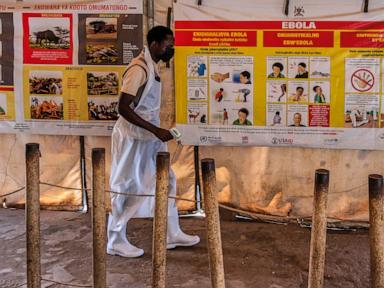
When the Mpondwe crossing closed, the price of smuggling spiked. Desperate traders, unable to afford the total loss of their cargo, began paying local guides to lead them through the bush under the cover of night. They bypassed the health screening tents. They bypassed the infrared thermometers. They bypassed the handwashing stations with their chlorinated water.
Picture the scene. A group of ten people, carrying heavy sacks of beans and contraband medicine, slipping through the tall grass in the pitch black. They are breathing heavily, brushing against one another, trading sweat and physical contact in the dark. If one of them has a fever, if one of them is harboring the virus, there is no ledger keeping track of their names. They vanish into the interior of Uganda, untracked and untraceable.
By turning a regulated, screened flow of human beings into a criminalised scramble for survival, the blunt instrument of a total border closure can backfire spectacularly. It trades a managed risk for an unmanageable catastrophe. It forces people to choose between the abstract threat of a virus and the immediate, guaranteed threat of financial ruin.
They will choose the virus every single time.
Shifting the Scale
The human mind is notoriously bad at understanding probability, especially when wrapped in fear. We see a headline about a hemorrhagic fever and our collective primitive brain screams to pull up the drawbridge.
But true resilience lies in the boring, meticulous middle ground.
During previous outbreaks, epidemiologists discovered that keeping borders open—but strictly monitored—was actually safer than shutting them down. When the gates stay open, people stay on the grid. They line up. They allow strangers in white hazmat suits to aim plastic guns at their foreheads to read their temperatures. They submerge their hands in stinging bleach water. They declare their points of origin.
This is not just a health strategy; it is an economic lifeline. It allows Amisi to sell his fish, even if it takes three hours longer to cross the line. It keeps the capital flowing, the trucks moving, and the families fed. It recognizes that economic health and physical health are not competing priorities on a see-saw, but two sides of the same coin.
Yet, this requires trust. It requires a government to trust its people to cooperate, and it requires the people to trust that the state will not arbitrarily lock them in a cage. In the borderlands, that trust is a rare commodity, easily hoarded and quickly spent.
The Price of Silence
The sun begins to dip below the Rwenzori Mountains, casting long, bruised shadows across the idle trucks at Mpondwe. The drivers have lit small cooking fires by the side of the road, the smoke curling up into the humid evening air. They are waiting for news that will not come today, and likely will not come tomorrow.
In the grand tally of global events, this border closure will be a footnote. It will not trigger emergency sessions of distant parliaments or cause Wall Street to quiver. The losses will be absorbed by people who are already experts at absorbing pain.
But the silence at the border post remains deafening. It is a monument to a world that still prefers the illusion of absolute safety over the messy, complicated reality of human survival. Until we learn to build systems that protect both the lung and the livelihood, the padlocks will continue to snap shut, and the dust will continue to swallow the dreams of those who live on the edge.